When August Meant War in the Kitchen: The Summer Ritual That Fed America All Winter

Photo: , Public domain, via Wikimedia Commons
By the second week of August, the kitchen had transformed. Jars lined every available surface. The stove ran from early morning until after dark. The air was thick with steam and the smell of hot vinegar and ripe tomatoes. Children were recruited as labor. Neighbors compared techniques over back fences. And the woman running the operation — usually the mother, often helped by a grandmother who had been doing this since before refrigerators existed — worked with the focused intensity of someone who understood exactly what was at stake.
What was at stake was dinner. In January. And February. And March.
The Calendar That Ran the Kitchen
For most of American history, eating was a seasonal negotiation. Fruits and vegetables didn't arrive from Chile in December. The supermarket didn't exist as we know it until the mid-twentieth century, and even after it did, the habit of preservation ran deep in families that had always done it and saw no reason to stop.
The rhythm was strict and unforgiving. Strawberries came in June — you made jam. Green beans peaked in July — you canned them by the bushel. Tomatoes arrived in August in overwhelming abundance — you turned them into sauce, whole canned tomatoes, tomato juice, and anything else that would last. Corn, peaches, pickles, apple butter, beets — each had its window, and missing that window meant missing that food for an entire year.
This wasn't a hobby. It wasn't the kind of weekend project that gets hashtagged and posted. It was a domestic obligation as serious as paying the mortgage, and households that didn't do it well felt the consequences in ways that were concrete and cold.
The Science of Keeping Things From Killing You
Home preservation was also, it should be said, genuinely dangerous when done wrong. Botulism doesn't announce itself. An improperly sealed jar of green beans looked exactly like a properly sealed one. The difference only became apparent later, in ways nobody wanted to discover.
The knowledge required to preserve food safely was specific and earned. Water bath canning worked for high-acid foods — fruits, tomatoes, pickles. Low-acid vegetables required a pressure canner to reach temperatures that killed the bacteria that caused botulism. Getting that wrong wasn't a minor inconvenience. It was a medical emergency.
American women — and it was overwhelmingly women doing this work — carried this technical knowledge as a matter of course. It was transmitted from mothers to daughters with the same seriousness as any professional training. The Ball Blue Book, a canning guide first published in 1909, sat in American kitchens the way a medical reference sat in a doctor's office. You consulted it, you followed it, and you trusted it with your family's safety.
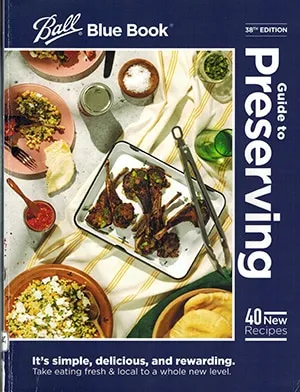 Photo: Ball Blue Book, via growagoodlife.com
That level of food literacy — the ability to understand not just how to cook something but how to preserve it safely across months — has largely vanished in two generations.
What Filled the Shelves and What It Meant
The basement pantry of a well-run American household in 1945 was a kind of domestic balance sheet. Rows of gleaming jars — labeled, dated, organized by type — represented security in the most literal sense. A full pantry going into winter meant a family that would eat well regardless of what happened to prices, weather, or income between October and April.
There was pride in those shelves. Visitors were shown them. Neighbors noticed. The quantity and quality of what a household put up reflected the competence of the people who ran it. It was visible, tangible evidence of work done well and a family prepared for what was coming.
Compare that to today, when food security means a credit card that works at the grocery store. Neither system is inherently superior — the modern one is vastly more convenient and requires almost no labor. But the older system produced a relationship with food that was intimate, specific, and grounded in genuine understanding of where things came from and what it took to make them last.
The Freezer Changed Everything (and Then the Supermarket Finished the Job)
Home freezers, which became widely affordable in the 1950s, were the first major disruption to the canning tradition. Freezing was faster, required less skill, and preserved flavor better than most canning methods. Families that had canned green beans for decades discovered that frozen green beans tasted more like fresh ones, and the shift began.
The expansion of supermarkets — and the year-round supply chains that fed them — did the rest. When you could buy canned tomatoes for thirty cents in January, the economic logic of spending three August weekends putting them up yourself became harder to justify. The labor cost was real. The time was real. And increasingly, the savings weren't dramatic enough to make the argument obvious.
By the 1970s, home canning had shifted from near-universal practice to niche interest. By the 1990s, it was something grandmothers did. By the 2010s, it had been rediscovered as a craft movement — artisanal, intentional, and entirely optional.
What Two Generations Forgot
The canning revival of recent years is genuine and appealing. Farmers' markets sell perfectly imperfect tomatoes specifically for putting up. YouTube tutorials walk viewers through proper headspace and processing times. Mason jars are sold as décor as often as as food storage.
But something about the optional, aesthetic nature of modern home preservation reveals the distance we've traveled. When your grandmother canned tomatoes in August, she wasn't making a lifestyle statement. She was doing what needed to be done, with skills she'd been building since childhood, connected to a food calendar that was older than the republic.
The knowledge still exists. The equipment is still manufactured. The tomatoes still ripen in August whether anyone puts them up or not.
What's gone is the urgency — and with it, a particular kind of self-reliance that once sat at the center of what it meant to run an American household.