Where the Pharmacist Made Your Milkshake: The American Drugstore That Did Everything
Two Counters, One Building
Walk into any Walgreens or CVS today and you know exactly what you're going to get: fluorescent lighting, long aisles of packaged goods, a pharmacy counter behind a frosted partition, and maybe a refrigerator case of grab-and-go drinks near the register. Efficient. Functional. Completely forgettable.
It wasn't always like this.
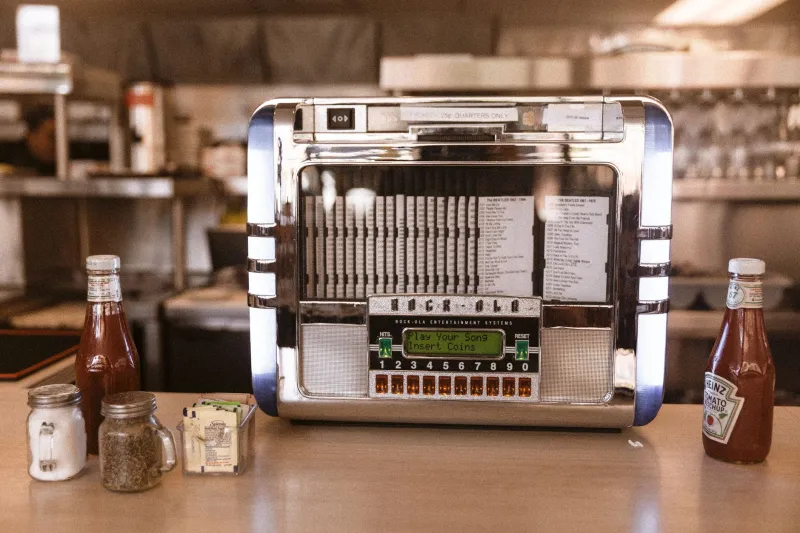
For roughly a century — from the 1880s through the 1960s — the American drugstore was something genuinely strange and wonderful. The pharmacist worked in the back, compounding prescriptions and dispensing medications. But up front, occupying a long marble counter lined with cushioned stools, was a soda fountain. A real one. With a trained soda jerk behind it, stainless steel dispensers, and a menu that might include ice cream sodas, phosphates, egg creams, banana splits, and milkshakes made fresh while you watched.
The same building. The same proprietor. The same afternoon.
How Pharmacists Became Soda Chemists
The connection between pharmacies and soda fountains wasn't accidental — it made a certain kind of nineteenth-century sense. Carbonated water was originally considered medicinal. Early pharmacists dispensed it as a treatment for various complaints, adding flavored syrups and minerals to make it more palatable. The leap from medicinal fizzy water to a chocolate phosphate for a nickel was shorter than it sounds.
By the early 1900s, soda fountains had become standard features of American drugstores from New York to small-town Kansas. The equipment was expensive enough that it represented a real investment, which meant the fountain was treated seriously. Soda jerks — named for the motion of pulling the carbonation lever — were trained staff who took pride in their craft. A well-made egg cream or a properly layered sundae was something to be proud of.
The drugstore fountain occupied a specific social niche that no other institution quite matched. It was indoors, which made it year-round. It was cheap, which made it accessible. It was supervised, which made parents comfortable. And it was genuinely pleasurable, which made teenagers return obsessively.
The Social Life of a Spinning Stool
For American teenagers in the 1940s and 1950s, the drugstore soda fountain wasn't just a place to get a Coke. It was the place — the default gathering point after school, after the movies, after the game. You could nurse a single cherry phosphate for an hour and nobody would push you out. The counter was long enough that you could claim your own section with your friends, and the stools spun, which apparently never got old.
First dates happened at soda fountains. Friendships were cemented there. Local gossip moved through those spaces the way it later moved through social media — imperfectly, rapidly, and with great enthusiasm. The pharmacist behind the prescription counter often knew the regulars by name, their families, their school situations. He was part of the furniture of the neighborhood in a way that a chain pharmacy employee simply cannot be.
Small towns often had only one drugstore, which meant the soda fountain inside it was genuinely communal territory. Farmers came in on Saturday afternoons. Elderly women stopped in after church. The same stool might hold a ten-year-old at three in the afternoon and a tired father at five-thirty.
The Slow Disappearance
The soda fountain didn't die overnight. It faded across two decades, squeezed from multiple directions at once.
Fast food chains arrived in force during the late 1950s and 1960s, offering something the drugstore couldn't match: speed, parking, and the thrill of the new. McDonald's and its competitors weren't selling better milkshakes — in many cases, the milkshakes were worse. But they were selling an experience that felt modern in a way that a marble counter and spinning stools did not.
At the same time, chain pharmacies began expanding, and their business model had no room for a soda fountain. A Walgreens or Rexall franchise was optimized for volume and standardization. The fountain required trained staff, expensive equipment, and daily fresh ingredients. It was inefficient by design, and efficiency was the future.
By the 1970s, most soda fountains were gone. A few survived in small towns where the old drugstore had resisted chain competition. Some were preserved as novelties, tourist attractions, or deliberate throwbacks. But the era when a pharmacist routinely handed you a prescription and then offered to make you a banana split was effectively over.
What Got Lost in the Renovation
The disappearance of the drugstore soda fountain is easy to dismiss as simple nostalgia — a prettier version of the past that we romanticize because we didn't have to live in it. And there's something to that. The soda fountains of the 1940s existed alongside plenty of things we're glad are gone.
But the soda fountain represented something that's genuinely hard to find now: a semi-public space that wasn't optimized for any single purpose. It was a pharmacy and a snack bar and a community room and a teenage hangout, all at once, without any of those functions undermining the others. It was a place where a ten-year-old and a sixty-year-old might sit three stools apart and both feel like they belonged.
We've built a lot of things since then. We haven't quite built that.