The Two-Week Wait That Made You Actually Want the Thing: America's Lost Art of Anticipation
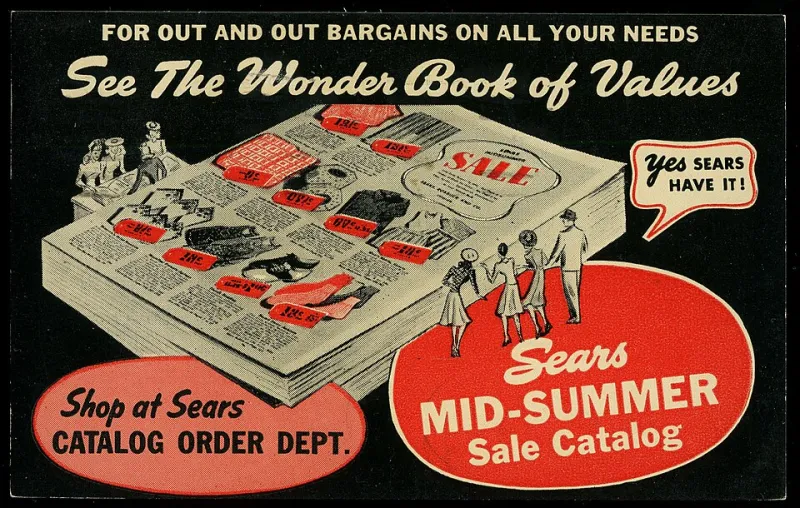
Photo: Steve Shook from Moscow, Idaho, USA, CC BY 2.0, via Wikimedia Commons
There was a ritual to it. You'd find the item in a catalog — maybe the Sears Wish Book, maybe a specialty mail-order company out of Vermont — fill out the paper order form, double-check the item number, write a check, seal the envelope, and mail it. Then you waited. Not impatiently, not with a refresh button, but with the low hum of genuine anticipation. Two weeks later, sometimes three, a box would appear. And it felt like something.
That experience is so foreign to modern American life that describing it to someone under thirty sounds like a story from another country. Which, in a sense, it is.
The Catalog Era
For most of the twentieth century, a significant portion of American retail ran on patience. Sears, Montgomery Ward, and J.C. Penney built enormous mail-order empires on the simple premise that people would plan ahead. The Sears catalog — at its peak, a 500-plus-page document that arrived in American homes like a seasonal event — required customers to think weeks in advance about what they needed.
This wasn't considered inconvenient. It was just how things worked. You ordered a winter coat in September. You bought Christmas gifts in October. Timing your purchases wasn't a burden; it was part of the rhythm of consumer life. And the wait itself served a purpose that nobody had a name for yet, because nobody had anything to compare it to.
When something finally arrived, you'd earned it in a small but real way. The waiting period wasn't dead time — it was a slow build of genuine desire. By the time the package showed up, you actually wanted it. You remembered why you'd ordered it. You'd thought about it.
The UPS Revolution and the Speed Ratchet
Things started shifting in the late 1970s and accelerated through the 1980s as carriers like UPS expanded their ground networks and Federal Express introduced overnight delivery for documents and small packages. By the early 1990s, two-day shipping existed — though it was expensive enough that most people reserved it for genuine urgency.
Then came Amazon. When the company launched in 1995, it was still operating in the old paradigm: you ordered a book, it shipped in a few days, it arrived the following week. But the infrastructure Jeff Bezos was quietly building wasn't designed to maintain that timeline. It was designed to collapse it.
Amazon Prime launched in 2005 with a promise of free two-day shipping on eligible items. Within a decade, two days felt slow. Prime Now arrived in 2014, offering one- and two-hour delivery in select cities. By the early 2020s, same-day delivery had become a standard expectation in major metro areas, and next-day was considered the floor, not the ceiling.
The ratchet only tightens. Each improvement in delivery speed raises the baseline of what feels acceptable, which raises customer pressure on retailers, which pushes the next round of investment. There's no obvious ceiling.
What Instant Actually Costs
The efficiency gains are real and significant. Nobody seriously argues that waiting three weeks for a replacement part is preferable to getting it tomorrow. Speed has genuine value — for small businesses, for emergency purchases, for the elderly and mobility-limited, for anyone living in a rural area that used to mean accepting limited access to goods.
But something less visible has been lost in the transaction. Behavioral economists have a concept called the endowment effect — the idea that we value things more once we've invested effort in acquiring them. The two-week wait was, in its own low-key way, an investment. You thought about the purchase. You committed to it. You anticipated it. By the time it arrived, the object carried a small emotional weight it had earned.
Same-day delivery bypasses all of that. The impulse and the acquisition collapse into a single moment. There's no space between wanting and having. And without that space, the thing you ordered is just... there. On the porch. Already slightly less interesting than it was when you clicked.
The Return Problem Nobody Talks About
There's a downstream consequence worth noting. American return rates have exploded in the e-commerce era. Online retail return rates hover around 20 to 30 percent, compared to roughly 8 to 10 percent for in-store purchases. Some apparel categories run even higher.
Part of that is the nature of buying things you can't touch first. But part of it is the impulse purchase problem. When there's no friction — no wait, no deliberation, no effort — people buy things they haven't really decided they want. The wait used to be a filter. It gave you time to change your mind before the transaction was complete, rather than after.
The environmental math here is uncomfortable. All those returned items — many of which get liquidated or landfilled rather than restocked — represent a real cost that the price of two-day shipping doesn't capture.
Learning to Wait Again
There's a quiet counter-movement happening. Slow retail, intentional purchasing, capsule wardrobes — all of these trends share a common thread: the deliberate reintroduction of friction into the buying process. People are choosing to wait not because they have to, but because they've noticed that waiting changes how they feel about what they own.
The two-week delivery window of the catalog era wasn't a failure of logistics. It was, accidentally, a feature. It asked you to be sure. It gave the thing you wanted time to feel worth wanting.
We optimized that out of existence. And now some of us are paying a monthly subscription fee to get it back.