The Booklet in the Box: When Products Trusted You Enough to Explain Themselves
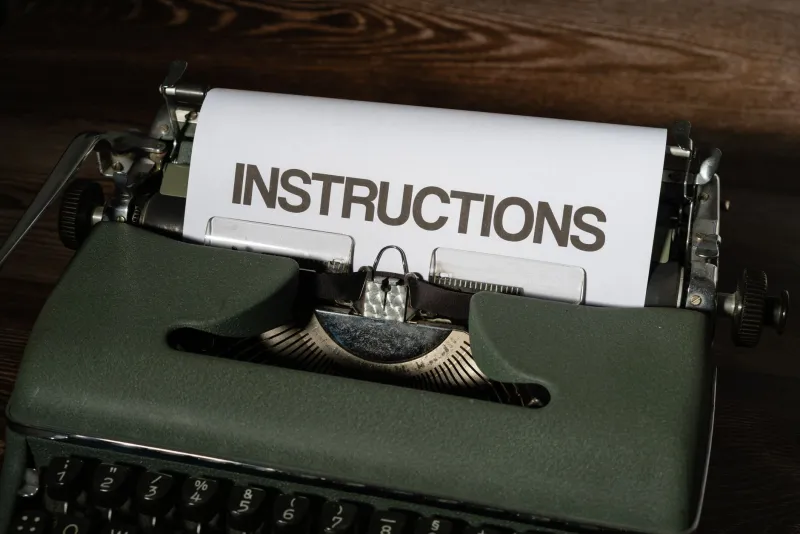
There was a specific weight to a new appliance box in 1978. Not just the product itself, but the manual that came with it — a saddle-stitched booklet, sometimes thirty or forty pages, occasionally more, with technical diagrams, safety warnings in three languages, troubleshooting trees, and a parts list that let you identify, by name and number, every component of the thing you'd just bought.
You were expected to read it. Not skim it. Read it.
And a surprising number of people actually did.
The Manual as a Contract Between Maker and Owner
The thick instruction manual wasn't just a practical document. It was a statement of relationship between manufacturer and consumer. It said, in effect: you've bought something with real complexity, and we respect you enough to explain how it works.
Post-war American manufacturing operated on the assumption that ownership implied responsibility. When you bought a reel-to-reel tape recorder, or a new washing machine, or an early microwave oven, you were acquiring a piece of equipment — not a service, not an experience, but a machine with internal logic that a reasonably attentive person could understand and maintain.
Manuals from the 1950s through the '80s were written with that assumption baked in. They explained not just what to do but why — why the water temperature setting mattered, why you shouldn't overload the drum, what the clicking sound during a particular cycle actually indicated. They treated the reader as someone who wanted to understand their purchase, not just use it.
This created a different relationship with owned objects. You knew your appliances in a way that's largely disappeared. You knew what the parts were called. You knew what to check first when something went wrong. You had a mental model of the machine that made you, in a modest but real way, competent.
From Expertise to Experience
The shift began accelerating in the 1990s, as consumer electronics became both more complex internally and more deliberately simple externally. The design philosophy that Steve Jobs would eventually make famous — that the best interface is one you never have to think about — was already gaining ground before Apple made it doctrine.
Products were increasingly engineered to be intuitive. Intuitive, in this context, meant that users shouldn't need to understand the underlying mechanics. The goal was seamlessness: a product that just worked, requiring no expertise, no prior knowledge, no engagement with the manual at all.
This was genuinely useful for a lot of products. Nobody needs to understand how a microprocessor works to use a microwave. The democratization of technology — the idea that complex tools should be accessible to everyone, not just technically literate users — was a real and meaningful achievement.
But something shifted in the process. As products became more opaque, the manuals didn't just get simpler — they got shorter and, eventually, almost disappear entirely. The assumption that users wanted to understand what they owned was quietly replaced by the assumption that users wanted to be undisturbed by what they owned.
The QR Code as a Confession
Open a new consumer product today — a smart speaker, a mid-range blender, a wireless printer — and you'll typically find a small card, sometimes just a folded half-sheet, with a handful of illustrated steps and a QR code or URL. The actual documentation lives online, where it can be updated, localized, and quietly corrected without the expense of reprinting.
There's a financial logic to this that's hard to argue with. Printing and shipping a forty-page manual with every unit costs real money at scale. Digital documentation is cheaper, searchable, and can include video. YouTube tutorials, in particular, have become the dominant mode of product education — and for many people, watching someone assemble or configure something is genuinely easier than reading about it.
But notice what that shift assumes. It assumes you have a device to watch the tutorial on. It assumes you have internet access. It assumes you're comfortable navigating to a third-party platform to learn how to use a product you just paid for. And it assumes, most significantly, that your relationship with the product doesn't need to begin with the manufacturer explaining it to you.
The manual was a one-time investment in your competence as an owner. The YouTube tutorial is a dependency — it requires infrastructure, connectivity, and a platform that the manufacturer doesn't control and can't guarantee will exist in five years.
What We Lost When Mastery Stopped Being the Goal
There's a financial dimension to this shift that tends to get overlooked. When you understood how your appliances worked, you were better equipped to maintain them, diagnose problems, and make informed decisions about repair versus replacement. The manual wasn't just documentation — it was a tool for extending the economic life of what you owned.
The move toward opacity has coincided, not coincidentally, with a move toward disposability. Products that can't be understood can't easily be repaired. Products that can't be repaired get replaced. Replacement drives revenue in ways that repair and maintenance never could.
The manual, in that sense, was a document that served the consumer's long-term financial interest. Its disappearance serves someone else's.
The Respect That Came Printed on Page One
The old instruction manual made an implicit promise: that the product was worth understanding, and that you were capable of understanding it. That combination — a meaningful object and a competent owner — created a different kind of consumer culture than the one we inhabit now.
We've traded mastery for convenience, expertise for seamlessness, and the quiet satisfaction of genuinely knowing how something works for the frictionless pleasure of it just working.
Most days, that feels like a reasonable trade. But every time you watch a stranger on YouTube explain something that used to come documented in the box, it's worth asking: when did we stop expecting products to explain themselves? And what did we agree to when we stopped asking?