Twelve Digits and You Were Home: The Vanishing Art of Knowing Things by Heart
There was a time when every American carried a small, invisible library inside their head — phone numbers, directions, birthdays, facts. Today, that library has moved to a device in your pocket, and the question worth asking is what happened to the building it left behind.
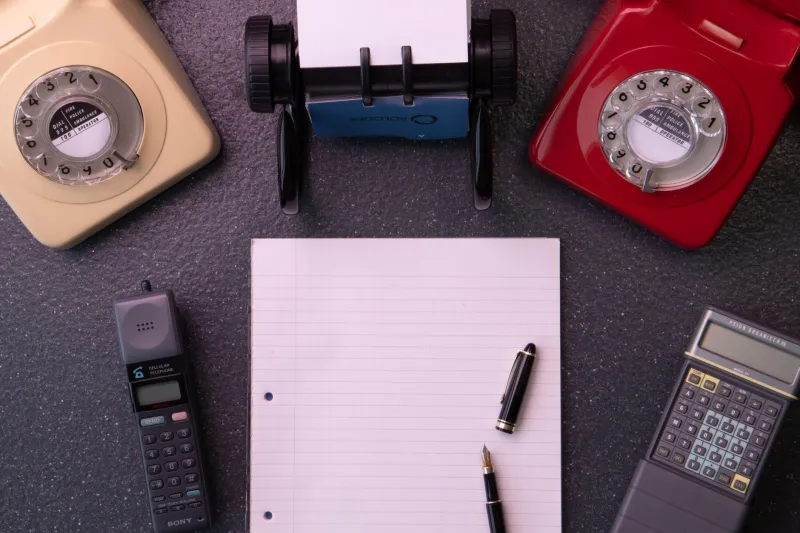
The Mental Rolodex
Ask anyone over forty to recite a phone number from their teenage years and watch what happens. Odds are, they can still do it. The number rolls off without effort — seven digits, maybe ten if it was long distance — retrieved from somewhere deep and automatic. Ask them to recite their own cell phone number today and there's a decent chance they'll hesitate.
That's not a coincidence. It's a window into how dramatically the smartphone has reshaped the way the American brain operates.
Before the mid-2000s, remembering was simply part of living. You kept your best friend's number in your head because that was the only way to reach them if you were calling from a payphone outside a gas station in rural Ohio. You memorized your route to a new job because MapQuest directions printed on paper could only take you so far, and they weren't always right. You tracked your dentist appointment because the alternative was missing it — there was no push notification arriving forty-eight hours in advance to do the job for you.
Memory wasn't a hobby or a party trick. It was infrastructure.
The Cognitive Load Was Real
Let's not romanticize it entirely. Carrying that much information in your head was genuinely taxing. People forgot things. Important things. Phone numbers got confused. Directions got scrambled. You showed up on the wrong day for the wrong appointment and felt terrible about it.
The pre-smartphone era was not some golden age of perfect recall. It was an era of sticky notes on refrigerators, handwritten address books stuffed into kitchen drawers, paper calendars with overlapping ink. People offloaded memory to physical objects constantly — they just couldn't offload it to a device that fit in a shirt pocket and updated itself in real time.
The difference between then and now isn't that people used to have superhuman memories. It's that the effort of remembering was distributed differently — between the brain, the body, and the immediate physical environment rather than handed entirely to a machine.
What Spatial Memory Used to Mean
One of the most striking losses is in navigation. Before GPS became standard equipment in every vehicle and then every pocket, Americans built what researchers call cognitive maps — internal representations of space. You knew your city. Not just your block, but the logic of it. Where north was. Which roads ran parallel and which ones crossed. How long things actually took to get to.
Children who grew up in the 1970s and 1980s navigated their neighborhoods on bicycles without adult supervision or digital guidance. They developed an instinctive spatial awareness that came from genuine trial and error. Getting lost was part of learning where you were.
Today, GPS has made getting lost nearly impossible — and that's a genuine gift when you're driving through an unfamiliar city at night. But researchers studying navigation and memory have found that people who rely heavily on GPS show measurably lower activity in the hippocampus, the brain region central to both spatial reasoning and long-term memory formation. You don't build a map in your head if the app is drawing it for you in real time.
The Outsourced Brain
Psychologists have a term for what's happened: cognitive offloading. The idea is straightforward — when we know a tool can store or retrieve information for us, we invest less mental energy in encoding it ourselves. It's rational behavior. Why memorize something you can look up in four seconds?
The trouble is that memory isn't just a storage system. The act of remembering — of encoding, storing, and retrieving information — is itself a workout. It builds mental connections, reinforces learning, and keeps the brain actively engaged with the world. When that workout gets outsourced, the muscle doesn't disappear overnight, but it does get less exercise.
This isn't alarmism. Researchers are careful to note that technology has always extended human cognition — writing itself is a form of cognitive offloading, and nobody argues we'd be better off without it. The question is more nuanced: what specifically are we offloading, and what does that cost us?
What We Traded and What We Got
The honest answer is that the trade has been mostly worth it. The smartphone has eliminated whole categories of daily frustration. Nobody misses arguing over a paper map in a moving car. Nobody misses frantically searching for a working payphone. Nobody misses the particular anxiety of forgetting a phone number and having no way to look it up.
What we may have quietly traded away is a certain mental self-reliance. The confidence that comes from knowing you can find your way, remember what matters, and hold the details of your own life in your own head. That confidence was built through practice — through the daily, unremarkable effort of carrying your world around in your memory.
The smartphone made that effort optional. And like most optional things, most people stopped doing it.
Still Worth Knowing
None of this means you should delete your contacts and start memorizing phone numbers as a lifestyle choice. But it does suggest that the brain, like any other system, responds to what you ask of it. Deliberately remembering things — choosing not to look something up, navigating a familiar route without GPS, keeping a few numbers in your head just because — is a small act of maintenance that previous generations performed without thinking about it.
They had no choice. We do. And that choice, made a hundred times a day without noticing, is quietly reshaping what the American mind expects of itself.