The Chair That Asked Nothing of You: When Waiting Rooms Were Actually for Waiting
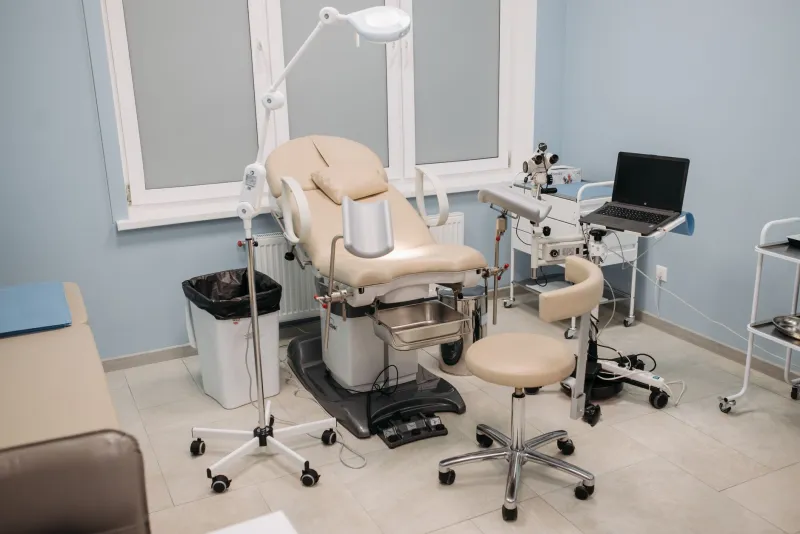
Not so long ago, sitting in a waiting room meant doing exactly that — sitting, waiting, and occasionally making eye contact with a stranger who'd also run out of things to do. That version of idle time has nearly vanished, and it took something valuable with it.
The Old Waiting Room Was Its Own World
Picture a doctor's office waiting room in 1987. Beige walls. A low table covered in magazines — People, Reader's Digest, Sports Illustrated, one issue of National Geographic from three years ago that someone keeps returning to. A few chairs bolted together in rows. A fish tank, maybe, if the practice was doing well.
You sat down, and then you waited. That was the entire program.
You might pick up a magazine. You might read the same paragraph three times because the person across from you kept coughing. You might glance at the fish. You might stare at the ceiling tiles and think about whether you'd remembered to defrost something for dinner. You might catch the eye of the older gentleman beside you, share a brief, wordless acknowledgment of your shared predicament, and then look away. Sometimes that turned into a conversation. Sometimes it didn't.
What you almost certainly didn't do was fill every second with external input. There simply wasn't any available.
The DMV as Accidental Monastery
If the doctor's waiting room was purgatory, the DMV was something closer to a monastery — a place where time moved differently and you had no choice but to accept it. You took a number. You found a seat. You waited.
The DMV waiting room of the 1980s and 1990s was one of the last genuinely democratic spaces in American life. Everybody was there. Young, old, rich, working-class — the DMV did not discriminate. And because nobody had a device to retreat into, the room had a strange collective quality. People talked. They complained, mostly, but they talked. They asked each other how long they'd been waiting. They traded small jokes about the indignity of the whole situation. They were, briefly and involuntarily, a community.
That's not nostalgia talking. That's just what happens when people are stuck together with nothing to look at.
What Boredom Actually Does
Here's the thing about boredom that the smartphone era has made easy to forget: it isn't only unpleasant. It's also productive.
Psychologists who study the function of boredom have found that it serves as a kind of mental reset — a state that encourages the mind to wander, make unexpected connections, and surface ideas that focused attention tends to suppress. The daydream you had while staring at the ceiling of that waiting room wasn't wasted time. It was your brain doing something it needed to do.
Beyond the cognitive benefits, there's a social dimension. Idle waiting — with nothing to look at and nowhere to be — created low-stakes opportunities for spontaneous human contact. Not the performed, scheduled kind of connection that Americans are good at, but the accidental kind. The kind where you end up talking to someone you'd never have approached and find out they grew up in the same town as your mother.
Those moments weren't common. But they happened. And they happened because everyone in the room was equally available.
The Phone Entered the Room
The change didn't happen all at once. In the early 2000s, people brought books. Then they brought early cell phones and played Snake or sent text messages. Then the iPhone arrived in 2007, and within a few years, the waiting room as a social environment was effectively over.
Today, walk into any waiting room in America and you'll see the same scene: every head angled down, every face lit by a screen. The magazines are still there — thinner now, a little sad — but almost nobody reads them. The fish tank, if it survived, goes unwatched. The older gentleman beside you is not going to catch your eye because his eyes are occupied.
This isn't a moral failure. It's a rational response to an available option. If you can spend your wait reading the news, texting a friend, or watching a video, why would you choose to stare at the wall instead? The phone is right there. It's always right there.
The Attention We No Longer Practice
What's been lost is harder to quantify than what's been gained. It's not that Americans have become less capable of patience — it's that patience has been made largely unnecessary. You don't have to tolerate boredom when you can eliminate it in under three seconds.
But tolerance for boredom is a skill, and skills that go unpracticed tend to atrophy. Attention researchers have noted a measurable decline in what's sometimes called sustained attention — the ability to sit with a single thought, a single task, or a single environment without seeking stimulation elsewhere. The waiting room used to provide involuntary practice in exactly this. Now it doesn't.
There's also something quieter at stake. The waiting room was one of the few places in American life where you were genuinely off duty. Not expected to be productive. Not reachable by your boss. Not performing anything for anyone. Just a person in a chair, killing time in the most human way possible.
The Unscheduled Moment
We've gotten very good at filling time. Every gap in the day has become an opportunity to consume something — information, entertainment, communication. The idea that a few minutes of doing nothing might be the point, rather than a problem to be solved, has become genuinely difficult to hold onto.
The waiting room used to enforce it. The chair asked nothing of you, and somehow that was enough. Sitting in it, with nothing to do and nowhere to go, you were briefly just a person in the world — present, a little bored, and occasionally surprised by who sat down next to you.
That's a small thing. But small things, when they disappear entirely, have a way of leaving rooms that are larger than you expected.