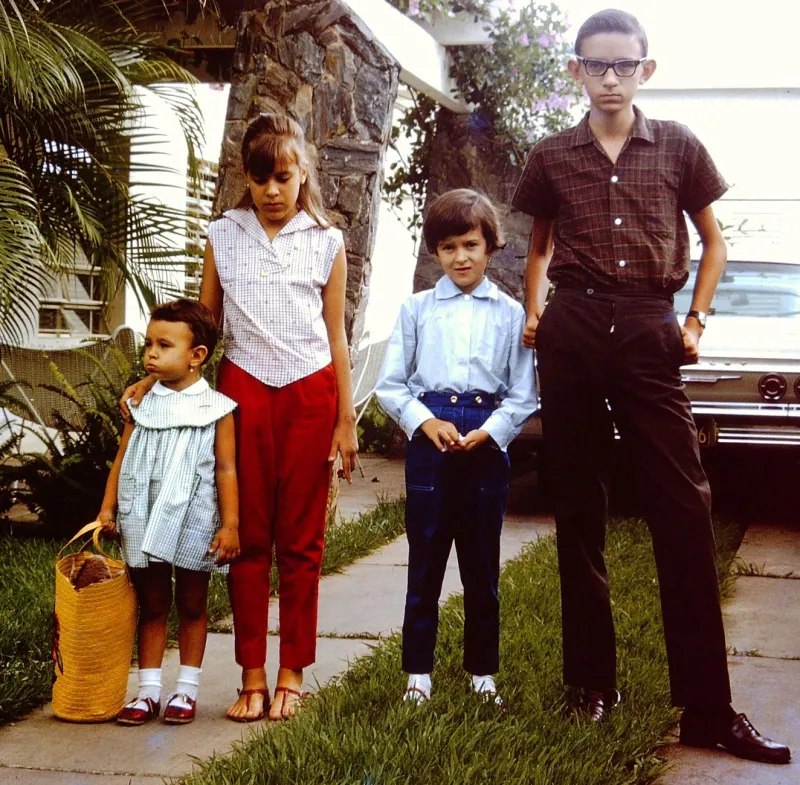
Three Pairs of Shoes and a Cobbler Who Knew Your Name: The Death of Dressing for Life
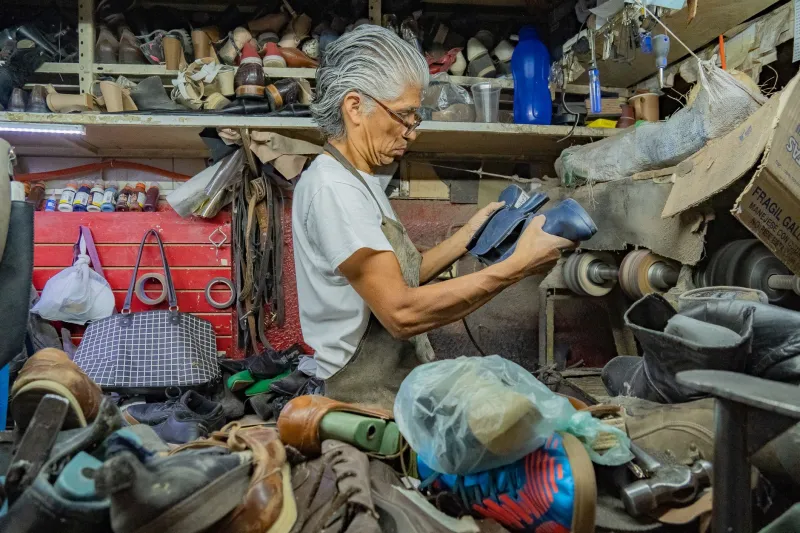
Somewhere in the back of your grandfather's closet, there was probably one pair of work shoes, one pair for church, and if he was lucky, something for summer. That was it. Three pairs, maybe four, and every single one of them had a history — a resoled heel, a polished-out scuff, a broken eyelet replaced at the shoe shop on Main Street. He didn't think of himself as underdressed. He thought of himself as a man who took care of his things.
That world is almost unrecognizable now.
When Shoes Were a Purchase, Not a Habit
Through most of the mid-20th century, buying shoes was a considered event. You went to a proper shoe store — not a big-box retailer, but a family-owned shop where the salesman measured your foot with a Brannock device and actually looked at how you stood. Shoes were leather, generally, and leather was meant to last. A quality pair in the 1950s might cost the equivalent of $80 to $150 in today's money, which was real money for a working family. You didn't buy on a whim.
And when the soles wore down — which they did, because you wore the same pair constantly — you didn't throw them away. You took them to the cobbler. Cobblers were everywhere. Every mid-sized American town had at least one, often tucked between the hardware store and the dry cleaner, usually run by a man whose father had done the same work. He'd resole your shoes for a few dollars, and they'd come back feeling almost new. That transaction was completely normal. It was what you did.
The average American in 1960 owned roughly three to five pairs of shoes. Today, that number sits closer to nineteen — and rising.
The Closet That Became a Landfill
Fast fashion didn't arrive all at once. It crept in through the 1980s and accelerated sharply through the 1990s and 2000s as manufacturing shifted overseas and production costs collapsed. Brands that once built reputations on durability quietly pivoted to volume. The pitch changed from this will last you years to this is what's new this season.
By the time brands like Zara and H&M were running clothing cycles of 52 micro-seasons per year — essentially a new trend every week — the psychological relationship Americans had with clothing had been fundamentally rewired. Novelty became the product. Wearing something twice started to feel like a social risk. The idea of repairing a shoe rather than replacing it began to seem not just inconvenient, but vaguely eccentric.
The numbers are striking. The average American now buys around 65 garments per year. In the 1960s, that figure was closer to 25. We're buying more than twice as much clothing, wearing each piece for a fraction of the time, and throwing away roughly 81 pounds of textiles per person annually. Most of it goes straight to landfill.
Cobblers, meanwhile, have largely disappeared. The Bureau of Labor Statistics stopped tracking them as a separate occupation because there weren't enough left to count.
What 'Getting Dressed' Used to Mean
Here's the part that's easy to miss in this story: getting dressed used to be an act of identity maintenance, not trend participation. Your clothes represented accumulated choices. That blazer was bought for your brother's wedding and altered twice. Those boots were broken in over three winters. There was a relationship between you and what you wore that took time to build.
When your grandmother said she was saving an outfit for a special occasion, she wasn't being quaint. She was operating inside a value system where clothing carried weight — literal and emotional. A good coat was something you might pass down. Jeans were patched at the knee before they were retired. A dress might be taken in at the waist after a pregnancy. You adapted your clothes to your life, not the other way around.
The psychological effect of that relationship was subtle but real. You owned less, but you knew what you owned. There was no decision fatigue standing in front of a stuffed closet at 7 a.m. There was just: here are my things, and I know each one of them.
The Anxiety We Bought Instead
Research on consumer behavior has consistently found that more choice doesn't reliably produce more satisfaction. Psychologist Barry Schwartz called it the paradox of choice — the idea that past a certain threshold, options stop feeling like freedom and start feeling like pressure. The modern closet, overflowing with fast-fashion pieces that don't quite fit, don't quite match, and were bought during a moment of trend-induced urgency, is a physical manifestation of that paradox.
There's also something worth noting about the health dimension here. Fast fashion's supply chain — the dyes, the synthetic materials, the production conditions — has real consequences that eventually circle back. Microplastics from synthetic fabrics are now showing up in human blood. Skin sensitivities linked to chemical treatments in cheap garments are increasingly common. The trade-off for cheap and plentiful isn't always neutral.
Enough Used to Be a Simpler Calculation
The word enough has changed meaning quietly over the last 60 years. For your grandparents, enough meant functional, durable, and respected. Enough was three pairs of shoes that lasted a decade. Enough was a wardrobe you could pack in one suitcase and feel completely equipped for life.
Today, enough is harder to locate. The algorithm always has something new. The feed always shows you what you're supposedly missing. The micro-season is already over before you've worn the thing you bought for it.
That cobbler on Main Street didn't just fix shoes. He was part of an ecosystem that said: what you have is worth keeping. When he disappeared, we didn't just lose a service. We lost a whole philosophy about the relationship between people and the things they own.
Somewhere in that shift is a question worth sitting with: Did we get more, or did we just get busier replacing things that used to last?