Nothing to Do Was Actually Something: The Vanishing Art of the Unscheduled Afternoon
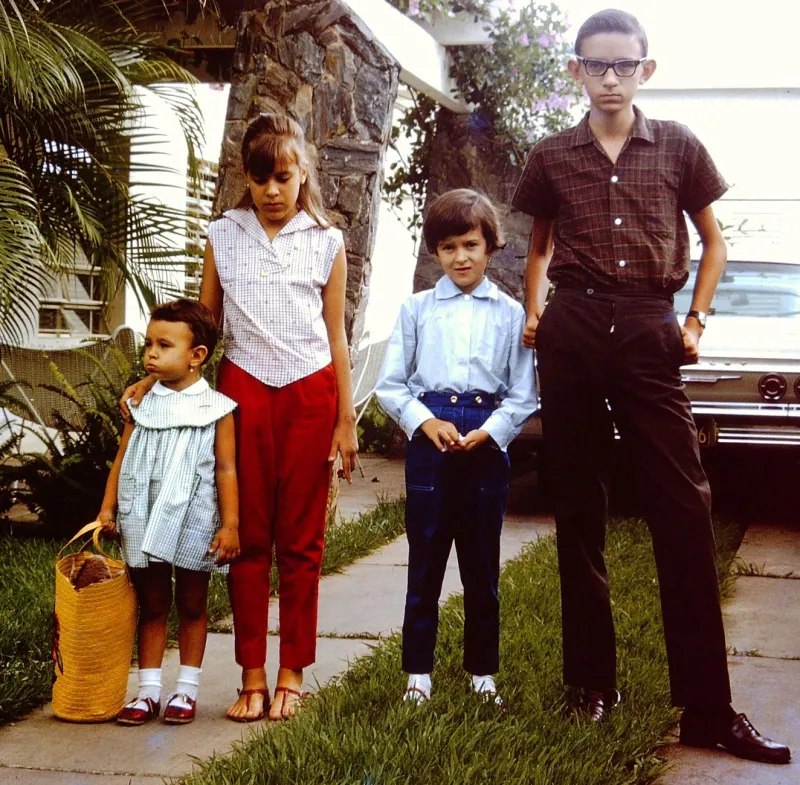
It's a Saturday in 1967. School's out for summer. A ten-year-old in suburban Ohio wakes up, eats cereal, and walks out the back door. His mother doesn't know exactly where he's going. He doesn't either. He might end up at the creek two streets over, or in someone's garage building something half-functional out of scrap wood, or lying in the grass watching clouds until that gets boring enough to prompt the next thing. He'll be home by dinner. That's the only rule.
Nothing about that afternoon is organized. Nothing is optimized. No adult has designed it for his development. And yet, something is happening — something that turns out to matter quite a lot.
What Boredom Actually Was
The word boredom carries a negative charge now. We treat it as a problem to be solved, a gap to be filled, an experience to be prevented. But the boredom that mid-century American kids lived inside wasn't the anxious, restless boredom of someone waiting for a notification. It was something closer to a blank canvas — uncomfortable at first, genuinely demanding, and eventually generative.
With nothing to do and nowhere to be, a child in 1965 had to solve a fundamental problem: how do I make this afternoon interesting? That problem couldn't be outsourced. There was no screen to hand it to. Television existed, but most families had one channel of anything worth watching, and cartoons were a Saturday morning event, not an all-day option. Organized sports were seasonal and limited. Summer camp was for the relatively affluent, and it ended.
The result was that children became specialists in self-directed play. They built things, destroyed things, invented games with improvised rules, resolved disputes without referees, and failed at projects regularly enough to learn that failure wasn't catastrophic. They were bored, and then they weren't, because they'd found a way through it themselves.
Developmental psychologists have a term for what was happening in those unstructured hours: intrinsic motivation — the capacity to pursue goals and activities for internal reasons rather than external rewards or instructions. Research consistently links it to resilience, creativity, and long-term psychological wellbeing. And it requires, as a precondition, the experience of having nothing handed to you.
The Scheduling of Childhood
The shift away from unstructured time didn't happen overnight, and it didn't happen for bad reasons. The 1980s brought a wave of anxiety about child safety — some of it warranted, much of it amplified by media coverage that made rare dangers feel ubiquitous. The idea of a ten-year-old wandering unsupervised for hours started to feel irresponsible rather than normal.
At the same time, economic pressure on middle-class families was intensifying. As the job market became more competitive, the anxiety about children's future outcomes began to shape how parents thought about their kids' free time. Unstructured afternoons started to feel like wasted afternoons. Sports leagues expanded from seasonal to year-round. Enrichment activities multiplied. The résumé-building logic of adult professional life began migrating downward into childhood.
By the 1990s, the overscheduled child had become a recognizable cultural phenomenon — and also, increasingly, the norm. Today, the average American child's discretionary time (time not in school, sleeping, or in organized activities) has shrunk by roughly a third compared to the 1980s. Much of what remains is absorbed by screens.
The Screen That Solved the Wrong Problem
When smartphones and tablets arrived in children's lives in the late 2000s and early 2010s, they offered something that looked like freedom but functioned more like a bypass. The discomfort of an unoccupied afternoon — that particular tension that used to precede creative invention — could now be dissolved instantly. No need to figure out what to do. The device already knew.
The problem is that the discomfort was doing something. Neuroscience research on the default mode network — the brain system that activates during unstructured, unstimulated states — suggests that this is precisely when the mind consolidates memories, processes emotions, and generates novel connections. Daydreaming, in other words, is not idle. It's one of the brain's most productive states. And it requires boredom as its entry condition.
When we eliminate boredom, we also eliminate the mental space where a lot of important work happens quietly. A generation raised on constant stimulation is a generation that has rarely had to sit with an uncomfortable thought long enough to work through it.
The anxiety statistics are hard to ignore. Rates of anxiety disorders among American children and adolescents have risen sharply over the same period that unstructured time declined and screen time expanded. Causation is always complicated, but the correlation is worth examining honestly.
What Those Unscheduled Afternoons Actually Built
The generation raised on empty afternoons and limited entertainment options — the kids who grew up in the 1940s, 50s, and 60s — went on to do things that required a particular set of capacities: the ability to tolerate uncertainty, to self-start, to fail and try differently, to occupy themselves without instructions.
They built companies before there were business school frameworks for entrepreneurship. They solved engineering problems without the internet. They formed social bonds through negotiation and conflict and the slow work of actually being around people with nothing else to do.
None of that was the explicit goal of their childhoods. It was a byproduct of having time that wasn't managed for them.
The Discomfort We Optimized Away
There's a particular irony in the fact that we've made childhood more comfortable, more stimulating, more enriched — and produced kids who report feeling more anxious, more overwhelmed, and less capable of independent thought than previous generations did.
It suggests that some of what we removed in the name of improvement was actually load-bearing.
The boy in suburban Ohio, lying in the grass watching clouds, wasn't wasting time. He was learning how to be inside his own head without panicking. He was discovering what he found interesting when no one was telling him what to find interesting. He was building the internal architecture that would carry him through decades of uncertainty and change.
He was, in the most literal sense, doing nothing. And that nothing was doing a great deal to him.
We got very good at filling the gap. We're still figuring out what we put in it.