The Doctor Who Already Knew Before You Sat Down: When One Person Held Your Whole Family's Story
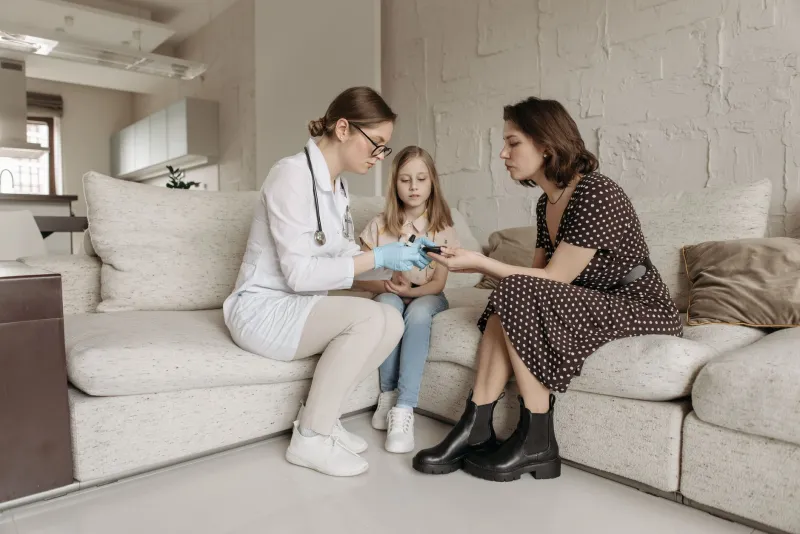
Picture a Tuesday morning in 1958. You walk into Dr. Harmon's office on the ground floor of a brick building two blocks from the center of town. His receptionist — who has known you since you were seven — waves you to the waiting room. When Dr. Harmon comes in, he doesn't ask why you're there in a tone that implies he's never seen you before. He says something like, "Still having trouble sleeping like your father did?" And then he actually listens to your answer.
That doctor has been seeing your family for twenty years. He delivered your youngest sibling. He was there when your mother had her episode in 1952. He knows, without consulting anything, that heart trouble runs on your father's side and that you've always had a sensitive stomach. He knows because he was present for all of it.
That model of care — unhurried, continuous, deeply personal — is now largely a relic.
The Doctor as Family Historian
The mid-20th century family physician occupied a role that was part medical professional, part community institution. In an era before sprawling hospital networks, specialist referral chains, and electronic health records, the family doctor was the single thread connecting every chapter of a patient's medical life.
His notes were handwritten, kept in physical folders, and organized by memory as much as by paper. He made house calls — real ones, with a black bag, in the evening if necessary. He knew which families were prone to certain conditions. He knew who drank too much and who wouldn't admit it. He knew that the Henderson boy's chest complaints were probably anxiety, not asthma, because he'd watched that kid grow up in a tense household.
This wasn't just good bedside manner. It was functional medicine. Pattern recognition over time, across generations, is one of the most powerful diagnostic tools available — and it requires continuity to work. That doctor wasn't just treating you. He was reading a story he'd been following for decades.
What the Shift Looked Like
The dismantling of that model happened gradually, driven by forces that each made individual sense but collectively changed everything.
Medical specialization accelerated after World War II. The GI Bill sent a wave of new doctors through training programs that increasingly emphasized specialized expertise over generalist knowledge. Insurance systems began to favor procedure-based billing, which rewarded doing things to patients more than knowing them over time. Population growth and suburban expansion meant that the tight geographic relationships between doctor and community started to fray.
By the 1980s and 1990s, the managed care era had arrived, and with it came the fifteen-minute appointment. The economics of modern healthcare practice made long, reflective consultations financially unsustainable for most primary care physicians. Doctors began seeing more patients per day, and the depth of each encounter shrank accordingly.
Then came electronic health records — a genuine technological achievement that promised to solve the continuity problem digitally. In theory, your entire medical history would follow you from provider to provider, accessible to any clinician who needed it. In practice, the systems are often incompatible with each other, incomplete, and so cluttered with administrative data that the clinical signal gets buried in the noise.
The Algorithm Doesn't Know Your Mother
Modern healthcare's answer to lost continuity is data. AI-assisted diagnostic tools can now flag patterns across thousands of data points. Genomic testing can identify hereditary risk factors that no family doctor could have spotted through observation alone. Remote monitoring devices track vitals in real time. By almost any objective measure, the information available to a clinician in 2024 is vastly richer than what Dr. Harmon had in 1958.
And yet.
Studies on patient outcomes consistently show that continuity of care — seeing the same primary care physician over time — is associated with lower hospitalization rates, fewer unnecessary tests, better management of chronic conditions, and higher patient satisfaction. A 2018 study published in BMJ Open found that patients with continuous relationships with their doctors had significantly lower mortality rates. The relationship itself, it turns out, is clinically meaningful.
What the algorithm can't replicate is context. It can tell you that your bloodwork shows a certain pattern. It cannot tell you that you've seemed different since your divorce, or that you've been under unusual stress at work, or that your reluctance to discuss your symptoms sounds exactly like the way your father used to deflect. That interpretive layer — the one built from years of watching a person live their life — doesn't exist in a database.
The Appointment That Starts at Zero
If you've navigated American healthcare in the last decade, you know the feeling. You sit down in front of a physician you've never met, who is looking at a screen that may or may not have accurate information from your last provider, and you spend the first ten minutes of a fifteen-minute appointment establishing basic context that should already exist.
You explain your history. You try to remember your medications. You reconstruct, imperfectly, the timeline of something that happened three years ago with a different doctor in a different system. The clinician is doing their best with the information available. But you both know you're starting from somewhere close to zero.
This is the paradox of modern American healthcare: we have more data than ever, and less sense of being known.
What We Actually Lost
The family doctor of the 1950s wasn't a perfect figure. He could be paternalistic, occasionally dismissive, and limited by the medical knowledge of his era. There were real reasons the system evolved. Specialization saves lives. Advanced diagnostics catch things that observation never would.
But what disappeared alongside those limitations was something genuinely valuable: the idea that one person could hold your whole medical story in their head and care about its outcome. Not because they were paid per procedure, but because they'd been there. Because they knew you.
Dr. Harmon's notes are in a box somewhere, or more likely long gone. But the patients he saw over thirty years of practice probably can't fully articulate what they had in him. They just knew that when they walked into his office, they didn't have to explain themselves from scratch.
That's a harder thing to build than a better algorithm. And we haven't figured out how to replace it yet.