Six O'Clock Was Non-Negotiable: The Family Dinner Table America Quietly Abandoned
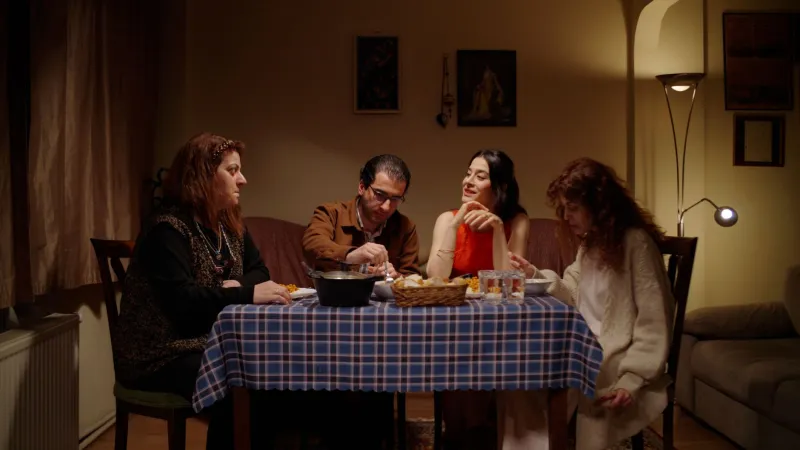
There was a time — not ancient history, well within living memory — when six o'clock meant one thing in an American household. It meant dinner. Not starting to think about dinner. Not checking what everyone felt like. Dinner. On the table. Everyone sitting down.
The family meal at a fixed hour was one of the most consistent features of American domestic life for most of the 20th century. It was so consistent that it barely registered as a choice. It was simply what happened. And then, slowly and then all at once, it stopped.
The Architecture of the Old Dinner Hour
To understand what's been lost, you have to understand what the six o'clock dinner actually was — structurally, not just sentimentally.
It was an anchor. Everything in the household schedule oriented around it. Kids knew when to be home. Fathers arranged their commute around it. The meal wasn't just food delivery; it was the mechanism by which the family synchronized. It was the one moment in the day when everyone's individual trajectory stopped and they occupied the same space, at the same time, without negotiation.
In the 1950s and '60s, surveys of American households consistently found that the majority of families ate dinner together five or more nights per week. The meal was typically home-cooked — not because people were ideologically committed to home cooking, but because it was the economical default. Eating out was occasional, celebratory. The drive-through didn't exist yet. Frozen dinners, when they appeared in 1953, were marketed as a novelty, not a lifestyle.
The dinner table was also, in a pre-screen world, where information moved. You learned what was happening in the neighborhood, what was going on at school, what your father thought about the news. It was the family's internal broadcast system, running nightly whether anyone had particularly interesting content or not.
The Unraveling
The fixed dinner hour didn't collapse from a single cause. It eroded from several directions at once.
The rise of dual-income households through the 1970s and '80s was a major factor. When both parents worked outside the home — a shift that represented genuine economic and social progress for millions of women — the logistics of a six o'clock dinner became more complicated. Someone had to plan it, shop for it, and cook it after a full workday. The labor math changed.
At the same time, children's schedules grew more structured. After-school activities, organized sports, tutoring, and enrichment programs began filling the late afternoon hours that had previously been unscheduled. A kid at soccer practice at five-thirty can't be at the dinner table at six. Multiply that across three children with different schedules and the synchronized meal becomes a genuine coordination challenge.
Then came the technology cascade. Microwave ovens, introduced broadly in the late 1970s, made reheating individual portions trivially easy. The VCR, then cable television, then video games created compelling alternatives to sitting at the table. By the time smartphones arrived, the dinner table had already been losing ground for two decades. The phone just finished the job.
Today, the numbers are striking. Research from Columbia University's National Center on Addiction and Substance Abuse found that the frequency of family dinners has declined significantly since the 1980s. A 2023 survey found that fewer than 30 percent of American families eat dinner together on a daily basis. Many families report sharing a meal fewer than three times per week. For a ritual that was once as reliable as the evening news, that's a dramatic reversal.
What the Table Actually Did
The dinner table's cultural importance has been discussed so often it risks becoming cliché, but the research underneath the sentiment is real.
Studies spanning several decades have consistently linked regular family dinners to better academic performance in children, lower rates of substance abuse in teenagers, improved vocabulary development in younger kids, and stronger family cohesion across the board. The Harvard Family Dinner Project, which has tracked this data for years, describes the shared meal not as a nicety but as a genuine developmental tool.
The mechanism isn't magic. It's repetition and presence. A child who sits at a dinner table five nights a week, year after year, accumulates thousands of hours of unstructured conversation with the adults in their life. They learn how to talk about their day, how to listen, how to disagree, how to sit through a meal they didn't choose. These are not small skills.
The fixed dinner hour also imposed a kind of discipline on the whole household that we've largely replaced with nothing. When dinner is at six, you organize your day around it. When dinner is whenever, you organize your day around whatever else is happening — and the family becomes a collection of individuals sharing a roof rather than a unit sharing a life.
What We Replaced It With
American food culture has never been more interesting than it is right now. The variety of cuisines available, the quality of ingredients accessible in most cities, the knowledge that home cooks bring to their kitchens — all of it has expanded dramatically. By almost any culinary measure, we eat better than our grandparents did.
What we don't do is eat together, at a predictable time, as a default rather than an occasion.
The family dinner has become something you plan — a special event that requires scheduling, like a date night or a holiday gathering. That shift in category, from daily ritual to occasional event, is the real loss. Not the food, not the table manners, not the particular dishes. The reliability. The sense that no matter what happened during the day, at six o'clock, everyone would be in the same room.
The Anchor We Didn't Know We Needed
There's something worth sitting with here. The six o'clock dinner wasn't always pleasant. Plenty of American families had tense tables, difficult conversations, and meals eaten in near-silence. It wasn't a golden era of family harmony just because everyone was present.
But presence itself was the point. The table forced proximity, and proximity — even imperfect, sometimes uncomfortable proximity — is the raw material of family life. You can't really know the people you live with if the only time you occupy the same space is when something important enough to schedule has come up.
We traded a daily anchor for daily flexibility. Most days, the flexibility wins. But once in a while — at the drive-through window at 7 p.m., everyone in their own seat, everyone on their own phone — you can feel what we gave up.