Salt, Sugar, Flour: When Food Labels Told You Everything in Three Words
The Ingredient List You Could Actually Read
Grab a box of Nabisco saltines from 1960, and the ingredient list read like a recipe your grandmother might use: flour, water, salt, shortening, yeast. Five ingredients. All of them pronounceable. All of them recognizable as actual food.
Pick up today's equivalent "Original Premium Saltine Crackers," and you'll find: enriched flour, soybean oil, palm oil, salt, malted barley flour, baking soda, yeast, soy lecithin, and natural flavor. That's nearly double the ingredients, and we're just getting started with the simplest possible cracker.
Move beyond basic crackers to something like flavored snacks, and the ingredient lists become paragraphs of chemical compounds that require a food science degree to decode. When did eating require a chemistry background?
The Slow Chemical Creep
The transformation didn't happen overnight. Through the 1970s and 80s, food manufacturers began adding preservatives to extend shelf life, allowing products to survive longer shipping distances and warehouse storage. Consumers barely noticed because the changes came one additive at a time.
First came BHT and BHA—antioxidants that prevented oils from going rancid. Then emulsifiers like mono- and diglycerides to improve texture. Artificial colors replaced natural ones because they were cheaper and more consistent. Natural flavors gave way to "natural flavors"—a term that can legally include hundreds of chemical compounds as long as they're derived from something that was once natural.
Each addition solved a business problem: longer shelf life, lower costs, more consistent appearance, enhanced flavor. But collectively, they transformed American food from recognizable ingredients into industrial chemistry projects.
When Bread Was Just Bread
Consider something as basic as bread. A 1950s loaf of Wonder Bread contained: enriched wheat flour, water, sugar, yeast, salt, and a few vitamins added back after processing removed them. Seven ingredients, most of which you'd find in any home kitchen.
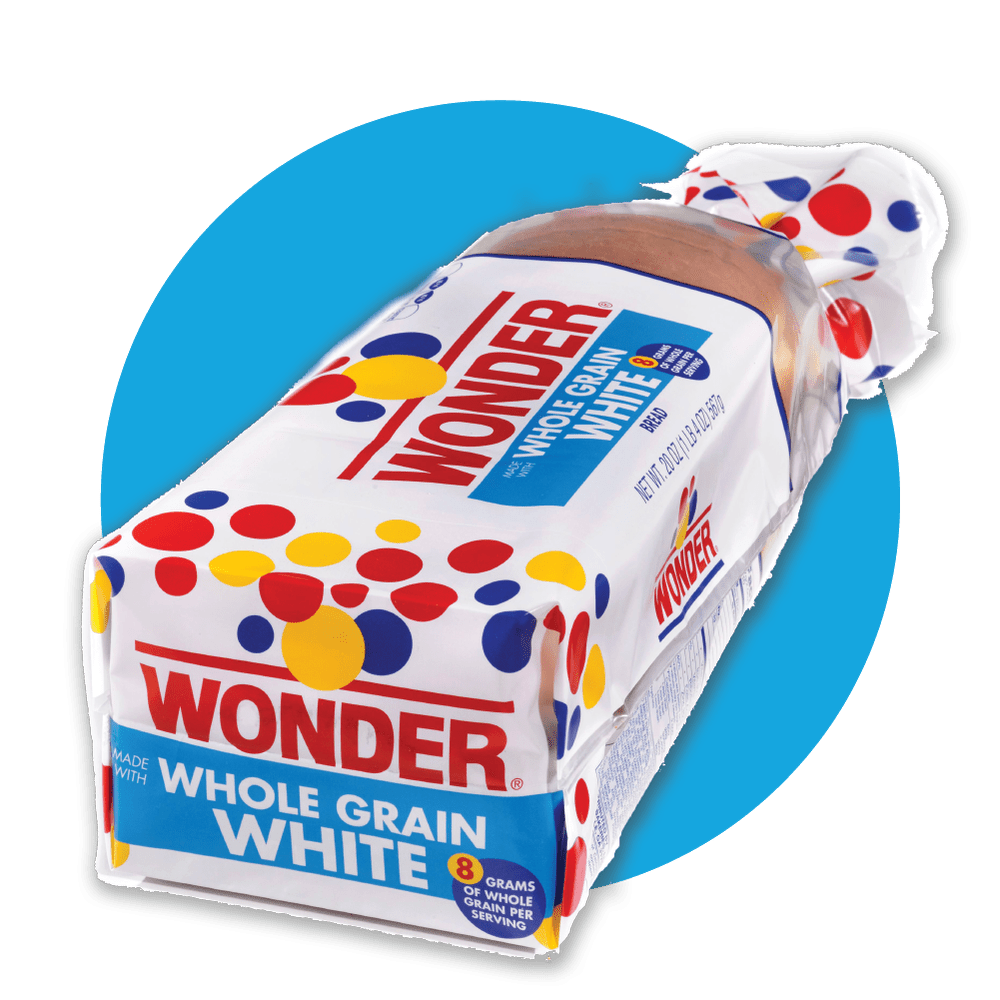 Photo: Wonder Bread, via images.squarespace-cdn.com
Today's Wonder Bread contains: enriched wheat flour, water, sugar, yeast, soybean oil, salt, wheat gluten, dough conditioners (sodium stearoyl lactylate, calcium stearoyl lactylate, monoglycerides, calcium peroxide, calcium iodate, DATEM, ethoxylated mono- and diglycerides, enzymes, ascorbic acid), yeast nutrients (calcium sulfate, ammonium sulfate), cornstarch, natural flavor, beta carotene, vitamin D3, and calcium propionate.
That's 20+ ingredients for something humans have made with four ingredients for thousands of years: flour, water, salt, and yeast.
The Snack Food Laboratory
Snack foods reveal the most dramatic transformation. A 1960s bag of Lay's potato chips contained three ingredients: potatoes, vegetable oil, salt. Today's "Classic" Lay's still keeps it relatively simple, but venture into flavored varieties and you'll encounter ingredient lists that read like pharmaceutical formulations.
Take Doritos, introduced in 1966 as simple tortilla chips. The original ingredients: corn, vegetable oil, salt. Today's Nacho Cheese Doritos contain: corn, vegetable oil, maltodextrin, cheddar cheese, whey, monosodium glutamate, buttermilk, Romano cheese, whey protein concentrate, onion powder, corn flour, natural and artificial flavor, dextrose, tomato powder, lactose, spices, artificial color (yellow 6, yellow 5, red 40), lactic acid, citric acid, sugar, garlic powder, skim milk, red and green bell pepper powder, disodium inosinate, and disodium guanylate.
That's 27 ingredients to make corn taste like cheese.
The Chemistry of Convenience
Why did this happen? The answer lies in America's changing relationship with food. As families moved to suburbs, shopped less frequently, and demanded more convenience, food manufacturers responded with products that could survive longer journeys from factory to table.
Preservatives extended shelf life from days to months. Stabilizers prevented separation during shipping. Artificial flavors ensured consistent taste regardless of seasonal variations in natural ingredients. Color additives made products visually appealing under fluorescent supermarket lighting.
Each chemical served a purpose in the industrial food system. But collectively, they distanced American food from anything resembling its natural origins.
What We Stopped Tasting
The irony is that many of these additives were added to improve flavor, but they often mask the taste of real food. Natural strawberry flavor contains dozens of chemical compounds. Artificial strawberry flavor contains just a few key ones—enough to trigger "strawberry" recognition in your brain, but missing the complexity that makes actual strawberries taste like strawberries.
This created a feedback loop: as people became accustomed to simplified, enhanced flavors, natural foods began tasting bland by comparison. Real strawberries couldn't compete with strawberry-flavored products designed to deliver maximum flavor impact.
The Hidden Health Experiment
Perhaps most concerning is that this transformation turned every American into an unwitting participant in a massive health experiment. Many food additives were approved based on short-term safety studies, but no one studied the long-term effects of consuming dozens of chemical additives daily for decades.
We're now seeing the results: rising rates of food allergies, digestive issues, and chronic diseases that correlate with the industrialization of food. While causation is difficult to prove, the timing is suggestive.
Reading Between the Lines
Today's food labels tell a story our grandparents wouldn't recognize. Where they saw "flour, salt, water," we see "enriched wheat flour (wheat flour, niacin, reduced iron, thiamine mononitrate, riboflavin, folic acid), water, sugar, yeast, soybean oil, salt, wheat gluten, preservatives (calcium propionate, sorbic acid), dough conditioners..."
The parenthetical explanations alone are longer than entire ingredient lists used to be.
This isn't necessarily a story of good versus evil—many additives serve legitimate purposes and are generally recognized as safe. But it is a story of how dramatically American food changed without most people noticing. We traded simplicity for shelf life, recognizable ingredients for industrial efficiency, and the ability to read our food labels for the convenience of processed food.
The question isn't whether we can go back—industrial food production feeds millions efficiently. The question is whether we understand what we traded away when salt, sugar, and flour became a 30-ingredient chemistry experiment.