She Already Had the Coffee Poured: The Neighborhood Restaurant That Knew You by Name
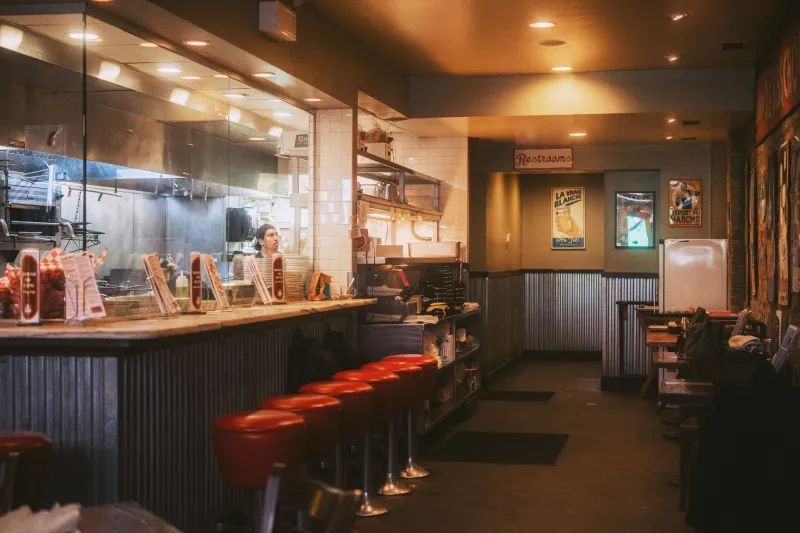
Walk into enough American diners from the 1940s through the 1980s and a version of the same scene plays out. You take your usual stool. Before you've said a word, a mug appears. The person behind the counter — sometimes the owner, sometimes someone who's worked there for fifteen years — glances up and says something like, "The usual?" And you nod, because yes, obviously, the usual.
That transaction took about four seconds and contained something that no amount of restaurant technology has managed to replicate: the feeling of being genuinely known.
The Corner Booth Was a Social Institution
The neighborhood diner, the family-run Italian place, the Greek coffee shop on the corner — these weren't just places to eat. They were anchor points in the social geography of American towns and city blocks. Regulars didn't just have favorite tables. They had relationships.
The owner knew your kids' names. The waitress knew your mother had been sick and asked how she was doing. The cook remembered you'd once mentioned you didn't like cilantro, and it never appeared on your plate again without you having to ask. These weren't extraordinary gestures. They were just what happened when the same people showed up in the same place, week after week, year after year.
For many Americans, especially those who lived alone or worked long hours, the local diner was where social life happened in its most casual and sustaining form. You didn't need to make plans. You didn't need to be "on." You just showed up, and the place absorbed you.
Food, in that context, was almost secondary. What you were really there for was the low-stakes comfort of familiarity.
When Chains Arrived and Consistency Replaced Character
The first wave of national chain restaurants in the 1950s and '60s offered something genuinely appealing: predictability. You knew exactly what a McDonald's hamburger tasted like in Ohio because it tasted the same in California. That consistency was a real innovation, especially for a country that was increasingly mobile and car-dependent.
But consistency and familiarity are not the same thing. Consistency means the product doesn't change. Familiarity means someone knows you. Chains delivered the first and, by design, couldn't offer the second.
As chains expanded through the '70s and '80s, the independent neighborhood restaurant started losing ground — not just in market share, but in cultural centrality. The places where people had been known for decades closed, and what replaced them were efficient, pleasant, anonymous environments where every customer was treated identically, because identical treatment was the point.
The tradeoff seemed reasonable at the time. Cheaper food, faster service, no bad days from the cook. What wasn't immediately obvious was the quiet social cost of eliminating the version of dining where someone remembered who you were.
The Algorithm Knows What You Ordered. It Doesn't Know You.
Today's restaurant industry has developed genuinely sophisticated tools for personalizing the dining experience. Loyalty apps track your order history. Recommendation engines suggest dishes based on past choices. Some platforms can predict, with reasonable accuracy, that you'll probably want the spicy option, that you tend to order dessert on weekends, that you favor a particular cuisine on Friday nights.
This is often described as personalization, and in a narrow technical sense, it is. But there's a meaningful difference between a system that has catalogued your behavior and a person who actually knows you.
The app knows you ordered the chicken sandwich six times. It doesn't know you order it every time you've had a hard week because it's what your dad used to make on Sundays. It doesn't know you're celebrating something today and might want to try something new. It doesn't notice that you seem tired and ask if everything's okay.
Data captures patterns. It doesn't capture context. And the context is usually where the human part lives.
What Recognition Actually Does for People
Being recognized — genuinely, personally recognized — turns out to matter more than we tend to acknowledge. Psychologists who study belonging and social connection consistently find that even brief, low-intensity social interactions with familiar people contribute meaningfully to wellbeing. The barista who knows your name. The deli counter guy who asks about your commute. The diner waitress who remembers you take your toast dry.
None of these are deep relationships. But they form a kind of connective tissue in daily life — small, repeated confirmations that you exist in someone else's awareness. That you're not just a transaction.
The neighborhood restaurant was one of the primary places where that kind of recognition happened for ordinary Americans. Multiple times a week, sometimes daily, you went somewhere and were seen by someone who knew you in the specific, particular way that only comes from showing up consistently over time.
When those places close — and they've been closing at a steady rate for decades — that recognition doesn't automatically transfer somewhere else. It just disappears.
The Table Is Still There, But the Knowing Isn't
None of this means the food was better at the old places, or that independent restaurants are inherently superior to chains, or that there's something wrong with ordering through an app. Convenience matters. Affordability matters. Hygiene standards are genuinely better now than they were in 1962.
But the shift from personal to algorithmic dining has involved a real loss, even if it's a quiet one. The industry optimized around efficiency and scale and, in doing so, designed out the thing that used to make a regular customer feel like more than a revenue unit.
Somewhere in America right now, there's still a diner where someone has your coffee ready before you've taken off your coat. Those places still exist. They're just harder to find — and they're not being replaced when they go.
The algorithm will remember your order. It just won't remember you.