Four Grand to Say 'Leave a Message': The Absurd Economics of Early Home Tech
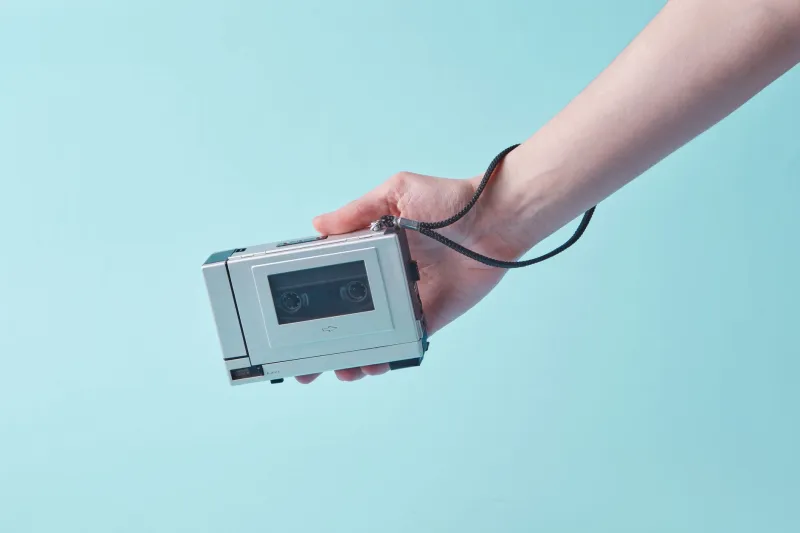
Picture this: it's 1981, you're standing in a electronics store in a suburban mall, and you want the luxury of not missing phone calls while you're out. The machine that grants this wish — a hulking cassette-based contraption with a plastic microphone grille — is priced at roughly $4,000 in today's money. For context, that's about the same as a down payment on a house in much of the country at the time.
You didn't buy it. You admired it, maybe. You told your coworkers about it.
When a Greeting Was a Luxury Good
The first consumer answering machines date back to the 1960s, but for most of their existence they were commercial equipment — the kind of thing a doctor's office or a travel agency owned. The machines used actual cassette tapes. One tape held your outgoing greeting; another recorded incoming messages. If the tape jammed, as tapes did, your messages went with it.
By the late 1970s, prices began slipping toward the merely outrageous. A mid-range unit from a brand like PhoneMate might run $300 to $500 — real money, but suddenly within reach of upper-middle-class households that wanted to project a certain image. Owning one said something. It said you were busy, important, maybe self-employed. The answering machine was the first gadget that let an ordinary family pretend to have a secretary.
The Briefcase Phone and the $3,000 Handshake
Then came the mobile era. In 1984, Motorola's DynaTAC 8000X hit the market at $3,995 — nearly $12,000 adjusted for inflation — for a brick that offered about 30 minutes of talk time. The mobile phone of the era wasn't really mobile; the popular alternative was a bag phone or a briefcase unit with a battery pack that weighed more than a Thanksgiving turkey.
Consider the trajectory:
- 1984: ~$4,000 for a phone with no screen, no camera, and a battery measured in minutes
- 1996: ~$1,000 for a flip phone with an antenna and monochrome display
- 2004: Often free with a two-year contract
- 2024: $1,200 for a device with more computing power than the systems that sent Apollo 11 to the moon — adjusted for capability, arguably the cheapest sophisticated machine ever sold
The pattern repeats across categories. A 40-inch flat-screen TV cost over $10,000 in 1997 dollars. A GPS unit ran $300 in the early 2000s; now the same function rides free in your pocket. Economists call it consumer price deflation, and it's one of the strangest financial stories of the last half century: the things that got exponentially better also got exponentially cheaper, while housing, healthcare, and education marched in the opposite direction.
What the Money Actually Bought
Here's the part worth sitting with. The $4,000 answering machine did exactly one thing: it recorded a voice. Today's free voicemail does the same thing, plus transcription, plus unlimited storage. On paper, we've captured nearly infinite value.
But the old machine had a financial property modern tech lacks: you bought it once, and it was yours. No subscription, no data plan, no monthly toll for the privilege of connectivity. Your grandfather's $500 PhoneMate, adjusted for inflation, was cheaper over ten years than a single year of a family's current phone and internet bills.
We traded the big one-time payment for the small eternal one, and the ledger never quite closes. The average American household now spends several hundred dollars a month on communications and streaming services — a recurring cost that would have sounded like madness to the family that saved up for their answering machine in installments.
The Surrender Nobody Priced
There was another trade hidden in the transaction. When an answering machine was rare and expensive, missing a call was understood — the machine was a firewall, a polite barrier. Now that the ability to reach anyone is free and universal, the expectation inverted. The missed call stopped being an inconvenience for the caller and became an offense by the callee.
The $4,000 machine bought you the right to be unavailable. Today's $0 voicemail sold that right back, at a price we're still tallying.
Progress, as always at Then & This, cuts both ways. We paid four grand for the privilege of missing a call — and we'd struggle to buy back that privilege at any price today.