The Doctor Who Had Time for You: How Medicine Traded Relationships for Efficiency

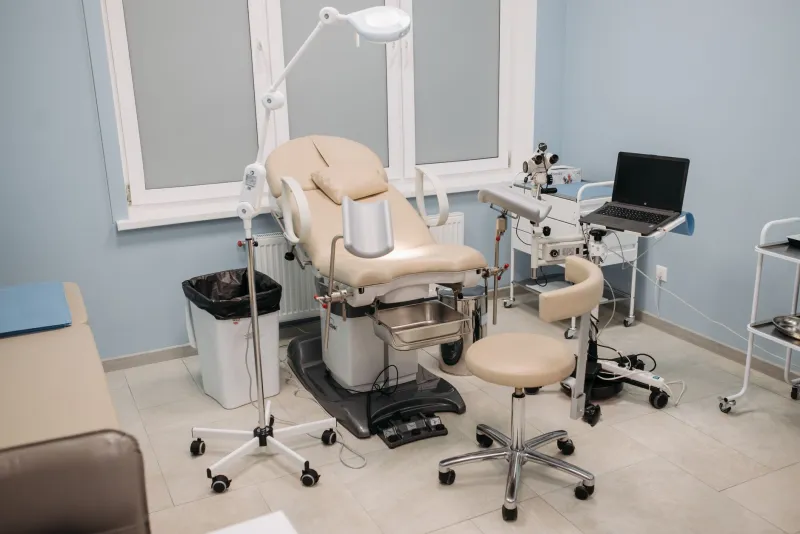
Photo by Photo by Navy Medicine on Unsplash on Unsplash
Somewhere around the mid-1980s, sitting in a doctor's waiting room wasn't a test of patience — it was almost pleasant. The magazines on the side table were current. The receptionist knew your last name without asking. And when the doctor finally called you in, he didn't glance at a clock. He pulled up a chair.
That version of American medicine feels almost mythological now. Today, you book an appointment three weeks out, arrive to find a waiting room that smells like hand sanitizer and quiet anxiety, and get roughly eleven to fifteen minutes with a physician who may be meeting you for the first time. What happened between then and now is one of the more quietly dramatic shifts in American daily life.
The Unhurried Era
Through the 1960s and well into the 1980s, the typical American family doctor operated out of a small practice — often a converted house or a modest office suite. The waiting room was genuinely that: a room for waiting, with a soft chair, a stack of Life or Reader's Digest from the current month, and maybe a fish tank if the doctor had a personality.
Appointments weren't timed with a stopwatch. A patient presenting with chest tightness might spend forty-five minutes discussing diet, stress, and family history before anything clinical even happened. Doctors asked about your kids. They remembered your mother's hip surgery from two years back without consulting a file. The relationship was the treatment, in a sense — continuity of care built over years, sometimes decades, with a single physician who held the entire map of your health in his head.
This wasn't nostalgia-bait. It was simply how medicine was practiced when the system wasn't yet built around throughput.
The Efficiency Revolution
The transformation didn't happen all at once. Managed care crept in during the late 1980s and accelerated sharply through the 1990s. Insurance reimbursement models began rewarding volume over depth. A doctor who saw twenty-five patients a day was suddenly more viable than one who saw twelve carefully. Overhead rose. Malpractice insurance climbed. The business of medicine started reshaping the practice of it.
By the early 2000s, the average primary care appointment in the United States had compressed to somewhere between fifteen and eighteen minutes. Today, some studies put it closer to eleven. Doctors are now expected to document everything in real time — which means a significant portion of your appointment is your physician typing into an electronic health record while half-listening to your symptoms.
The physician isn't the villain here. Most doctors trained because they wanted to do exactly what those old-school practitioners did: know their patients, take their time, make careful decisions. The system they entered didn't leave room for it.
What We Gained
It would be unfair to frame this purely as loss. The modern medical system has delivered extraordinary things. Diagnostic technology that would have seemed like science fiction to a 1970s general practitioner is now standard. Telemedicine means a patient in rural Montana can consult a specialist in Boston without boarding a plane. Electronic records — clunky and time-consuming as they are — mean a doctor in an ER can pull up your full medication history in seconds rather than hoping you remembered to bring a list.
Specialization has deepened. Treatment protocols are more evidence-based. Drugs that didn't exist thirty years ago are now keeping people alive. By almost every measurable clinical outcome, American medicine is more effective than it was in the era of the unhurried waiting room.
What We Lost
But something real went with the old model. Doctors used to catch things not because of superior technology, but because they knew their patients well enough to notice when something was subtly off. A long-term physician relationship is itself a diagnostic tool — one that can't be replicated by a fifteen-minute intake with a provider you've never met.
Patients feel it too. Survey after survey shows Americans reporting that they feel rushed, unheard, and less confident in their healthcare interactions than previous generations did. The average patient gets interrupted by their doctor within eleven seconds of beginning to describe their symptoms. Eleven seconds.
There's also the invisible cost of what doesn't get said. In a forty-five-minute appointment, a patient might eventually mention the thing that was actually worrying them — the thing they were too embarrassed to lead with. In a fifteen-minute slot, that conversation never happens.
The Gap Between Knowing and Feeling Known
The modern medical system knows more about you than any country doctor ever could. Your lab values, imaging history, and genetic risk factors can be pulled up on a screen in an instant. But knowing your data isn't the same as knowing you.
There's a reason concierge medicine — a model where patients pay a monthly fee for longer appointments and direct doctor access — has been growing steadily for the past decade. It's essentially people paying extra to get back what was once just standard. That says something.
The waiting room with the current magazines wasn't just a comfortable inconvenience. It was a signal: we're not in a hurry here. You matter enough to take time with. That signal has gotten harder and harder to send — not because doctors stopped meaning it, but because the system stopped making space for it.
Medicine got faster, smarter, and more capable. It also got shorter. Whether the trade was worth it depends on which side of the exam table you're sitting on.