Your Name Was Your Credit Score: When Corner Stores Fed Families on Nothing But Trust
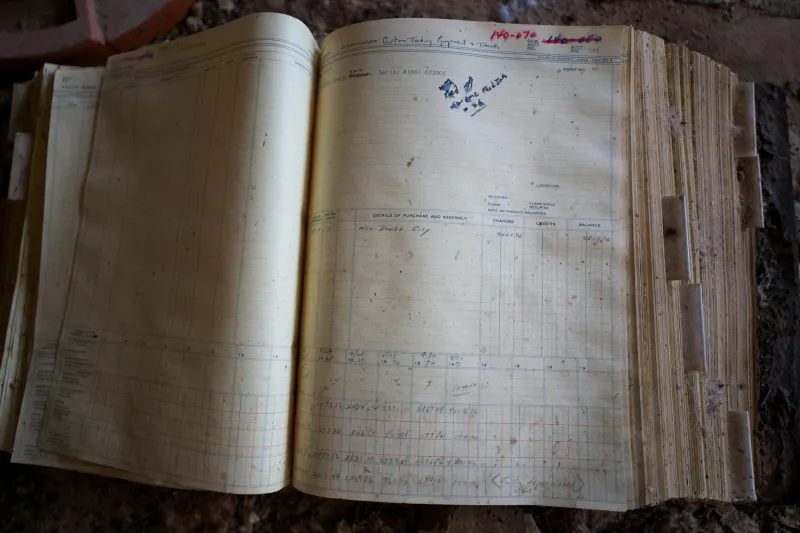
The Book Behind the Counter
In 1955, if you walked into Kowalski's Market on Detroit's east side, Stanley Kowalski could tell you exactly how much the Patterson family owed—$23.47—without looking at his ledger. But he'd flip to their page anyway, adding today's purchases in his careful script: "2 lbs ground beef, 1 doz eggs, loaf Wonder bread." Mrs. Patterson would pay up when her husband got his Friday paycheck from the Ford plant, same as she had every week for six years.
This was the credit system that kept working-class America fed: no applications, no interest rates, no credit scores. Just your name in a notebook and a store owner's judgment about your character.
How the Tab System Actually Worked
The mechanics were beautifully simple. Regular customers could take groceries home and settle their account weekly or monthly, depending on when they got paid. Store owners tracked purchases in composition notebooks or bound ledgers, often keeping separate books for different payment schedules—weekly customers in one book, monthly in another.
The typical arrangement worked like this: families would "run a tab" for basic necessities—milk, bread, eggs, meat for dinner. Luxury items like candy or soda usually required cash on the spot. Most stores set informal limits based on the customer's income and payment history, rarely extending credit beyond what a family could reasonably pay in two weeks.
The Economics of Neighborhood Trust
For store owners, the tab system wasn't charity—it was business strategy. Customers with running accounts shopped more frequently and bought more per visit than cash-only customers. They'd grab items impulsively, knowing they could settle up later. This increased both sales volume and customer loyalty in an era when competition from supermarket chains was intensifying.
The system also smoothed out the economic rhythms of working-class life. In industries with irregular pay schedules—construction, seasonal work, piece-rate manufacturing—families might have flush weeks followed by lean ones. The corner store tab system let them maintain consistent nutrition regardless of their weekly cash flow.
Who Got Credit and Who Didn't
Access to store credit wasn't universal or equitable. Store owners made decisions based on personal knowledge and community standing, which often reflected the prejudices of their time. Established families with steady jobs got generous credit limits. Newcomers to the neighborhood, seasonal workers, and minority families often faced restrictions or outright rejection.
But within those limitations, the system could be surprisingly flexible. A store owner might extend credit to a widow whose husband had been a good customer, or to a young family going through temporary hardship. The decisions were personal, based on individual circumstances rather than algorithmic formulas.
The Weekly Reckoning
Payday meant settlement day. Every Friday evening, families would stop by the store to "square up" their accounts. Store owners would total the week's purchases, customers would pay what they owed, and the slate would be wiped clean for the following week.
These settlements were social occasions as much as financial transactions. Neighbors would gather in the store, discussing the week's events while waiting their turn to pay. Children learned arithmetic by watching their parents calculate grocery bills. The store became a community hub where economic life and social life intersected.
When the System Worked
At its best, the tab system created genuine partnerships between store owners and customers. Successful grocers became informal financial advisors, helping families budget their grocery expenses and sometimes extending extra credit during emergencies. During the 1958 recession, many corner stores carried customers for months, essentially providing interest-free loans that helped families survive unemployment.
The personal relationships made collection relatively easy. Customers who fell behind weren't anonymous account numbers—they were neighbors whose children played with your children. Social pressure and community reputation provided powerful incentives to pay debts.
The Dark Side of Personal Credit
The intimacy that made the system work also created opportunities for exploitation. Some store owners charged inflated prices to customers buying on credit, knowing they had limited alternatives. Others played favorites, extending generous terms to some families while being strict with others.
The system could also trap families in cycles of debt. Without the formal protections of regulated consumer credit, customers had little recourse if disputes arose. A falling-out with the store owner could mean losing access to credit entirely, forcing families to find new shopping arrangements or pay cash they might not have.
How Supermarkets Killed the Tab
The rise of supermarket chains in the 1960s gradually undermined the corner store credit system. Large chains operated on thin margins and high volume, making individual credit accounts impractical. They competed by offering lower prices for cash customers, gradually drawing away the families who had been the backbone of neighborhood store credit.
Credit cards, introduced widely in the 1970s, provided an alternative to store credit that worked at any retailer. Customers could maintain the convenience of deferred payment without being tied to a single store. For many families, the anonymity of plastic was preferable to the personal scrutiny of the neighborhood ledger.
What We Gained and Lost
Modern consumer credit is undeniably more fair and accessible than the old store tab system. Credit scores, for all their flaws, are more objective than store owners' personal judgments. Federal regulations protect consumers from the worst abuses that sometimes occurred under informal credit arrangements.
But we also lost something valuable: credit decisions made by people who knew our circumstances, understood our challenges, and had incentives to help us succeed. The algorithm that approves your credit card application doesn't care if you're going through a divorce or if your overtime hours got cut. It can't extend extra patience during a family emergency or celebrate when you get a promotion.
The Last of the Ledger Books
A few old-style corner stores still operate on informal credit, mostly in small towns or tight-knit urban neighborhoods. But they're curiosities now, holdovers from an earlier economic era. Most Americans under 40 have never experienced the particular mix of convenience, community, and vulnerability that came with having your groceries tracked in someone else's handwriting.
The tab system represented a different relationship between commerce and community, where financial transactions were embedded in personal relationships rather than managed by distant institutions. Whether that was better or worse depends on your perspective—and probably on how well your neighborhood store owner liked your family.