Five Cents to Change the Mood: When America's Soundtrack Lived in a Glass Box
The Democracy of the Diner Soundtrack
Walk into any truck stop diner in 1955, and you'd hear it before you saw it: the mechanical whir of a Wurlitzer jukebox cycling through its selection, followed by the warm crackle of a 45 RPM record dropping into place. For a nickel, any customer could hijack the entire restaurant's atmosphere, transforming a quiet breakfast into a honky-tonk party or turning a rowdy Saturday night into something slow and romantic.
This wasn't background music. This was America's social soundtrack, controlled not by corporate algorithms or personal headphones, but by whoever happened to have loose change and strong opinions about what everyone else should hear.
The Magnificent Machines
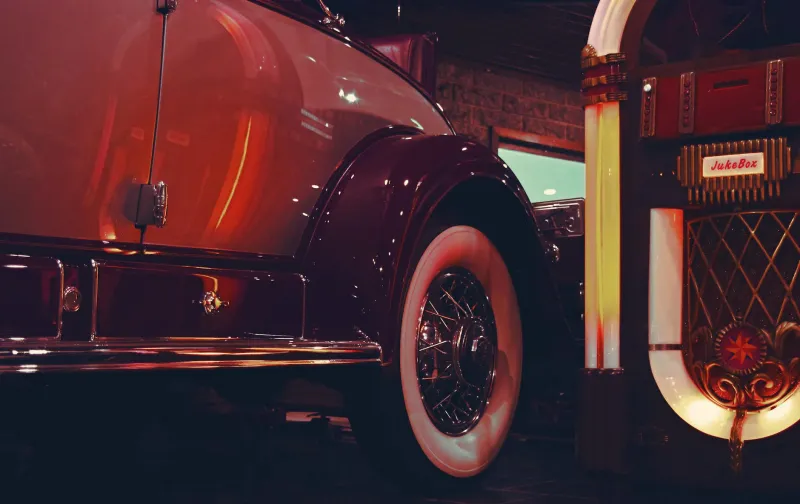
Jukeboxes weren't just music players—they were neighborhood institutions wrapped in chrome and colored glass. These towering mechanical marvels stood six feet tall and weighed as much as a small car, filled with hundreds of records and lit up like Las Vegas slot machines. The best ones featured bubble tubes, rotating colors, and elaborate Art Deco designs that made them the most beautiful objects in any room.
 Photo: Las Vegas, via c8.alamy.com
Every jukebox had its own personality, shaped by its location and the tastes of its patrons. The one at Tony's Diner might lean heavy on Frank Sinatra and Dean Martin, while the jukebox at the local soda fountain could be loaded with Chuck Berry and Buddy Holly. Route operators—the guys who owned and maintained these machines—became unofficial music curators for entire communities, reading the room and adjusting their selections based on what people actually played.
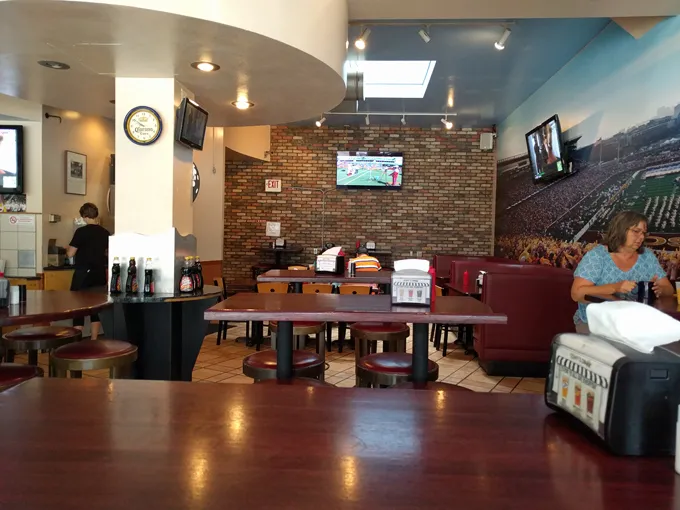 Photo: Tony's Diner, via familydestinationsguide.com
The ritual of choosing music was half the entertainment. You'd study the selection cards through the glass, debating options with friends or strangers. Should you play something everyone knew, or introduce the room to something new? Would your choice kill the conversation or get people dancing? These decisions mattered because everyone would have to live with them for the next three minutes.
The Communal Conductor
Unlike today's personalized playlists that nobody else can hear, jukebox music was inherently social. Your song choice became a public statement about who you were and what you wanted the room to feel like. Play "Hound Dog" at 2 PM in a quiet coffee shop, and you'd either clear the place out or turn it into an impromptu dance party.
Regular customers developed reputations based on their musical selections. There was always someone known for playing the same heartbreak ballad every Friday night, and someone else who could be counted on to liven things up with Chuck Berry when the room got too serious. Bartenders learned to recognize the sound of certain coins hitting the slot and could predict what was coming next.
The jukebox also served as a social mediator. Couples on awkward first dates could bond over music choices. Strangers could start conversations by complimenting someone's selection or requesting something specific. The machine created a shared experience that made everyone in the room temporary collaborators in creating the evening's soundtrack.
The Geography of Sound
Every jukebox reflected its neighborhood's musical DNA. Machines in Italian neighborhoods might feature more Perry Como and Tony Bennett. Southern diners loaded up on Hank Williams and Patsy Cline. Black-owned establishments became showcases for R&B and early rock and roll that white-owned venues often ignored.
This geographic specificity meant that traveling across America involved discovering different musical landscapes. The jukebox at a truck stop in Memphis would sound completely different from one in a Milwaukee tavern or a Seattle coffee shop. Music stayed local longer, and regional hits could dominate an area for months without ever making national charts.
Jukebox operators competed fiercely for the best locations, knowing that a machine in the right diner or bar could earn serious money. The most successful operators developed relationships with local DJs and record store owners, staying ahead of musical trends and keeping their machines stocked with the latest hits alongside proven favorites.
The Slow Fade
The decline of the jukebox happened gradually, then all at once. Background music systems appeared in the 1970s, offering restaurant owners more control and predictability than the musical chaos of customer-selected songs. Portable radios and eventually personal stereos gave people the ability to carry their own soundtracks.
By the 1980s, many establishments viewed jukeboxes as outdated novelties that took up valuable space and created too much noise. The rise of MTV and music videos made the purely audio experience of jukebox music seem almost primitive. Why listen to "Don't Stop Believin'" when you could watch the video?
The final blow came with digital music and smartphones. Why pump quarters into a machine with limited selections when you could access any song ever recorded on your phone? The communal aspect that had once been the jukebox's greatest strength—the fact that everyone had to hear your choice—became its fatal weakness in an age that prioritized personal control and customization.
The Silent Revolution
Today's America moves to a completely different rhythm. Every person carries their own personal jukebox with access to millions of songs, but nobody else gets to hear what they're playing. Restaurants pipe in carefully curated playlists designed to be inoffensive background noise. The idea that a stranger could spend fifty cents and force an entire room to listen to polka music seems almost aggressive by modern standards.
We gained convenience and choice, but we lost something harder to quantify: the democratic chaos of shared musical experiences. No algorithm can replicate the magic of the right song at the right moment, chosen by someone who read the room perfectly and knew exactly what everyone needed to hear.
The few remaining jukeboxes have become nostalgic curiosities, museum pieces in retro diners and vintage bars. They're admired for their craftsmanship and charm, but they no longer serve their original purpose as community soundtrack controllers. The music plays, but the social magic is gone.
America's soundtrack used to be decided by committee, one nickel at a time, in diners and bars across the country. Now it's decided by algorithms and personal preference, played through headphones that keep the music locked inside our individual worlds. We all have better access to music than ever before, but we've lost the art of choosing songs for each other—and maybe something essential about how communities create their own rhythm together.