Check Your Oil, Wash Your Windows, Know Your Name: When America's Gas Stations Actually Served You
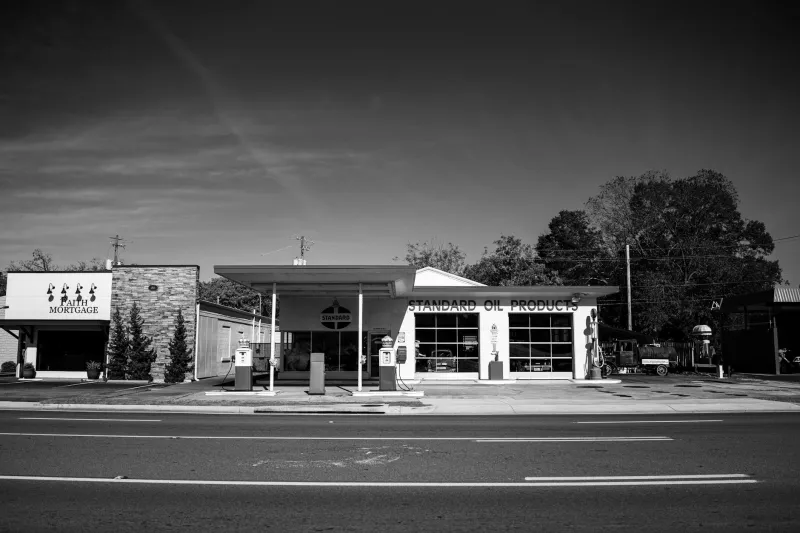
The Ritual That Defined American Road Travel
Pull into any gas station today and you're lucky if the pump accepts your credit card on the first try. But for most of the twentieth century, stopping for gas was an entirely different experience—one that began the moment you rolled over the rubber hose that triggered a cheerful ding-ding bell.
Within seconds, a uniformed attendant would emerge from the service bay, wiping his hands on a clean rag. "Fill 'er up?" he'd ask, already lifting the hood to check your oil level. While the gas pumped—at a leisurely pace that encouraged conversation—he'd squeegee every inch of your windshield, check your tire pressure, and top off your radiator fluid. If you were a regular, he knew whether you preferred Texaco or Shell, how you liked your tires inflated, and probably asked about your kids by name.
This wasn't exceptional customer service—it was just Tuesday at the Sinclair station.
More Than Fuel: The Everything Store Before Convenience Stores
Full-service gas stations were the original one-stop shops, long before 7-Eleven cornered the market on late-night snacks. Most featured a service garage where actual mechanics—not teenagers with computerized diagnostic tools—could rebuild your transmission or patch a radiator leak while you waited. The station owner often lived in an apartment above the garage, making him a genuine member of the community rather than a corporate franchise manager.
These establishments sold everything a traveler might need: road maps (folded by hand and given away free), motor oil, fan belts, spark plugs, and emergency provisions like crackers and soda. Many stations featured vending machines dispensed glass bottles of Coca-Cola for a nickel, and some even offered shower facilities for long-distance truckers.
The attendant wasn't just pumping gas—he was performing a 20-point inspection of your vehicle every time you stopped. He'd notice if your belts were fraying, if your oil was overdue for a change, or if your tires were wearing unevenly. This wasn't upselling; it was preventive maintenance that often saved drivers from dangerous breakdowns on remote highways.
The Economics of Actually Caring
Full-service gasoline cost only pennies more than self-serve, when self-serve existed at all. Most states actually prohibited self-service pumping until the 1970s, considering it both dangerous (gasoline vapors) and economically destructive (eliminating jobs). New Jersey and Oregon still maintain these restrictions today, offering a glimpse of what American road travel used to feel like everywhere.
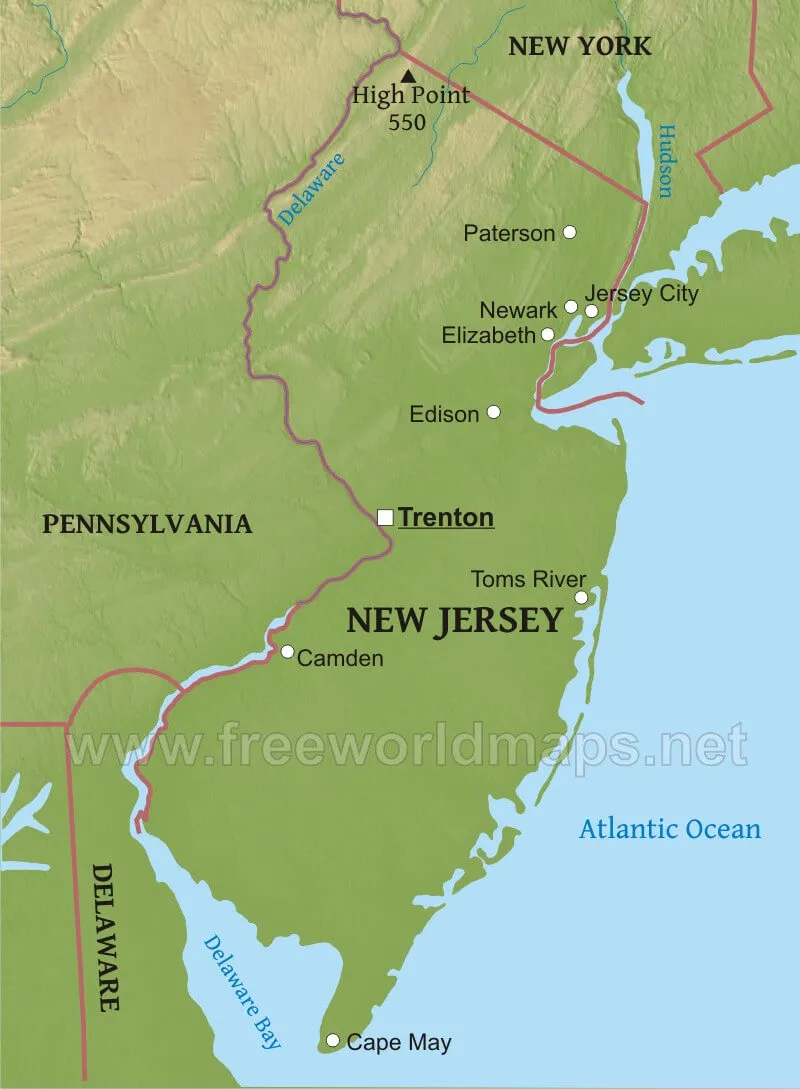 Photo: New Jersey, via www.freeworldmaps.net
Station owners built their businesses on repeat customers and word-of-mouth recommendations. A mechanic's reputation could make or break a station, so there was genuine incentive to provide honest, competent service. The attendant who remembered that Mrs. Johnson's Buick burned a quart of oil every 500 miles wasn't just being friendly—he was protecting his livelihood.
This economic model created a culture of automotive mentorship. Experienced attendants taught younger employees not just how to change oil and check tire pressure, but how to read the subtle signs of mechanical problems. Many future auto mechanics learned their trade at full-service stations, creating a pipeline of skilled workers that kept America's cars running reliably.
When the Whistle Blew at Self-Service
The 1973 oil crisis changed everything. As gasoline prices spiked, station owners looked for ways to cut costs, and labor was the biggest expense after the fuel itself. Self-service pumps, already common in western states, spread rapidly eastward as consumers chose savings over service.
By 1982, self-service accounted for more than half of all gasoline sales. The transformation happened remarkably quickly—within a decade, the uniformed attendant who knew your name was replaced by a computerized pump that barely acknowledged your existence.
The shift eliminated more than jobs; it erased an entire category of human interaction. The gas station attendant was often the only person many drivers talked to during long trips. He was a source of local directions, weather information, and road conditions—a human GPS before GPS existed.
What We Gained and Lost at the Pump
Self-service pumping gave consumers control and convenience. You could fill your tank at 2 AM without waking anyone up, and you didn't have to wait for an attendant who might be busy with another customer. Credit card readers eliminated the need to carry cash, and modern pumps work faster than their mechanical predecessors.
But we traded away something harder to quantify: the assurance that someone knowledgeable was looking after your vehicle's welfare. Today's drivers often go months without anyone checking their oil level or tire pressure. Many don't even know how to perform these basic maintenance tasks themselves.
The full-service gas station represented a different relationship between Americans and their automobiles—one where cars were maintained rather than simply driven until they broke down. It was a culture that valued mechanical knowledge, personal relationships, and the idea that looking after a stranger's safety was just part of doing business.
The Last Full-Service Economy
Full-service gas stations were among the final holdouts of an economic model that prioritized service over efficiency. They belonged to an era when businesses competed on the quality of human attention rather than the speed of automated transactions.
Today, the few remaining full-service stations feel like time capsules, preserving not just a way of buying gasoline but an entire philosophy of customer care. They remind us that convenience and human connection don't have to be mutually exclusive—we just decided, somewhere along the way, that one mattered more than the other.
The next time you're struggling with a credit card reader at a self-serve pump, remember that this isn't how it always was. There was a time when pulling into a gas station meant someone would take care of everything, ask about your trip, and send you safely on your way. It wasn't just better customer service—it was a completely different idea about what it meant to be on the road in America.