The Bell Rang at Three and Kids Vanished Until Dark: When Childhood Meant Disappearing
When the School Day Had Breathing Room
At Lincoln Elementary School in Burlington, Vermont, the lunch bell rang at 11:30 AM sharp. But unlike today's hurried twenty-minute eating periods, children in 1965 had two full hours before afternoon classes resumed. They wolfed down their sandwiches in fifteen minutes, then scattered across the playground, neighborhood, and nearby woods for an unsupervised adventure that wouldn't end until the 1:30 bell called them back to arithmetic and spelling.
 Photo: Burlington, Vermont, via images5.alphacoders.com
 Photo: Lincoln Elementary School, via cmsv2-assets.apptegy.net
This wasn't unusual—it was how American childhood worked for generations. Extended recesses, long lunch breaks, and minimal adult supervision gave children hours of daily practice at the essential human skills of cooperation, creativity, and conflict resolution.
The Playground as Laboratory
Mid-century school playgrounds were sprawling affairs with minimal equipment and maximum possibility. A single swing set, a slide, some monkey bars, and acres of empty space where children invented elaborate games with rules that evolved in real-time. Red Rover, Capture the Flag, and kickball games that could accommodate anywhere from six to sixty players, depending on who showed up.
Children learned to negotiate constantly: who got to be "it," whether that last tag counted, what to do when someone got hurt feelings. Every recess was a crash course in democracy, diplomacy, and group dynamics. Adults intervened only for genuine emergencies—scraped knees and hurt feelings were considered part of the learning process.
The Art of Productive Boredom
Modern parents panic at the phrase "I'm bored," immediately suggesting activities, scheduling playdates, or handing over devices. Children of the 1960s heard a different response: "Go find something to do." This wasn't parental neglect—it was educational philosophy.
Extended periods of unstructured time forced children to develop what psychologists now recognize as crucial executive function skills. They learned to generate their own entertainment, organize group activities, and persist through the uncomfortable feeling of having nothing to do until they created something interesting.
Research now shows that boredom activates the brain's "default mode network," the same neural pathways involved in creativity, problem-solving, and self-reflection. Children who regularly experienced boredom developed stronger imaginative capabilities and better tolerance for unstimulating situations.
When Kids Policed Themselves
Without constant adult supervision, children developed sophisticated systems of self-governance. Playground disputes were settled by peer consensus, not teacher intervention. Children learned to read social cues, negotiate compromises, and enforce group decisions through social pressure rather than adult authority.
This peer-based conflict resolution system taught children skills that no adult-led social-emotional learning curriculum can replicate. They learned that actions have social consequences, that reputation matters, and that getting along with others requires constant small adjustments in behavior.
Children who couldn't learn these lessons naturally faced immediate feedback from their peer group. The kid who always changed the rules mid-game found himself playing alone. The child who couldn't take turns discovered that others stopped including her in activities. These natural consequences were often more effective teachers than any adult lecture about cooperation.
The Shrinking of Childhood Freedom
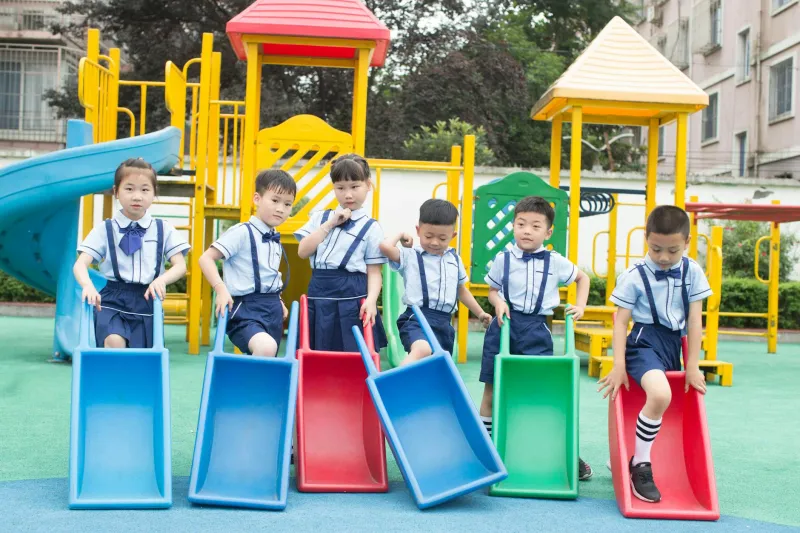
Today's elementary school recesses average fifteen to twenty minutes and often occur on small, heavily supervised playgrounds with equipment designed more for safety than adventure. Many schools have eliminated recess entirely, viewing it as time stolen from academic instruction.
The children who once spent hours outdoors now move through carefully scheduled days: twenty minutes for lunch, fifteen minutes for recess, then straight to after-school programs with their own structured activities. Free play has become a scheduled event that requires adult planning and supervision.
This shift reflects genuine changes in American society—working parents need predictable schedules, liability concerns require constant supervision, and academic pressure has intensified. But something important was lost in the translation from freedom to structure.
The Neuroscience of Unstructured Play
Recent research reveals why those long, boring recesses were actually crucial for brain development. Unstructured play activates the prefrontal cortex, the brain region responsible for executive function, emotional regulation, and creative thinking. Children who engage in regular free play show better attention spans, improved social skills, and greater emotional resilience.
Physical play specifically helps children develop proprioception—awareness of their body in space—and learn to assess and manage risk. The child who spent recess climbing trees and jumping off playground equipment developed better balance, coordination, and judgment about physical challenges.
Perhaps most importantly, unstructured play teaches children that they are capable of entertaining themselves and solving their own problems. This self-efficacy becomes a foundation for confidence and independence that serves them throughout life.
The Anxiety Generation
Child psychologists note a troubling correlation between the decline of free play and rising rates of childhood anxiety and depression. Children who never experience extended periods without adult direction struggle to develop internal motivation and self-direction skills.
The constant presence of helpful adults creates a generation of children who don't trust their own problem-solving abilities. When every dispute is mediated by a teacher and every moment is structured by an adult, children never develop confidence in their own judgment.
What Liability Culture Cost Us
The transformation of childhood reflects America's shifting relationship with risk and liability. The playground equipment that challenged children's physical abilities was replaced with safer alternatives that provide less developmental benefit. The rough-and-tumble play that taught children about physical boundaries was banned as too dangerous.
Lawsuits over playground injuries led to the removal of monkey bars, tall slides, and merry-go-rounds. Insurance concerns eliminated field trips, walking excursions, and outdoor education programs. The result is a generation of children who are physically safer but psychologically less prepared for independence.
The Finnish Difference
Finland, which consistently ranks among the world's top education systems, still provides children with 75 minutes of recess daily, regardless of weather. Finnish educators view unstructured play as essential to learning, not time stolen from it. Their children spend more time outdoors and less time in structured activities than their American counterparts—and consistently outperform them academically.
This suggests that the American approach of maximizing instructional time while minimizing free play may be counterproductive. Children who have adequate time to play and explore may actually learn more effectively during formal instruction periods.
The Path Back to Childhood
Some American schools are beginning to recognize what we lost when we eliminated extended recess periods. Programs like "adventure playgrounds" and "forest schools" deliberately provide children with unstructured time in challenging environments where they must create their own entertainment and solve their own problems.
These programs report improvements in children's creativity, social skills, and emotional regulation. Perhaps most tellingly, children in these programs show greater enthusiasm for school and learning—suggesting that adequate play time enhances rather than detracts from academic achievement.
When Three O'Clock Meant Freedom
For children of the 1960s and 1970s, the dismissal bell didn't signal the end of the school day—it announced the beginning of childhood. Those long hours of unsupervised play weren't empty time to be filled with productive activities. They were the main event, the daily laboratory where children learned to be human beings.
Perhaps it's time to remember that childhood isn't preparation for life—it is life. And life requires practice at being bored, making mistakes, solving problems, and entertaining yourself. Skills that no amount of structured programming can teach, but that every child can learn if we simply give them time and space to disappear.