America's Lost Encyclopedia: When Every Home Held a Five-Pound Guide to Everyone's Business

The Weight of Knowledge
In 1975, the Chicago phone book weighed exactly 4.7 pounds and contained 2.3 million listings. Every September, a new edition landed on doorsteps across the city with a satisfying thud, and within hours, families were flipping through its tissue-thin pages like archaeologists examining the bones of their community.
The phone book wasn't just a directory — it was America's most democratic database. Rich and poor, famous and forgotten, everyone got the same half-inch of space in 8-point type. Your listing revealed nothing about your credit score, your political views, or your weekend habits. Just your name, address, and the seven digits that connected you to the world.
The Social Archaeology of Yellow Pages
Americans developed an entire folklore around phone book navigation. You could trace a neighborhood's economic health by counting the business listings per page. A thriving commercial district might fill twelve pages with everything from "Accordion Repair" to "Zither Lessons." A declining area might struggle to fill two.
Families used phone books to settle dinner table arguments about whether the new Italian place was on Elm Street or Oak. Teenagers called random numbers from different area codes just to hear accents from distant states. Real estate agents studied the residential pages like census data, watching for the telltale signs of demographic shift — more Spanish surnames appearing in traditionally Irish neighborhoods, or the gradual disappearance of longtime family names.
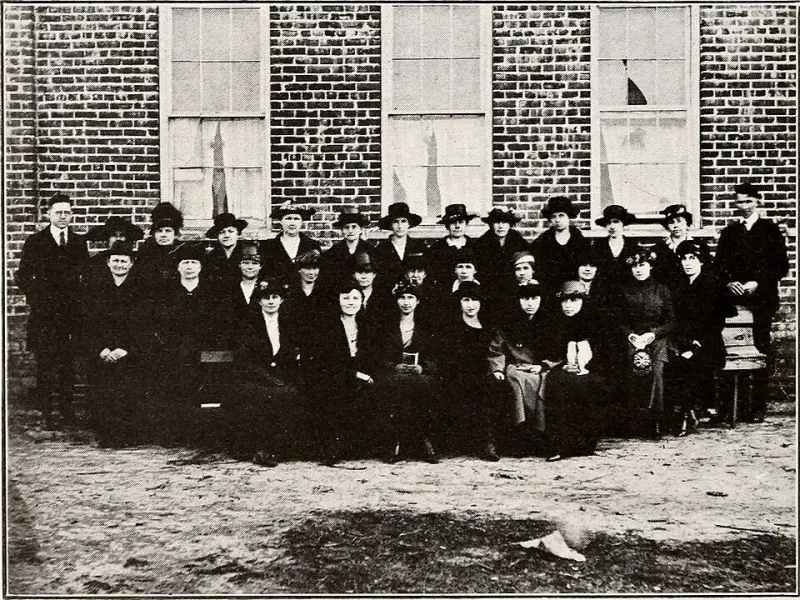
 Photo: Elm Street, via pregledi.bg
The annual phone book delivery created its own seasonal ritual. Mothers immediately checked whether their ex-husband had moved again. Small business owners frantically searched for their Yellow Pages ad, praying the phone company hadn't buried "Tony's Pizza" under "Towing Services." Kids used the outdated editions as booster seats, doorstops, and emergency fire starters for camping trips.
When Privacy Meant Paying Extra
Getting an unlisted number required a monthly fee and a conversation with the phone company about why you needed to disappear from the public record. Most Americans couldn't afford invisibility, so the phone book became an inadvertent census of everyone who couldn't hide.
This created a peculiar social dynamic. Your phone book listing was simultaneously the most public and most private thing about you. Everyone in town could find your address, but nobody knew what you did behind your front door. The directory told neighbors you existed, but revealed nothing about your existence.
Stalkers had to work harder in the phone book era. Finding someone required knowing their exact name spelling, their city, and hoping they hadn't moved recently. Today's digital stalking tools would have seemed like science fiction to someone armed with nothing but a phone book and determination.
The Lost Art of Cold Connection
Before LinkedIn and Facebook, Americans used phone books to resurrect old relationships. Finding a childhood friend meant calling every person with that surname in your hometown, politely explaining to confused strangers that you were looking for "the Jimmy Martinez who lived on Prospect Street in 1962."
 Photo: Prospect Street, via static.semrush.com
These searches created accidental connections. Wrong-number calls led to conversations with elderly widows who hadn't talked to anyone all week. Misdirected business inquiries sometimes resulted in actual business relationships. The phone book forced Americans to interact with random neighbors in ways that today's targeted algorithms never permit.
Small towns developed elaborate phone book etiquette. You never called someone during dinner hours unless it was an emergency. You identified yourself immediately, even to close friends, because caller ID didn't exist. You kept conversations brief because long-distance charges accumulated by the minute.
The Great Disappearance
The last comprehensive phone book for most American cities was published around 2010. By then, the volumes had shrunk to pamphlet size, filled mostly with business listings and government numbers. The residential pages — once the heart of the directory — had withered as Americans migrated to cell phones and unlisted digital lives.
Google replaced the phone book's democratic randomness with algorithmic precision. Instead of stumbling across "Bob's Unusual Clocks" while searching for "Bob's Used Cars," we now find exactly what we're looking for and nothing else. The accidental discoveries that made phone book browsing an adventure disappeared into the efficiency of search engines.
What We Lost in Translation
Today's digital directories know infinitely more about us than any phone book ever did, but they've lost the phone book's essential humanity. Your Google results are tailored to your search history, your location, your demographic profile. The phone book treated everyone the same — one name, one address, one number, arranged in simple alphabetical order.
Modern Americans can find anyone's social media profile, employment history, and political donations with a few keystrokes. But we've lost the phone book's gentle intimacy — the sense that we were all neighbors sharing the same printed space, our lives briefly intersecting in columns of black text on thin paper.
The phone book represented a different kind of privacy, where being publicly listed didn't mean being publicly exposed. It was the last artifact of an America where knowing someone's address didn't automatically grant access to their entire digital existence. In our hyperconnected age, that kind of limited, respectful visibility feels almost revolutionary.