The Man With the Heavy Cases: When American Sales Ran on Train Schedules and Boarding House Dinners
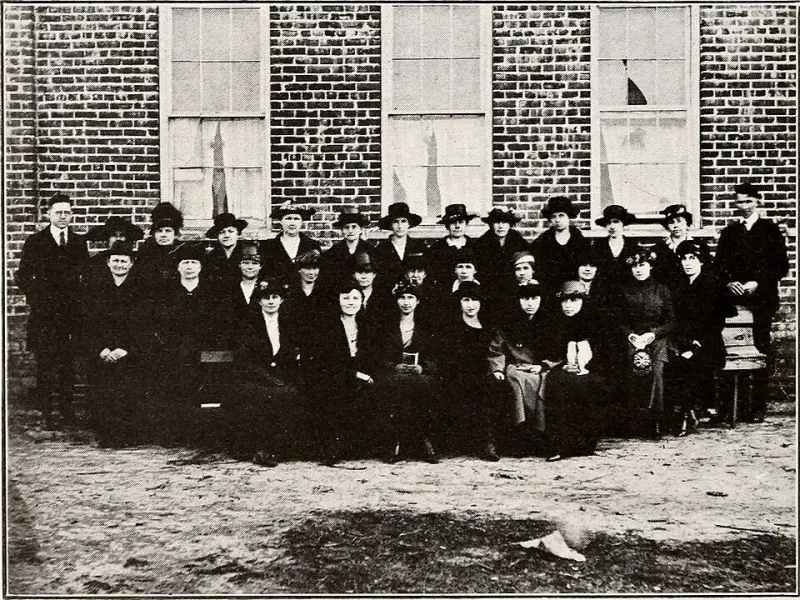
Photo: Internet Archive Book Images, No restrictions, via Wikimedia Commons
Before video calls, before red-eye flights, before expense accounts and CRM software, the American traveling salesman was a genuinely itinerant figure who spent months at a stretch away from home, covering his territory by rail, sleeping in boarding houses, and carrying the physical weight of his entire product line in leather sample cases. The modern sales rep closing deals from a home office laptop is operating in a world that would have been unrecognizable to him.
The Weight of Doing Business
Start with the cases. In the 1920s and 1930s, a traveling salesman for a textile company, a hardware manufacturer, or a dry goods distributor didn't carry a catalog or a tablet. He carried samples — actual physical examples of every product he was selling, packed into cases that could weigh forty or fifty pounds apiece. A full kit might include two or three of these, plus a personal bag, plus any promotional materials his company provided. Arriving at a train station in a midsize city meant negotiating all of this through the platform, into a cab, and up the stairs of whatever boarding house he'd arranged in advance or located upon arrival.
The sample case was the entire point. Buyers in that era didn't purchase from photographs or descriptions. They wanted to feel the fabric, test the hinge, examine the finish. The salesman's physical presence — and the physical presence of his product — was the only proof that what he was selling actually existed and actually worked. There was no other way to make the case.
This meant that the job was, in a very literal sense, a physical one. The salesman's body was his primary business tool, and his territory was the geography he could personally cover in the time allotted.
Life on the Road, Which Was Actually the Rails
In the years before the interstate highway system and affordable air travel, covering a sales territory meant mastering the train schedule. A salesman working the Midwest in 1928 might depart Chicago on a Monday morning and spend the next three weeks working his way through a circuit of smaller cities — Peoria, Decatur, Springfield, Champaign — stopping for one to three days in each location before catching the next train to the next town.
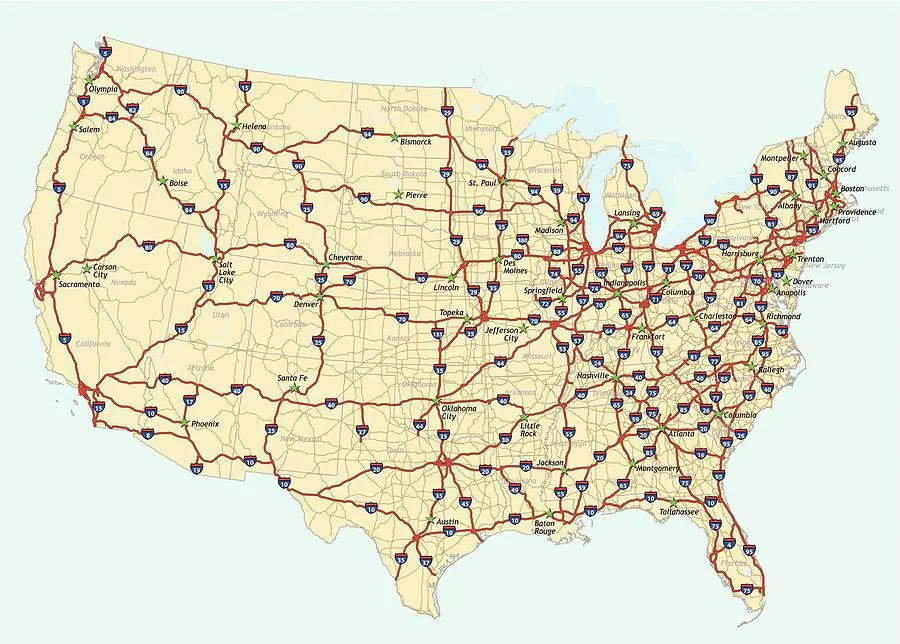 Photo: interstate highway system, via images.fineartamerica.com
His accommodations were boarding houses, not hotels. The commercial hotel existed, but it was expensive, and most traveling men on company accounts stayed in rooming houses where the landlady served breakfast and dinner at set times and the other guests were, more often than not, other traveling salesmen running other circuits through the same territory. These houses were their own social ecosystem. Men compared notes on buyers, traded gossip about which businesses were expanding and which were struggling, and occasionally shared leads on customers who'd expressed interest in a product outside their own line.
The boarding house dinner table was, in its way, a precursor to the modern professional network — an informal exchange of market intelligence conducted over pot roast and mashed potatoes by men who were technically competitors but practically neighbors for a night or two.
The Relationship Was the Product
What made the traveling salesman effective wasn't primarily his knowledge of the product. It was his knowledge of the buyer. Covering the same territory year after year, he knew which hardware store owner preferred to conduct business over lunch, which dry goods buyer made decisions quickly and which needed three visits before he'd commit, which accounts paid promptly and which required a follow-up letter. This intelligence wasn't stored anywhere. It lived entirely in the salesman's memory and his handwritten call notes, maintained in a leather-bound journal that he guarded like a personal bank account.
The relationship was, in the most literal sense, the business. A competitor couldn't simply undercut on price and take the account, because the account belonged — in the informal but binding logic of the era — to the man who showed up every season, knew the buyer's wife's name, and had been doing business with that store since before the buyer's father retired. Switching suppliers meant breaking a personal relationship, which carried genuine social weight in communities where business and community life were thoroughly intertwined.
This is what made the traveling salesman's months away from home something more than a logistical inconvenience. He was, quite literally, building the commercial infrastructure of American retail one relationship at a time, in person, over years.
What the Modern Version Lost
The transformation came in stages. Commercial aviation made it possible to cover a territory in days rather than weeks. The interstate highway system made driving practical for shorter circuits. Expense accounts replaced boarding house arrangements. And then, gradually, the phone call replaced the visit, the email replaced the phone call, and the video call replaced the email — each step reducing the friction of contact and, in doing so, reducing the weight that contact carried.
Today, a sales representative for a national manufacturer might cover a territory of several states without leaving their home office for weeks at a stretch. Zoom calls, digital catalogs, e-signatures, and CRM platforms make it entirely possible to maintain a large book of business through a screen. The sample cases are gone. The train schedules are irrelevant. The boarding house dinners have been replaced by whatever's in the refrigerator.
What's also gone, though, is the depth of relationship that physical presence made possible. There's a reason the phrase getting in front of the customer still exists in sales culture decades after it became literally optional — because everyone in the industry understands, at some level, that a face across a table still does something a face on a screen doesn't quite replicate.
The Body as Business Infrastructure
The traveling salesman of the 1920s and 1930s understood something that the modern business world has spent decades trying to engineer around: that commerce, at its foundation, is a human activity, and humans respond to physical presence in ways they don't fully respond to anything else.
His heavy cases weren't just carrying samples. They were carrying proof — proof that he was real, that his company was real, that the product was real, and that he cared enough to haul forty pounds of hardware across three states by train to show it to you in person.
That proof is harder to replicate from a laptop. Not impossible. Just harder. And a little lighter.