Alone With Your Thoughts at 60 Miles Per Hour: What the American Commute Used to Give You
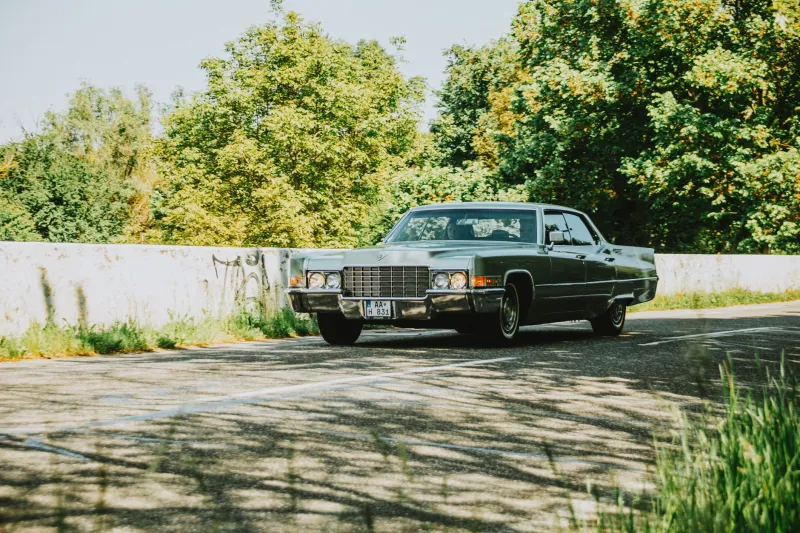
Somewhere between the 1970s and now, the American commute stopped being dead time and became the most aggressively scheduled part of the day. That shift happened so gradually that most people never noticed what they were giving up.
For decades, getting to work by car meant exactly one thing: getting to work by car. You sat in the seat. You watched the road. The radio played whatever the morning DJ decided — a song you didn't choose, news you didn't select, a joke that landed or didn't. And for the thirty, forty, sometimes sixty minutes it took to get from your driveway to the parking lot, your mind was largely left to its own devices.
That wasn't nothing. In fact, for a lot of Americans, it was quietly essential.
The Radio Was a Companion, Not a Content Strategy
The AM dial was the commute's original soundtrack. Drive-time radio in the 1950s, '60s, and '70s wasn't engineered for maximum engagement — it was companionable background. You half-listened to Paul Harvey's The Rest of the Story. You caught the traffic report that was already outdated by the time it aired. You heard a song you'd been humming all week without ever knowing the title.
Nobody was optimizing their morning. Nobody was "learning" during their commute as a deliberate act of self-improvement. The radio was just there, the way weather is just there, and your brain floated alongside it, drifting between the music and whatever it actually wanted to think about.
And here's the thing about a brain left to drift: it does useful work. Psychologists call it the default mode network — the mental state that activates when you're not focused on a specific task. It's where problems quietly solve themselves. Where you rehearse a difficult conversation. Where you remember the thing you forgot. Where ideas that have no obvious origin suddenly arrive, fully formed, before you've even pulled into the lot.
The commute used to be a daily appointment with that state. Nobody called it mindfulness. It was just driving.
When the Car Phone Changed Everything
The first crack appeared in the mid-1980s, when car phones moved from executive novelty to something regular people could actually own. Suddenly the commute had a competing claim on your attention. By the late '90s, with cell phones becoming standard, the idea of thirty uninterrupted minutes started to feel vaguely inefficient.
Then came the aux cord. Then Bluetooth. Then podcasts, which turned the commute into a classroom. Then audiobooks, which turned it into a library. Then work calls that started before you'd even merged onto the highway. Then navigation apps that required active interaction. Then, for the truly committed, voice-dictated emails sent at red lights while technically not looking at a screen.
Each addition made sense individually. Podcasts are genuinely great. Audiobooks are a real pleasure. Staying on top of your inbox feels responsible. But stacked together, they eliminated something that had existed without anyone ever consciously valuing it: the commute as a space where nothing was happening.
What "Doing Nothing" Was Actually Doing
There's a reason people used to say they'd "sleep on it" before making a big decision — and the morning commute served a similar function. It was the gap between home and work where your mind could catch up with itself. You left the house with the week's anxieties rattling around your head, and by the time you arrived at the office, some of them had quietly rearranged into something manageable.
That processing time wasn't accidental. It was structural. Built into the shape of the day whether you wanted it or not.
Today's commuter arrives at work already mid-conversation, mid-episode, mid-email thread. The car is no longer a transition zone — it's just another room in the same connected house. The mental shift that used to happen somewhere on Route 9 now has nowhere to happen at all.
Researchers studying the psychology of commuting have noted that the relationship between commute length and wellbeing isn't simply about time wasted. It's about what that time contains. A long commute filled with passive, low-demand activity — music, light radio, the simple act of watching the road — registers differently in the brain than the same duration spent in active cognitive engagement. The first can restore. The second often depletes.
The Commute That Got Shorter, Then Disappeared
The pandemic reshuffled everything. Remote work eliminated millions of commutes entirely, and the cultural conversation briefly turned to what people were doing with all that recovered time. The answer, largely, was: filling it with other things.
What almost nobody said was that they missed those forty minutes alone in the car. But some people did, quietly. Not the traffic. Not the cost of gas. Just the strange, undervalued fact of being in motion with nowhere to be for a little while — not yet at work, not yet at home, just somewhere in between.
That in-between space turns out to have been doing more work than anyone realized.
The Road Goes Both Ways
None of this is an argument against podcasts or audiobooks or even work calls. The productivity gains are real, and for many people, reclaiming commute time as learning time has been genuinely valuable.
But it's worth recognizing what the trade involved. The old commute wasn't wasted time. It was unstructured time — and those are not the same thing. One is time with nothing in it. The other is time with room in it.
The American commute used to be one of the last places in the day where the schedule couldn't follow you. The road had its own pace, and for a few miles, so did your mind.
We optimized that away. And we did it so smoothly, so incrementally, that most of us never got the chance to decide if it was worth it.