When Americans Actually Had Nothing to Do: The Lost Art of Waiting Without Screens
When Americans Actually Had Nothing to Do: The Lost Art of Waiting Without Screens
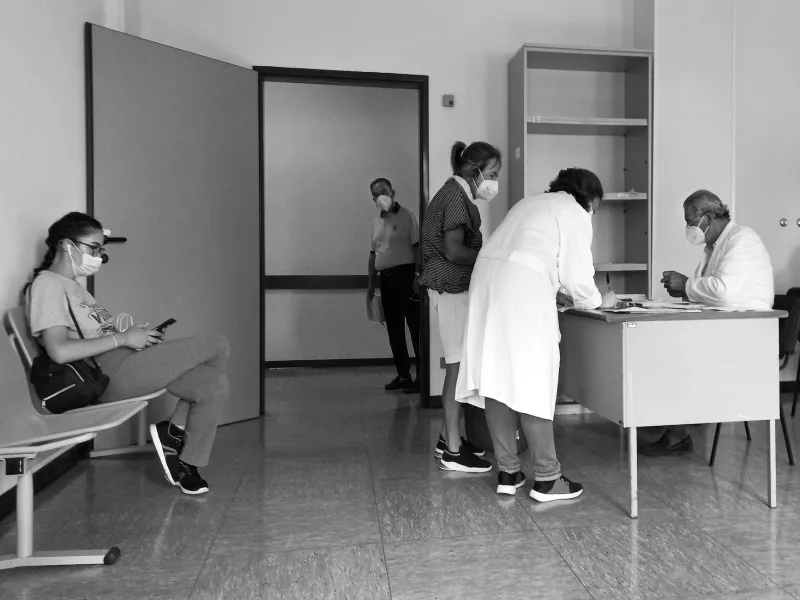
Picture this: You're sitting in a doctor's office in 1985. There's no phone to check, no notifications to clear, no infinite scroll to fall into. Just you, a stack of six-month-old Time magazines, and the rhythmic tick of a wall clock. You might flip through those magazines, study the other patients, or simply let your mind wander. This wasn't a punishment — it was just Tuesday afternoon.
For most of human history, boredom was as common as breathing. Americans routinely found themselves with nothing to do and no way to instantly fix it. Today, that experience has become as foreign as using a rotary phone.
The Rituals of Empty Time
Before pocket computers, Americans developed elaborate coping mechanisms for downtime. Waiting rooms became social laboratories where strangers made small talk about the weather. Bus stops turned into impromptu people-watching theaters. Long car rides meant license plate games, twenty questions, or simply staring out the window as America rolled by.
The average American carried a paperback book everywhere — not because they were literary enthusiasts, but because you never knew when you'd be stuck somewhere with time to kill. These books lived permanently bent and dog-eared in purses and back pockets, their pages yellow with age and handling.
Restaurants didn't need to provide entertainment beyond conversation. Families sat across from each other and actually talked, sometimes awkwardly, sometimes warmly, but always directly. The silence between courses wasn't uncomfortable — it was normal.
The Doodle Economy
Americans in the pre-smartphone era were unconscious artists. Phone conversations happened tethered to kitchen walls, which meant doodling on whatever paper was handy. Restaurant napkins became canvases for absent-minded sketches. School notebook margins filled with elaborate geometric patterns and cartoon faces.
Waiting for appointments meant studying your surroundings with forensic detail. You knew exactly how many ceiling tiles were in your dentist's office, which magazines were always available at the mechanic's shop, and what the receptionist's desk looked like from your particular chair.
This wasn't mindfulness — it was necessity. Your brain had to find something to occupy itself, so it learned to be genuinely present in whatever space you inhabited.
The Radio Relationship
Before on-demand everything, Americans had to work around entertainment schedules. Radio programs aired at specific times, which meant you planned your evening around your favorite shows. Families gathered in living rooms, not to watch screens, but to listen together.
This created a different relationship with time and attention. You couldn't pause, rewind, or skip ahead. If you missed something, it was gone. This scarcity made entertainment feel more precious, more shared, more communal.
Driving meant committing to whatever was on the radio or bringing along carefully curated cassette tapes. Long road trips involved actual conversation, car games, or comfortable silence as landscapes changed outside the windows.
The Waiting Game
Banks, grocery stores, and government offices all required patience. Lines moved slowly, and there was no alternative but to wait your turn. This created a different social dynamic — people actually talked to strangers, shared frustrations about slow service, or simply accepted waiting as part of life's rhythm.
Airports were particularly intense laboratories of forced downtime. Without WiFi, charging stations, or smartphone games, travelers read books, wrote postcards, or struck up conversations with fellow passengers. Flight delays meant genuine inconvenience because there was no digital escape hatch.
What We Lost in the Translation
Today's Americans experience a fundamentally different relationship with time and attention. The average person checks their phone 96 times per day, ensuring that genuine boredom has become nearly extinct. We've solved the problem of empty time so completely that we've forgotten it was ever a problem.
But something important disappeared in this solution. Those moments of forced stillness were when Americans processed their thoughts, made sense of their experiences, and sometimes stumbled onto creative insights. Boredom, it turns out, was doing important work.
Modern research suggests that unstimulated minds are more creative, better at problem-solving, and more capable of deep thought. The default mode network — the brain's screensaver — only activates during unstimulated moments. We've essentially eliminated the conditions that allow this mental process to function.
The Attention Revolution
The transformation happened gradually, then suddenly. First came portable music players, then handheld games, then smartphones that put the entire internet in our pockets. Each innovation promised to make waiting more bearable, and they delivered on that promise completely.
But we didn't just solve boredom — we eliminated it so thoroughly that many Americans now feel genuinely anxious when forced to sit with their own thoughts. The idea of waiting fifteen minutes without entertainment has become almost unthinkable.
The Quiet We've Lost
There's something profound about the America we've left behind — a country where people regularly experienced genuine quiet, both external and internal. Where thoughts had time and space to develop naturally. Where attention could rest on simple things: the pattern of rain on windows, the face of a stranger across a waiting room, the rhythm of wheels on railroad tracks.
We've gained incredible convenience and connection, but we've traded away something harder to measure: the capacity to be alone with ourselves, to let our minds wander, to find peace in the simple passage of time. In solving the problem of boredom, we may have created a different problem entirely — a society that's forgotten how to be still.