The Man Behind the Counter Knew Your Mother's Maiden Name: How America Lost Its Neighborhood Pharmacy
The Corner That Held Everything Together
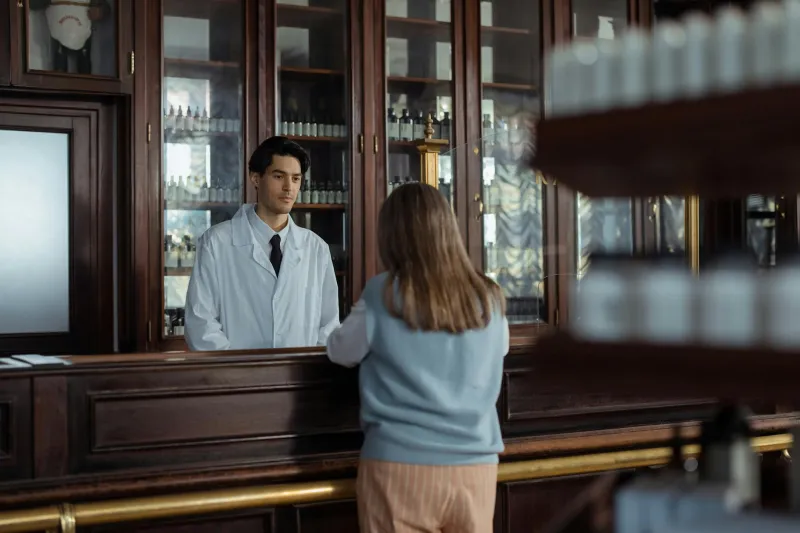
Walk into any pharmacy today and you'll find fluorescent lights, self-checkout kiosks, and a pharmacist hidden behind bulletproof glass who might ask for your birthday twice. But for most of the 20th century, stepping into your neighborhood drugstore meant entering a place where the man behind the counter knew not just your prescription history, but your family's entire medical story—and probably your mother's maiden name too.
These weren't just places to fill prescriptions. They were community anchors where the pharmacist served as an unofficial family doctor, the soda fountain drew teenagers after school, and the front counter became an informal town square where neighbors caught up on local news.
When Your Pharmacist Was Your First Doctor
Before urgent care centers and WebMD, Americans turned to their neighborhood pharmacist for medical guidance. These weren't just pill-counters—they were trusted healthcare advisors who often knew more about your family's health patterns than your actual doctor did.
"My grandfather would ask about your arthritis, remember that your daughter was getting married next month, and somehow know exactly which cough syrup worked best for your particular type of bronchitis," recalls Mary Patterson, whose family ran Patterson's Pharmacy in small-town Ohio for three generations. "He kept mental notes on everyone."
This personal touch wasn't just good customer service—it was essential healthcare. In an era when seeing a doctor required appointments weeks in advance and cost significantly more relative to average wages, the pharmacist often served as the first line of medical consultation. They'd recommend remedies, explain how to take medications properly, and most importantly, they'd notice when something seemed off with a regular customer.
Pharmacists would track which customers hadn't picked up their heart medication in a while, notice when someone's mother stopped coming in for her usual purchases, and even make house calls during emergencies. They were healthcare providers disguised as shopkeepers.
The Soda Fountain Social Club
But these drugstores weren't just about medicine. The soda fountain—a fixture in virtually every neighborhood pharmacy—created a social hub that today's strip-mall pharmacies could never replicate.
High school students would gather after school for cherry Cokes and gossip. Business deals were discussed over coffee and pie. First dates happened at the counter, with nervous teenagers sharing ice cream sundaes while the pharmacist's wife smiled knowingly from behind the register.
"The soda fountain wasn't just an add-on business," explains retail historian Dr. James Morrison. "It was what made the drugstore a destination. People came for the social experience as much as the prescriptions."
These weren't fast-food operations either. The soda jerks—often the pharmacist's children—knew how each customer liked their Coca-Cola mixed and remembered everyone's favorite ice cream flavors. The ritual of ordering, the careful preparation, the conversation across the marble counter—it all moved at a deliberately unhurried pace that seems impossible to imagine today.
When Every Purchase Came with a Story
The front of the store told its own story about American life. Shelves lined with patent medicines, each with elaborate claims and ornate packaging. Cosmetics counters where women could try products with personal consultation. Magazine racks where neighbors browsed the latest issues while catching up on local news.
Everything was curated by someone who knew the community. The pharmacist stocked specific brands because he knew Mrs. Johnson's sensitive skin, carried particular magazines because the teenagers requested them, and kept certain remedies in stock because they worked well for the local climate and common ailments.
"My father knew that the factory workers came in on Friday afternoons for their week's supplies, that the church ladies preferred certain brands of face powder, and that the high school football team needed extra supplies of liniment during the season," remembers former pharmacy owner Robert Chen. "Every decision was personal."
The Economics of Knowing Everyone
This personal service model worked because the economics were completely different. Independent pharmacies had little competition—most neighborhoods had one drugstore that served the entire area. Prescription margins were higher, and customers were intensely loyal because switching meant losing that personal relationship and institutional knowledge.
Pharmacists could afford to spend time with each customer because they weren't competing on price or speed. They were competing on trust, knowledge, and service—qualities that took years to build but created customers for life.
The business model also supported this approach. With soda fountains, cosmetics, magazines, and sundries all contributing to revenue, pharmacists weren't dependent solely on prescriptions. This diversification allowed them to invest time in relationships rather than rushing through transactions.
What We Lost When Efficiency Won
Today's pharmacy experience prioritizes speed, cost, and convenience over relationships. You can get your prescription filled while grocery shopping, delivered to your door, or picked up at a drive-through window. But you've lost the pharmacist who noticed when you looked tired, remembered that your husband was recovering from surgery, and knew without asking which generic brands you preferred.
The modern system is undeniably more efficient and often less expensive. Chain pharmacies can negotiate better prices, offer extended hours, and provide services that small independents never could. But efficiency came at the cost of the personal touch that once made healthcare feel more human.
The Last of a Dying Breed
A few independent pharmacies still operate the old way, mostly in small towns where chain stores haven't yet arrived. Visit one, and you'll immediately understand what we lost. The pharmacist greets customers by name, asks about family members, and takes time to explain medications thoroughly. The pace is unhurried, the service personal, and the experience feels like stepping back in time.
But these holdouts are disappearing rapidly. The economics that once supported neighborhood pharmacies—higher margins, less competition, diversified revenue—no longer exist in most markets.
The corner drugstore represented something uniquely American: the intersection of commerce and community, where business success came from knowing your neighbors and caring about their wellbeing. When we traded that for lower prices and greater convenience, we gained efficiency but lost something harder to quantify—the comfort of being known, the security of being cared for, and the simple pleasure of conducting business with someone who remembered your name.