The Monthly Bill Ritual That Actually Made You Think About Money
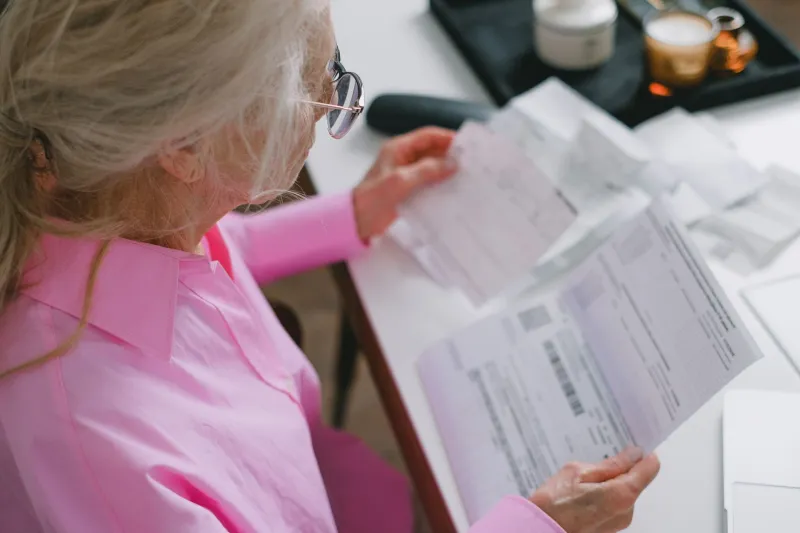
The Envelope on the Kitchen Counter
Somewhere in almost every American home, there was a drawer. Maybe it was in the kitchen, maybe in a little desk tucked into the hallway. Inside that drawer lived a book of stamps, a checkbook, and a small stack of return envelopes — one for the phone company, one for the electric utility, one for the gas bill. Every month, without fail, someone sat down and worked through that stack.
This wasn't considered a burden. It was just what adults did.
Paying bills in mid-century America was a physical, deliberate act. The phone company mailed you a statement. You opened it, looked at the amount, maybe winced a little, wrote a check, tucked it into the pre-addressed envelope they'd thoughtfully included, and dropped it in a mailbox. Then you waited a few days and hoped it arrived before the cutoff. The whole process took maybe twenty minutes — but those twenty minutes mattered more than most people realize.
Coupon Books and Utility Windows
Not every bill arrived as a statement. For many recurring payments — car loans, installment purchases, even some utility accounts — companies issued coupon books. These were small, spiral-bound pads where each page represented one month's payment. You tore out the coupon, wrote your check, and sent them together. When the book ran out, the debt was done. There was something deeply satisfying about watching that book get thinner.
For people who didn't trust the mail, or simply wanted the certainty of a receipt, there was always the option of paying in person. Utility companies kept downtown offices staffed with clerks behind counters specifically for this purpose. You'd walk in, hand over your payment, and walk out with a stamped receipt. Some Americans preferred this every single month. The transaction felt real in a way that a dropped envelope never quite did.
Phone companies, gas utilities, water departments — they all had these offices. They were often busy on the days before due dates, small crowds of people shuffling forward with their envelopes and checkbooks, exchanging nods with neighbors they recognized from the same errand last month.
The Friction Was the Feature
Here's the thing about all that inconvenience: it forced a kind of financial awareness that has quietly disappeared from modern life.
When you physically wrote a check for your phone bill, you saw the number. You wrote it out in longhand — forty-two dollars and seventeen cents — and something in your brain registered it. When the electric bill came in higher than expected because you'd left the air conditioning running all month, you felt that directly. The act of writing the check connected the behavior to the consequence in a way that's hard to replicate when a number just silently leaves your bank account on the fifteenth of every month.
Budgeting worked differently, too. Many families kept a running ledger — a simple notebook where they recorded each payment as it went out. Nothing sophisticated. Just a date, a payee, and an amount. But that notebook was a real-time picture of the household finances. You couldn't accidentally forget that you'd signed up for something because forgetting to mail the check meant your service got cut off.
When Automation Changed Everything
Automatic bill payment existed in a limited form by the 1970s, mainly for large institutions and mortgage holders. But the real shift came gradually through the 1990s and accelerated sharply in the early 2000s, as online banking went mainstream and companies began offering autopay as both a convenience and a way to reduce their own processing costs.
By the time smartphones arrived, the transformation was nearly complete. Today, most Americans have a significant portion of their monthly expenses set to automatic withdrawal. Streaming services, insurance premiums, gym memberships, phone plans, utility bills — they cycle through bank accounts like quiet, invisible machinery. You set it up once and largely forget it exists.
That forgetting is precisely the problem.
Studies consistently show that people underestimate their monthly subscription spending by a wide margin. One frequently cited survey found that Americans guessed they spent around $80 a month on subscriptions; the actual average was closer to $220. When payments require no action, they require no attention. And when they require no attention, they accumulate unchecked.
What the Ritual Was Really About
The monthly bill-paying ritual wasn't just about transferring money. It was a scheduled moment of financial reckoning — a built-in checkpoint that forced every household, regardless of income or sophistication, to look at what they were spending and confirm, consciously, that they were okay with it.
There's a reason financial advisors still recommend manually reviewing every recurring charge at least once a month. They're trying to recreate artificially what the old system built in automatically. The friction wasn't a flaw in the process. The friction was the process.
None of this is an argument for going back to coupon books and utility offices. Autopay is genuinely useful, and the time savings are real. But it's worth acknowledging what disappeared along with the stamps and the checkbooks: a monthly moment of quiet accountability, when Americans sat down at the kitchen table, picked up a pen, and paid attention to where the money actually went.