The Original Delivery App Ran on Hooves: America's 6 A.M. Milk Route, Reconsidered
There's a version of the delivery economy we think we invented. Order from your phone, and a stranger leaves goods at your door — contactless, convenient, done. It feels like a breakthrough of the 2010s, a technological leap that reshaped American life.
Except it isn't a leap. It's a loop.
Before Dawn, Six Days a Week
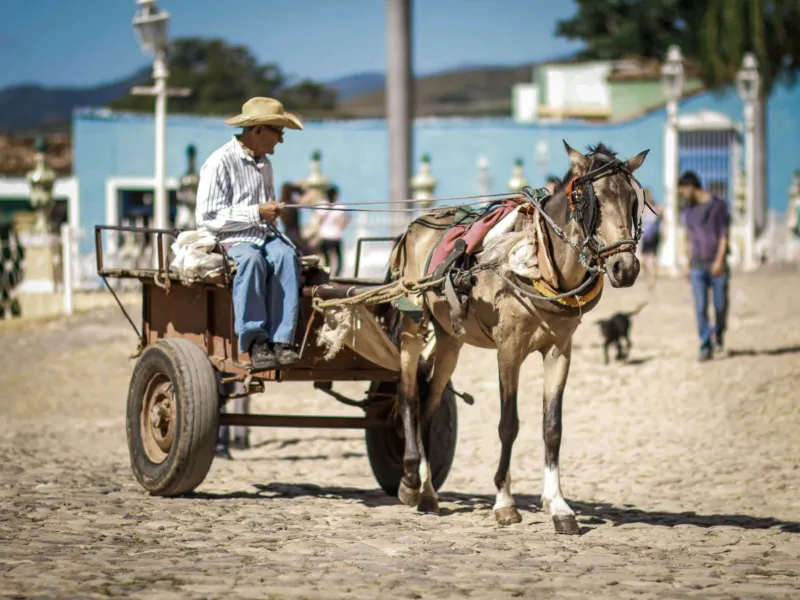
By the early 20th century, home milk delivery was as American as the front porch. In cities and suburbs alike, the milk wagon — horse-drawn well into the 1920s and 1930s in many towns — rolled through quiet streets before sunrise. The milkman's day started around 2 or 3 a.m. at the dairy, and by 6 a.m. bottles were clinking onto doorsteps across the neighborhood.
The system was elegant in a way that's easy to miss. Glass bottles were heavy — about two pounds each — so dairies owned them, not customers. You left the empties on the step, washed and sterilized, and the same bottle might circulate through twenty households before its glass finally retired. There were no single-use containers, because nobody had thought to invent the problem yet.
Delivery wasn't just milk, either. The route expanded with prosperity: cream, butter, eggs, orange juice in season, even cottage cheese in waxed paper. In some cities, the milkman was effectively a mobile micro-grocery, and the route knowledge he carried was its own kind of infrastructure. He knew which porches had dogs, which families wanted pint bottles, which grandmother needed the heavy cream set closer to the door.
Why the Routes Died
The milkman didn't lose to a better idea. He lost to three converging forces:
The refrigerator. Once every kitchen had reliable cold storage in the postwar decades, weekly grocery runs became practical. Milk stopped being a daily purchase and became a stock-up item.
The supermarket. A&P, Safeway, and their rivals offered lower prices because customers did the hauling. The cost of delivery was always baked into the milkman's price — you just couldn't see it until someone showed you the shelf price without it.
The car. Cheap gasoline and a car in every driveway turned the household into its own delivery service, at its own expense of time and fuel.
By the mid-1960s, home delivery had collapsed from the majority of dairy sales to a sliver. By 1980, the milkman was a punchline about a bygone era.
The Round Trip
Now look around. Grocery delivery, meal kits in insulated boxes, subscription dairy services in glass bottles — the original milk route, rebuilt with software. Companies like DoorDash and Instacart reconstructed, one startup at a time, the exact network America dismantled in the 1950s and 60s: a person, a vehicle, a route, goods left at the door.
Even the returnable bottle is staging a comeback, with refill services in Portland, Brooklyn, and Chicago echoing the wash-and-return loop dairies ran for a century. The 'innovations' of reusable packaging and hyperlocal delivery turn out to be restorations — history taking a sixty-year detour.
What's genuinely different is the geography of trust. The milkman was a known face on a fixed route; today's courier is a stranger on a dynamic one, a name and a rating in an app. The logistics came back. The neighborhood knowledge, mostly, didn't.
It's worth asking, next time a box arrives at your door before dawn, whether you're living in the future — or just back where your great-grandparents started.