The Stool Where Everyone Knew Your Name: How America's Lunch Counters Built Communities Before Chains Tore Them Down
The Daily Ritual That Defined Mid-Century America
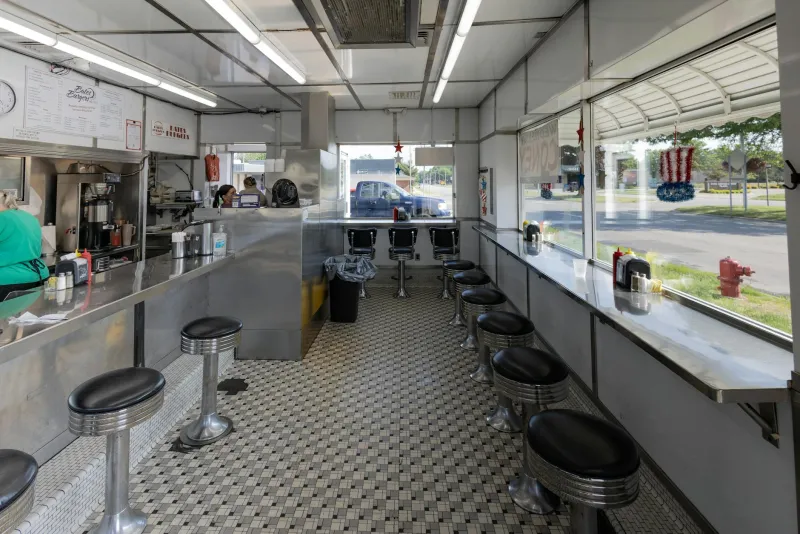
Walk into any Woolworth's or corner drugstore in 1955, and you'd find the beating heart of American social life: a lunch counter lined with red vinyl stools, where office workers rubbed shoulders with shop clerks, students sat next to retirees, and everyone knew the short-order cook's name.
This wasn't just about grabbing a quick bite. The lunch counter was where deals were struck, gossip was exchanged, and strangers became neighbors over a shared plate of meatloaf and mashed potatoes. The cook behind the grill didn't just flip burgers — he was a neighborhood confidant who remembered that Mrs. Johnson always ordered her grilled cheese without butter and that the kid from the hardware store liked extra pickles on his ham sandwich.
When Eating Out Meant Sitting Still
The pace of lunch counter dining reflected a different relationship with time itself. There was no drive-through window, no mobile ordering app, no delivery driver racing against the clock. You walked in, took a seat, and waited for your food to be prepared fresh. The cook cracked eggs to order, sliced tomatoes by hand, and assembled sandwiches one at a time.
This slower rhythm created space for conversation. While waiting for your club sandwich, you might strike up a chat with the person on the next stool about the weather, the baseball game, or the new store opening down the street. The lunch counter became an accidental community center, a place where the social fabric of neighborhoods was woven together one meal at a time.
Regular customers developed relationships not just with the staff, but with each other. The businessman who always ordered the daily special at 12:15 sharp would nod to the teacher who came in every Tuesday for a tuna melt. These weren't deep friendships, but they were the kind of casual, repeated social interactions that made neighborhoods feel like communities.
The Revolution That Changed Everything
Then came the 1960s and 70s, and with them, the fast food revolution that would transform not just American eating habits, but the entire social landscape of mealtime. Ray Kroc's McDonald's system promised something the lunch counter couldn't: speed, consistency, and convenience. The same Big Mac would taste identical whether you ordered it in Ohio or Oregon, and you could get it in under five minutes.
The appeal was undeniable. As American life accelerated and more families relied on two working parents, the efficiency of fast food became not just attractive but necessary. Why spend 45 minutes at a lunch counter when you could grab a burger and fries in five minutes and eat it in your car?
But something profound was lost in the translation. The fast food model prioritized efficiency over interaction, standardization over personality. The teenager behind the McDonald's counter might be perfectly pleasant, but they weren't invested in remembering your usual order or asking about your family. The relationship was transactional, not personal.
The Death of the Daily Connection
As fast food chains multiplied and lunch counters disappeared, America lost more than just a dining option — it lost a daily ritual of human connection. The lunch counter had served as a democratic space where class distinctions temporarily dissolved over shared meals. The bank president and the shop clerk might sit side by side, united by their common need for sustenance and their shared appreciation for Mabel's famous apple pie.
This wasn't just nostalgia talking. Research on social capital — the networks of relationships that bind communities together — shows that casual, repeated interactions between neighbors create the foundation for civic engagement and community resilience. The lunch counter provided exactly this kind of "weak tie" social connection that sociologists now recognize as crucial for healthy communities.
The nutritional implications were significant too. Lunch counter meals, while not always health food, were prepared fresh from recognizable ingredients. The cook used real potatoes for the fries, actual ground beef for the burgers, and fresh lettuce for the salads. Portion sizes reflected human appetite rather than marketing psychology, and meals came with vegetables as a matter of course, not as an expensive add-on.
What We Gained and What We Lost
The fast food revolution wasn't entirely negative. It democratized dining out, making restaurant meals affordable for working-class families. It provided jobs for millions of teenagers and immigrants. It gave busy families a convenient option when time was short and schedules were packed.
But the trade-offs were enormous. We gained speed and lost connection. We gained consistency and lost personality. We gained convenience and lost community. The lunch counter represented a different set of values: patience over speed, relationships over efficiency, quality over quantity.
Today's food landscape offers more choices than ever before — from artisanal coffee shops to food trucks to meal delivery apps. Yet none quite replicate the social function of the old lunch counter, where eating was inherently communal and conversation came standard with every order.
The Lingering Hunger for Connection
Perhaps that's why the few remaining authentic lunch counters — like the ones still operating in some small-town diners or vintage soda fountains — feel so special to modern visitors. They offer a glimpse of what we gave up when we chose convenience over community, reminding us that food has always been about more than just fuel.
In our rush to make eating faster and more efficient, we may have forgotten that sharing a meal is one of humanity's oldest forms of social bonding. The lunch counter understood this instinctively, creating spaces where nourishment fed both body and spirit, one conversation at a time.