The Guardian Angels Who Read Numbers: When Utility Workers Were America's Unofficial Neighborhood Watch
The Monthly Ritual
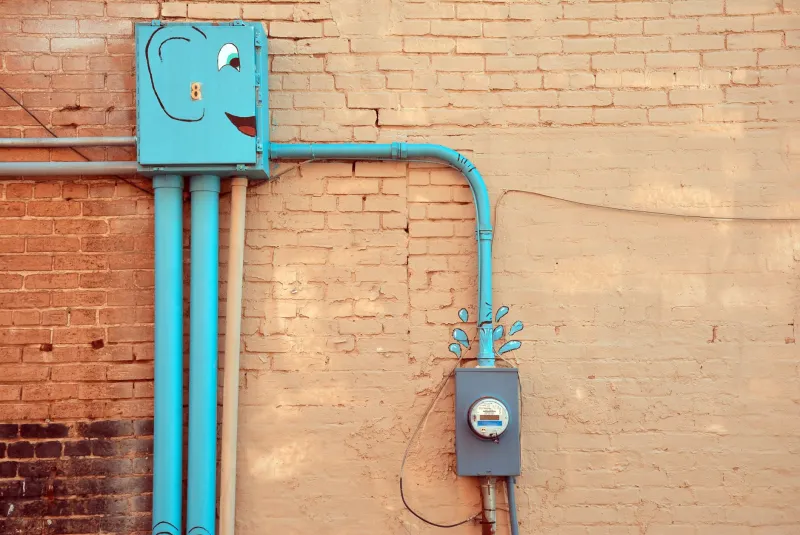
Every third Tuesday, Frank DiMarco walked the same route through the Riverside neighborhood, clipboard in hand, reading gas meters tucked behind rose bushes and hidden under back porches. He knew which dogs barked and which ones bit, which homeowners left coffee on the kitchen table for utility workers, and which houses had gone suspiciously quiet.
For forty-three years, Frank and thousands like him crisscrossed American neighborhoods, transforming a mundane administrative task into an informal community surveillance system. They weren't trained as social workers or emergency responders, but they became both by accident — the only people guaranteed to visit every single house in America on a regular schedule.
Utility workers developed an intimate knowledge of neighborhood rhythms that police officers and postal workers couldn't match. They knew Mrs. Peterson always had her kitchen light on by 7 AM, that the Johnsons' sprinkler system ran every Thursday, and that the elderly man on Elm Street always moved his bedroom curtains when he heard footsteps in his backyard.
The Accidental Safety Net
These monthly visits created an unintended consequence: America's most reliable wellness check system. Utility workers often became the first to notice when something had gone wrong in a household. Newspapers piling up on doorsteps, mail overflowing from boxes, or the eerie silence from houses that usually buzzed with activity.
In 1987, a Philadelphia gas meter reader named Tony Castellano noticed that 78-year-old Eleanor Walsh hadn't moved her living room curtains in three consecutive visits. Her gas usage had dropped to almost nothing, and her backyard gate — usually latched — was hanging open. Castellano knocked, got no response, and called police. They found Walsh unconscious but alive, having fallen in her bathroom four days earlier.
 Photo: Eleanor Walsh, via i.pinimg.com
Stories like this multiplied across America throughout the 20th century. Utility workers discovered house fires before smoke detectors activated, spotted break-ins before homeowners returned from vacation, and identified elderly residents who had died alone but weren't found until the monthly meter reading.
Companies began training their field workers to recognize signs of distress, domestic violence, and medical emergencies. What started as a billing necessity evolved into an accidental social service that connected utility companies to their communities in profound ways.
The Geography of Trust
Meter readers occupied a unique position in American social hierarchy — trusted enough to enter private property, but invisible enough to observe without intrusion. Homeowners grew comfortable with these monthly visitors, often leaving gates unlocked and dogs secured specifically for meter reading day.
This access created informal relationships that lasted decades. Children grew up recognizing their neighborhood meter reader by name. Homeowners left holiday tips and cold drinks for workers during summer heat waves. Some families invited longtime meter readers to retirement parties and funeral services.
The job required a special kind of person — someone comfortable with solitude but skilled at reading social situations. Meter readers learned to distinguish between normal household chaos and genuine distress signals. They developed an almost supernatural ability to sense when something was wrong, even if they couldn't articulate exactly what had changed.
The Technology That Ended an Era
Smart meters began appearing in American neighborhoods in the early 2000s, promising improved efficiency and reduced costs for utility companies. These digital devices transmitted usage data automatically, eliminating the need for human meter readers to visit every home monthly.
Utility companies celebrated the technological advance. No more weather delays, no more worker injuries from aggressive dogs, no more scheduling complications. Bills became more accurate, readings more frequent, and costs dramatically lower.
What they didn't anticipate was the quiet social infrastructure they were dismantling. The meter readers who had served as inadvertent neighborhood guardians disappeared overnight, replaced by silent electronic transmissions that knew nothing about curtains that hadn't moved or mail that hadn't been collected.
The Invisible Loss
The transition to smart meters happened so gradually that most Americans never noticed what they'd lost. There was no dramatic moment when the neighborhood safety net disappeared — just a quiet absence where human presence used to exist.
Elderly residents were often the first to feel the change. The monthly visit that had provided a small but regular human connection vanished, replaced by nothing. The person who might have noticed unusual patterns or signs of distress no longer walked through their backyard.
Social services agencies began reporting longer delays in discovering isolated seniors who had experienced medical emergencies. Without utility workers making regular visits, some elderly Americans went days or weeks without any human contact, their distress unnoticed until concerned relatives or neighbors eventually intervened.
The Economics of Human Contact
Utility companies saved millions of dollars by eliminating meter reading positions, but the social costs proved harder to calculate. How do you measure the value of Frank DiMarco's forty-three years of neighborhood knowledge? What's the dollar value of Tony Castellano's intuition about Eleanor Walsh's curtains?
Some communities tried to replace the lost social infrastructure with formal programs — volunteer wellness checks, neighborhood watch groups, or social services visits. But none could replicate the natural, unobtrusive regularity of monthly meter readings.
The utility workers hadn't been trained as social workers, but their job had made them inadvertent community guardians. Their replacement by technology was more efficient and cost-effective, but it eliminated a human presence that had quietly protected American neighborhoods for generations.
What We Automated Away
Smart meters represent remarkable technological progress — they're more accurate, more efficient, and more environmentally friendly than human meter reading ever was. They've reduced utility costs, improved billing accuracy, and eliminated thousands of mundane jobs that few people wanted to perform.
But they also represent something else: the gradual automation of human connection in American communities. The meter reader was often the only person guaranteed to visit every house in a neighborhood regularly, creating an accidental social service that no one planned and few people fully appreciated until it disappeared.
In our rush toward technological efficiency, we sometimes automate away systems we didn't realize we depended on. The monthly meter reading was never intended as a community safety program, but it functioned as one for decades. Its quiet elimination left a gap in America's social infrastructure that we're only beginning to understand.
Today's smart meters are undoubtedly superior at measuring gas and electricity usage. But they'll never notice when Mrs. Peterson's kitchen light doesn't come on, or when the curtains on Elm Street haven't moved in three days. That kind of noticing required something no algorithm can replicate: a human being who cared enough to pay attention.