Your Salesman Coached Your Son's Baseball Team: When Car Dealers Were Pillars of the Community
The Handshake Economy
Walk into any car dealership today and you'll be greeted by sales associates armed with tablets, financing calculators, and access to your credit report before you've finished saying hello. But step back sixty years, and you'd encounter something entirely different: a showroom owned by someone who probably knew your father, had opinions about your choice in baseball teams, and would still be selling you cars twenty years later.
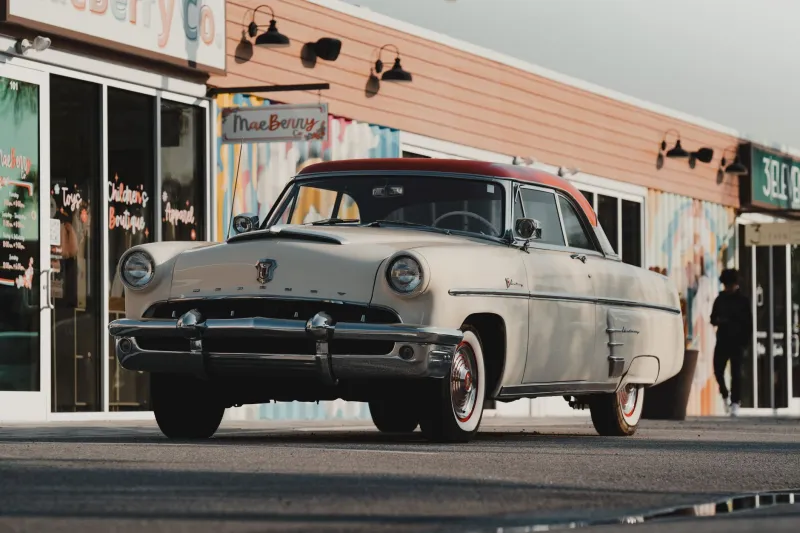
The American car dealer of the 1950s and 1960s wasn't just a salesperson—he was a community fixture. Bob Johnson's Ford dealership didn't just sell cars; Bob Johnson sponsored Little League teams, organized charity drives, and served on the school board. His success depended not on moving inventory to anonymous customers, but on maintaining relationships with families across generations.
 Photo: Bob Johnson's Ford dealership, via i.pinimg.com
This was capitalism with a human face, where your reputation as a neighbor mattered as much as your credit score, and where the person selling you a car had to live with the consequences of that transaction every time he saw you at the grocery store.
Where Everyone Knew Your Trade-In
The ritual of buying a car began long before you set foot in the showroom. Your current vehicle's history was an open book in small-town America. The dealer knew exactly what you'd paid for it three years ago because he'd probably sold it to you. He remembered the fender-bender from last winter and the fact that you'd been religious about oil changes.
This intimate knowledge created a completely different negotiation dynamic. Instead of researching invoice prices online and printing out competitor quotes, buyers relied on personal relationships and community reputation. A dealer who consistently overcharged customers wouldn't just lose sales—he'd lose his standing in the community.
The showroom itself reflected this personal approach. Cars weren't just merchandise; they were conversation starters. The dealer would remember that your wife preferred blue interiors, that you needed something reliable for your daily commute to the plant, or that your teenage daughter was about to start driving. These weren't customer relationship management database entries—they were genuine human connections.
The Art of the Local Deal
Negotiating a car purchase was a face-to-face art form that could stretch over multiple visits, phone calls, and chance encounters around town. There were no online pricing guides to consult, no nationwide inventory searches, no manufacturer incentives calculated by computer algorithms.
Instead, deals were crafted through personal conversation. The dealer might know you'd been eyeing that particular model for months. He'd factor in your loyalty as a customer, your family's financial situation, and sometimes even non-monetary considerations. Maybe he'd throw in the extended warranty because your brother-in-law had recommended three other customers. Perhaps he'd hold a car for an extra week because he knew you were waiting for your bonus check.
This wasn't just good customer service—it was enlightened self-interest. In a town of 15,000 people, every dissatisfied customer represented not just a lost sale, but a damaged reputation that could ripple through church congregations, school board meetings, and coffee shop conversations.
More Than Metal and Chrome
The local dealership served functions that extended far beyond automotive sales. These businesses were economic anchors that provided good-paying jobs for mechanics, salespeople, and office staff. They were civic institutions that sponsored high school football teams, organized charity car washes, and donated vehicles for driver's education programs.
Many dealers also served as informal financial institutions. They offered financing when banks might turn down a customer, structured payment plans around seasonal employment, and sometimes accepted unusual trade-ins or payment arrangements. A farmer might trade a car for livestock. A skilled craftsman might work off part of his payment by repairing the dealership's building.
The service department was equally integrated into community life. Your mechanic knew your car's quirks, your driving habits, and your budget limitations. Repairs were often handled with a phone call rather than a formal estimate. Trust ran in both directions—customers left keys with mechanics they'd known for years, while dealers extended credit to families going through temporary hardships.
The Franchise Revolution
The transformation of car sales began in the 1970s and accelerated through the following decades. Manufacturers consolidated their dealer networks, favoring larger operations that could meet increasingly complex regulatory and training requirements. Small-town dealers either sold out to regional chains or simply closed their doors.
Simultaneously, the entire information landscape shifted. Consumer Reports gave buyers independent research tools. Automotive websites provided invoice pricing and reliability data. Manufacturers began advertising prices directly to consumers, reducing dealers' pricing flexibility.
 Photo: Consumer Reports, via chatgpt.org
The rise of automotive superstores—massive facilities selling multiple brands under one roof—represented the final break with the neighborhood dealer model. These operations prioritized volume over relationships, efficiency over community connection, and standardized processes over personal service.
The Algorithm Knows Your Credit Score
Today's car buying experience is simultaneously more transparent and more impersonal than anything previous generations could have imagined. Online tools let you research every aspect of a vehicle's history, compare prices across hundreds of dealers, and even complete much of the purchase process from home.
Yet something essential has been lost in this evolution toward efficiency. Modern car sales operate on quarterly targets rather than lifetime relationships. Sales associates are often employees rather than owners, with little stake in long-term customer satisfaction. The financing process is handled by distant banks using algorithmic decisions rather than personal knowledge.
Even the physical spaces have changed. Today's dealerships are designed for throughput rather than relationship-building. The coffee is better and the waiting areas more comfortable, but the fundamental transaction has become anonymous. Your salesperson might not be there next month, let alone next decade.
The Price of Progress
The modernization of car sales has brought undeniable benefits. Buyers have access to unprecedented information, legal protections, and competitive pricing. The old system's potential for favoritism and discrimination has largely been eliminated through standardized processes and federal oversight.
But we've also lost something valuable: the idea that major financial transactions could be embedded in ongoing human relationships rather than one-time exchanges between strangers. The neighborhood car dealer represented a form of capitalism that was accountable to community standards, not just market forces.
When we wonder why economic institutions feel increasingly disconnected from the communities they serve, the transformation of car dealerships offers one clear example. The efficiency gains are real, but so is the loss of businesses that were genuinely rooted in the places where their customers lived, worked, and raised families.
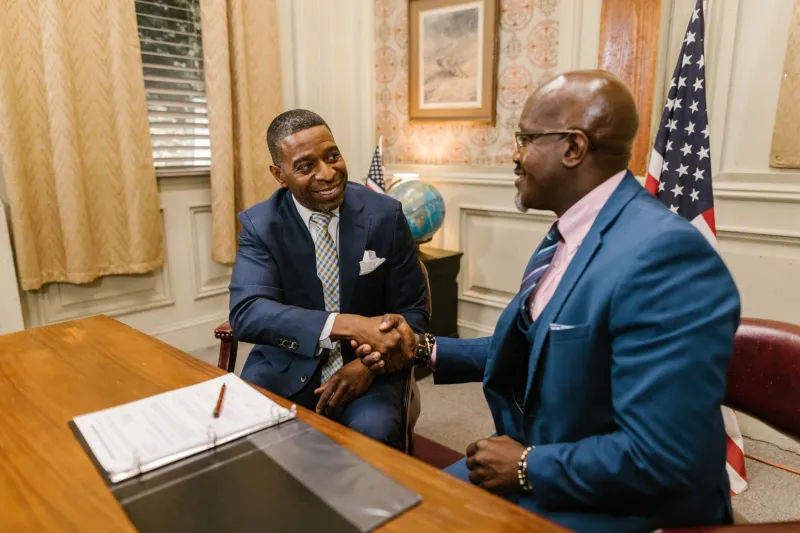
The next time you complete a car purchase online or walk through a massive automotive superstore, remember that buying a car once meant shaking hands with someone who would still be greeting you by name twenty years later—and who had every incentive to make sure that handshake meant something.