When Every Neighborhood Had a Fix-It Guy: The Death of America's Repair Culture
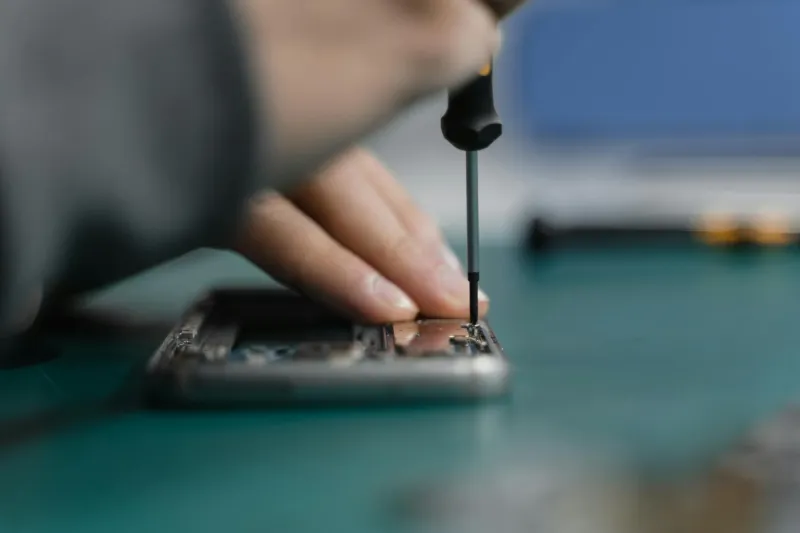
When Every Neighborhood Had a Fix-It Guy: The Death of America's Repair Culture
In 1970, when Sarah Mitchell's Westinghouse toaster stopped working in her Cleveland kitchen, she didn't head to the store for a replacement. She wrapped the chrome appliance in a dish towel, walked three blocks to Kowalski's Appliance Repair, and left it with Stan, who promised it would be "good as new" by Thursday. The repair cost $3.50. A new toaster would have cost $12.
This wasn't unusual. It was just Tuesday in America.
The Infrastructure of Fixing Things
Mid-century American neighborhoods operated on a completely different economic principle: repair first, replace never. Every few blocks, you'd find a cobbler resoling shoes for $2, a tailor taking in waists for 75 cents, or an electronics wizard coaxing life back into radios and televisions with a soldering iron and decades of experience.
These weren't quaint throwbacks to an earlier era—they were thriving businesses serving a practical need. In 1960, the average American household owned a television worth $300 (about $3,000 today). When it broke, which happened regularly, calling the TV repair man wasn't nostalgia. It was economics.
The Yellow Pages told the story. In 1970, Chicago's phone book listed 112 television repair shops, 89 shoe repair services, and 156 tailors and seamstresses. Today, the same area has maybe a dozen of each, serving a population twice the size.
When Broken Meant Fixable
The repair culture went far beyond professional services. American fathers spent Saturday mornings in basements and garages, armed with toolboxes that actually got used. Hardware stores sold individual screws, washers, and gaskets because people bought them. Sears made a fortune selling repair manuals for every appliance they manufactured.
Even clothing followed repair logic. Women routinely darned socks, patched elbows, and turned collars when shirts showed wear. Men's dress shoes came with leather soles specifically designed to be replaced multiple times. A quality pair of Florsheims could last decades with regular resoling—and often did.
The numbers were staggering by today's standards. In 1960, Americans threw away 2.7 pounds of garbage per person daily. By 2018, that figure had nearly doubled to 4.9 pounds, despite massive improvements in packaging efficiency.
The Economics That Changed Everything
The shift wasn't cultural—it was mathematical. Through the 1970s and 1980s, a perfect storm of economic forces made replacement cheaper than repair.
Manufacturing moved overseas, where labor costs plummeted. A toaster that cost $45 to make in Ohio in 1975 could be produced in Taiwan for $12 by 1985. Simultaneously, American labor costs rose. The neighborhood repair shop that charged $8 to fix your toaster in 1975 needed to charge $20 by 1985 just to break even.
Suddenly, the math flipped. Why pay $20 to fix something when you could buy a new one for $15?
Technology accelerated the trend. Electronics became simultaneously more complex and less expensive. Your 1965 Zenith television had vacuum tubes and circuits that a skilled technician could diagnose and replace. Your 1995 Sony had integrated circuits that were cheaper to replace wholesale than to troubleshoot.
The Hidden Costs of Convenience
What seemed like progress had deeper implications. The repair economy employed millions of Americans in small, local businesses that kept money circulating in communities. When neighborhood shoe repair shops closed, those dollars left town entirely, flowing to distant factories and corporate headquarters.
Environmentally, the shift proved catastrophic. Americans now discard 9.7 million tons of furniture annually and 6.9 million tons of appliances. Most of this "waste" would have been repairable by the standards of 1970.
The cultural loss was subtler but equally significant. Repair culture taught patience, problem-solving, and the value of craftsmanship. It connected people to their possessions and their communities. When your neighborhood cobbler knew your shoe size and your walking habits, consumption felt different.
What We Lost When We Stopped Fixing
Modern Americans live in a world where replacement is so routine we barely notice it. The average smartphone lasts 2.5 years. Fast fashion has reduced clothing lifespans to mere months. Appliances that our grandparents expected to last decades now carry warranties measured in single years.
We've gained convenience and lost connection. We've traded the satisfaction of fixing for the ease of buying. Most significantly, we've shifted from an economy that valued durability to one that depends on disposal.
The repair shops didn't just disappear—they took with them an entire way of thinking about ownership, value, and waste. In 1970, Americans understood that things could be fixed because they lived in a world built around that assumption. Today, we assume things can't be fixed because we live in a world built around replacement.
The next time your toaster stops working, remember Sarah Mitchell walking to Kowalski's repair shop. She wasn't being old-fashioned. She was living in an America where broken didn't mean worthless—it just meant fixable.