Saturday Afternoon at the Movies Used to Be an All-Day Adventure
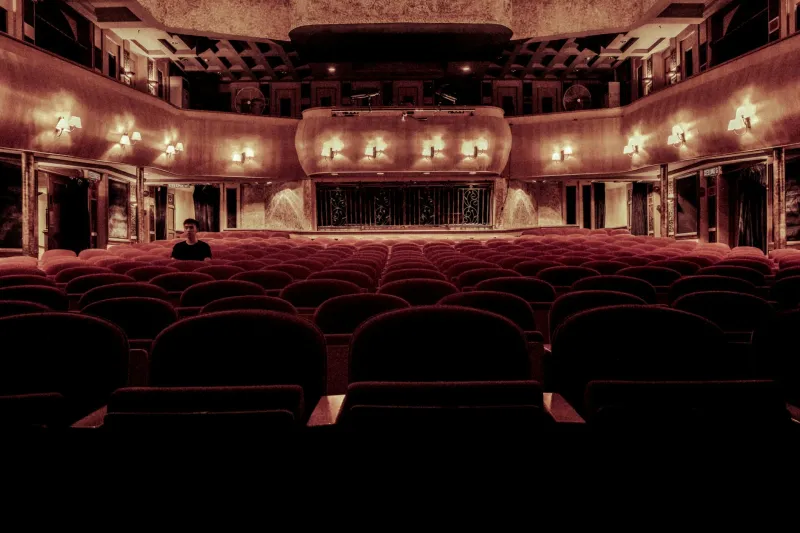
The Palace on Main Street
Every American town had one: a movie palace that dominated the downtown skyline with its towering marquee and ornate facade. The Roxy, The Paramount, The State Theater—these weren't just places to watch movies. They were architectural marvels designed to transport ordinary folks into a world of velvet seats, crystal chandeliers, and gold-leafed ceilings that rivaled European opera houses.
Walk into the Loew's Grand in Atlanta or the Fox Theatre in Detroit during the 1940s, and you'd find yourself in a Moorish palace or Egyptian temple, complete with twinkling star ceilings and uniformed ushers who treated every patron like visiting royalty. These theaters seated 2,000 to 4,000 people in a single auditorium—larger than most concert venues today.
More Than Movies: A Full Day's Entertainment
What made the movie palace experience so different wasn't just the grandeur—it was the programming. You didn't show up for a specific movie time because there wasn't one. The entertainment ran continuously from early afternoon until late evening, and you could walk in whenever you pleased.
A typical Saturday might include a newsreel updating you on world events, a cartoon featuring Mickey Mouse or Bugs Bunny, a short subject about exotic travel destinations, and then the main feature. But wait—there was more. Many theaters offered double features, meaning two full-length movies for the price of one ticket. Between shows, a live organist might rise from beneath the stage on a hydraulic platform, playing everything from classical pieces to popular songs while the audience sang along.
Some theaters went even further. The larger palaces featured live vaudeville acts, amateur talent contests, and even full orchestras. The Chicago Theatre regularly hosted big bands between movie screenings. Going to the movies wasn't a two-hour commitment—families would arrive after lunch and stay until dinnertime.
The Social Fabric of Saturday Afternoons
The movie palace served as the town's unofficial community center. Kids would get dropped off for the Saturday matinee and spend the entire afternoon with friends, watching the same movies multiple times if they wanted. Parents knew their children were safe in these supervised, air-conditioned havens.
For adults, the movie palace was often the most luxurious space they'd ever enter. Factory workers and shop clerks could sit in the same plush seats as the town's elite, all paying the same modest admission price. The democratic nature of the movie palace—everyone from millionaires to minimum-wage workers enjoying the same entertainment in the same grand setting—created a shared cultural experience that crossed class lines.
The ushers, dressed in military-style uniforms with brass buttons and white gloves, knew regular customers by name. They'd help elderly patrons to their seats, quiet disruptive children, and even assist with coat checking during winter months. These weren't minimum-wage teenagers—they were trained professionals who took pride in maintaining the theater's atmosphere of elegance and order.
When Air Conditioning Changed Everything
Before home air conditioning became common in the 1960s, movie theaters offered the only escape from sweltering summer heat. The phrase "air-conditioned for your comfort" appeared on every marquee because it was a genuine selling point. Families would head to the movies not just for entertainment, but for relief from 90-degree temperatures in stuffy apartments and houses.
This practical necessity turned movie palaces into summer refuges where people would spend entire days. Some theaters even advertised their cooling systems more prominently than their movies, with signs boasting "20 degrees cooler inside" or "refrigerated air."
The Suburban Exodus and the End of an Era
By the 1960s, everything began to change. Suburban shopping centers started building smaller theaters with multiple screens, offering more movie choices but none of the grandeur. Television kept families home, and air conditioning made staying there comfortable year-round.
The grand movie palaces couldn't compete with the convenience of suburban multiplexes. Maintaining those massive buildings with their ornate interiors and large staffs became economically impossible when attendance dropped. One by one, America's movie palaces closed, were demolished, or converted into churches, concert venues, or, in some tragic cases, parking lots.
What We Lost When Movies Became Efficient
Today's moviegoing experience prioritizes efficiency over experience. We buy tickets online, choose our seats in advance, and arrive precisely when our chosen movie begins. The theater looks like every other theater—utilitarian seating, basic sound systems, and snack bars that serve the same nachos and popcorn as a gas station.
We've gained convenience and choice—seventeen different movies playing at seventeen different times in seventeen different rooms. But we've lost the sense of occasion that made going to the movies feel special. No live entertainment, no architectural wonder, no community gathering space where different generations and social classes shared the same magical afternoon.
The movie palace represented something uniquely American: the belief that ordinary people deserved extraordinary experiences, that entertainment should be an event, not just a transaction. In our rush toward efficiency and choice, we've forgotten that sometimes the journey—or in this case, the palace—was just as important as the destination.