Every Town Had a Station and Every Station Had a Story: America's Lost Railroad Nation
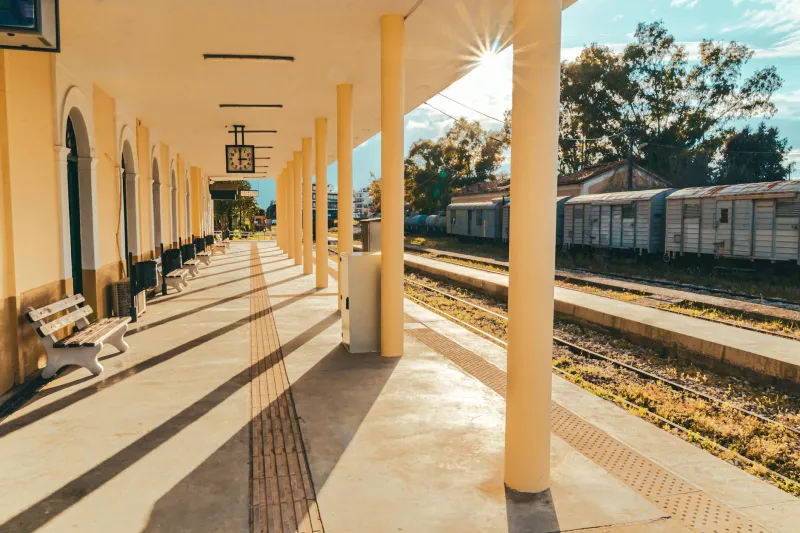
Walk through any small American town today and you might notice a peculiar building near the old downtown — usually brick, often beautiful, sometimes converted into a restaurant or antique shop. These are the remnants of passenger railroad stations, and they tell the story of an America that was connected in ways we can barely imagine today.
In 1950, you could board a train in Dodge City, Kansas, and step off in Los Angeles, Chicago, or New York without changing your seat. Today, Amtrak serves just 500 stations nationwide. In 1950, passenger trains stopped at over 4,000 communities across America.
The Depot as Town Square
Every morning at 7:23, the eastbound Burlington Zephyr pulled into Red Oak, Iowa, population 6,800. The station platform buzzed with activity: businessmen heading to Omaha, farmers shipping cattle, teenagers leaving for college, and families meeting relatives arriving from distant cities.
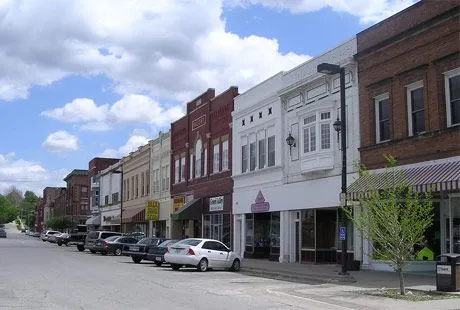 Photo: Red Oak, Iowa, via i.pinimg.com
The depot wasn't just a transportation hub — it was the nerve center of small-town communication. Telegraph lines ran along the railroad tracks, making the station master the first person to receive news from the outside world. During World War II, families gathered at depots across America to receive updates about battles and casualties. Good news and bad news both arrived by rail.
Station restaurants served as informal community centers. In Flagstaff, Arizona, the Harvey House restaurant employed dozens of local women and fed passengers during the train's brief stop. These "Harvey Girls" became local celebrities, and their restaurant was where the town's business was conducted over coffee and pie.
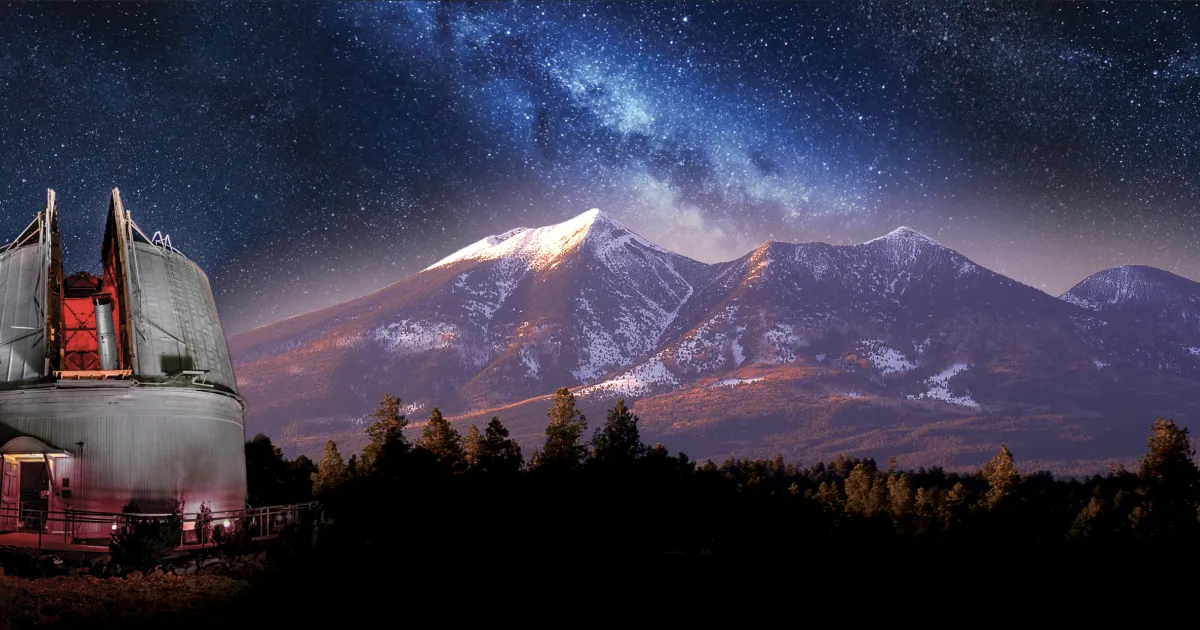 Photo: Flagstaff, Arizona, via i.pinimg.com
A Ticket to Anywhere
Passenger rail in mid-century America wasn't just comprehensive — it was genuinely affordable. A coach ticket from Chicago to Los Angeles in 1955 cost $47, equivalent to about $500 today. But the average American worker earned $3,400 annually, making that cross-country journey less than 1.5% of yearly income.
Today's equivalent Amtrak journey costs around $150 in coach — seemingly cheaper until you realize it represents a much larger percentage of median income and takes twice as long as it did in 1955.
The trains themselves were designed for long-distance comfort. The California Zephyr featured dome cars with glass ceilings for viewing the Rocky Mountains. The 20th Century Limited offered red-carpet service and white-glove porters. Even basic coach travel included reclining seats with more legroom than today's first-class airline seats.
The Network That Connected Everything
The scope of America's passenger rail network in its heyday is difficult to comprehend today. The Pennsylvania Railroad alone operated passenger service to over 700 stations. You could travel by train from Miami to Seattle, from Boston to San Francisco, from New Orleans to Minneapolis — all on regularly scheduled passenger service that ran like clockwork.
Small towns weren't afterthoughts in this system; they were integral stops. The milk train that stopped in rural Wisconsin wasn't just carrying passengers — it was moving mail, newspapers, and freight that kept these communities connected to the broader economy. When the train stopped serving a town, that community often began to wither.
What Replaced the Rails
The decline of passenger rail wasn't inevitable — it was engineered. The Interstate Highway System, launched in 1956, received massive federal subsidies while railroads were expected to maintain their infrastructure with private funds. Airlines received subsidies for airports and air traffic control while paying no fuel taxes.
By the 1960s, passenger trains were losing money on most routes, not because people didn't want to use them, but because the government had tilted the playing field toward cars and planes. The last private passenger train ran in 1971, when the federal government created Amtrak to preserve a skeleton of what had once been a comprehensive network.
The Towns That Time Forgot
Drive through rural America today and you'll find hundreds of communities that passenger trains once served but interstate highways bypassed entirely. These towns — places like Julesburg, Colorado, or Winnemucca, Nevada — were once just as connected to the national transportation network as major cities.
The economic impact was profound. When passenger service ended, these communities lost their connection to the broader job market. Young people who might have commuted to work in larger cities instead moved away permanently. Businesses that relied on visitors arriving by train closed their doors.
The social impact was equally significant. Small-town America became truly isolated in ways it had never been before. The ease of visiting relatives in distant cities, or bringing relatives to visit, disappeared overnight for people who couldn't afford to fly or drive long distances.
The Speed of Life
Perhaps most remarkably, passenger trains in the 1950s were often faster than today's alternatives. The 20th Century Limited covered the 960 miles between New York and Chicago in 16 hours — an average speed of 60 mph including stops. Today's Amtrak Lake Shore Limited takes 19 hours for the same journey.
The Super Chief ran from Chicago to Los Angeles in 39 hours, compared to 43 hours today. These weren't bullet trains or high-speed rail — they were conventional passenger trains operating on infrastructure built in the early 1900s. The difference was priority: passenger trains ran on schedule, and freight trains waited.
What We Lost
The dismantling of America's passenger rail network wasn't just about transportation — it was about fundamentally changing how Americans related to distance and place. Train travel made the journey part of the experience. You met people, saw the landscape change gradually, arrived refreshed rather than exhausted.
Rail travel also democratized long-distance transportation in ways that flying never has. A factory worker could afford a train ticket to California; a farmer's daughter could travel to college in the East. The train didn't discriminate by income level the way air travel does today.
Most importantly, passenger rail kept small-town America connected to the broader national conversation. When every community had a station, every community was part of the network. When the trains stopped running, thousands of American towns were quietly written out of the national story.
The Stations That Remain
Today, those beautiful old railroad stations serve as museums, restaurants, and event venues — monuments to a different kind of America. Some, like Grand Central in New York or Union Station in Los Angeles, still serve their original purpose. But for every station that survived, dozens were demolished or abandoned.
The next time you see one of these old depots, imagine it as it was: the platform crowded with travelers, the telegraph clicking with news from distant cities, the whistle of an approaching train promising connection to anywhere in America. That was the sound of a more connected country, when every town had a station and every station had a story to tell.