When Horse Racing Was America's National Pastime
The Sport of Kings Becomes Everyone's Game
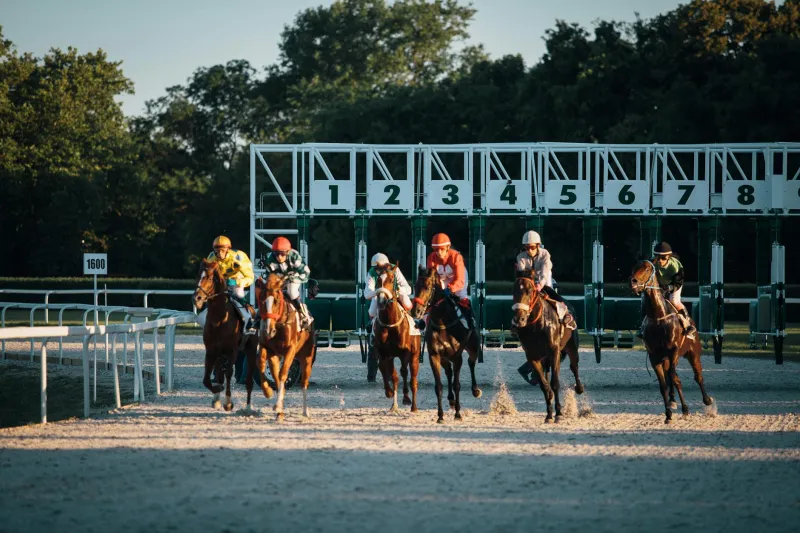
For most of the twentieth century, if you wanted to understand America's sporting soul, you didn't look at baseball stadiums or football fields—you went to the racetrack. Every major city had one, and most smaller towns did too. From Belmont Park on Long Island to Santa Anita in California, these weren't just venues for gambling—they were the country's most democratic entertainment spaces.
On any given Saturday, you'd find construction workers standing shoulder-to-shoulder with bank presidents, all studying the same racing form, all equally convinced they'd spotted the winner in the next race. A two-dollar bet was enough to make you feel like a player, and everyone from the guy who swept floors to the woman who owned the department store had the same chance of picking the long shot that would pay for Christmas.
The Ritual That United America
Racing wasn't just about the horses—it was about the entire experience. Tracks opened their gates hours before the first race, and people came early to claim their spots along the rail, to study the horses during morning workouts, and to participate in a ritual that had remained unchanged for generations.
The day began with the Daily Racing Form, a newspaper as complex as the Wall Street Journal but focused entirely on horses, jockeys, and odds. Men and women would spread these forms across picnic tables in the grandstand, marking up past performances with colored pens, creating systems and theories that they were absolutely certain would beat the house.
Between races, the crowd would migrate from the betting windows to the paddock, where they could see the horses being saddled and the jockeys receiving last-minute instructions. This wasn't like today's sports, where athletes are separated from fans by security barriers and media restrictions. At the track, you could walk right up to a million-dollar thoroughbred, study its legs and disposition, and make your own judgment about its chances.
When Every State Had Its Tracks
By 1950, nearly every state had at least one major racetrack, and most had several. California had Hollywood Park, Santa Anita, and Bay Meadows. New York boasted Belmont, Aqueduct, and Saratoga. Even smaller states like West Virginia and Ohio had thriving racing circuits that drew crowds from hundreds of miles away.
These tracks weren't just weekend destinations—they were economic engines for their communities. A major track employed hundreds of people: grooms, trainers, jockeys, veterinarians, security guards, ticket sellers, and food service workers. The horse industry supported entire towns, from the breeding farms in Kentucky to the feed suppliers in Iowa.
The social calendar in racing towns revolved around the track. Opening day was a community holiday. Stakes races drew visitors from across the country. Saratoga in August was as much a part of New York's summer society as the Hamptons. The Kentucky Derby wasn't just a horse race—it was a national celebration that stopped the country for two minutes every May.
The Democracy of the Two-Dollar Bet
What made horse racing special was its accessibility. Unlike golf or tennis, which required expensive equipment and exclusive clubs, anyone could participate in racing for the price of admission and a minimum bet. The same excitement that motivated a millionaire's thousand-dollar wager was available to someone betting their lunch money.
The track's social dynamics were unique in American society. Class distinctions existed—the clubhouse seats cost more than general admission—but they dissolved at the betting windows and in the winner's circle celebrations. When a long shot came in at 20-to-1 odds, the cheers from the cheap seats were just as loud as those from the expensive boxes.
Regular racegoers developed relationships with track employees that lasted decades. The same parking attendant would remember where you liked to park. Concession stand workers knew your usual order. Even the pari-mutuel clerks who took your bets would remember your favorite numbers and betting patterns.
The Decline of a National Obsession
By the 1980s, everything started changing. State lotteries provided easier gambling options without the need to understand complex racing forms. Casinos offered games with better odds and more immediate gratification than waiting twenty minutes between races. Professional football, with its television-friendly format and fantasy leagues, captured the betting public's attention.
One by one, America's racetracks began closing. Smaller tracks couldn't compete with casino gambling for entertainment dollars. Urban tracks found their valuable real estate more profitable as shopping centers or housing developments. The horse industry consolidated around a few major venues, losing its local character and community connections.
Today, only about 30 major thoroughbred tracks operate year-round in the United States, compared to more than 100 in racing's heyday. Attendance has dropped by more than 75% since the 1970s. The average racegoer is now over 50 years old, suggesting that younger generations have found other ways to spend their entertainment dollars.
What Online Betting Can't Replace
Modern technology has made horse race betting more accessible than ever. You can bet on races from around the world using your smartphone, with instant results and immediate payouts. But something essential was lost when betting moved from the track to the app.
The communal experience of racing—the shared tension as horses rounded the final turn, the collective groans when favorites lost, the spontaneous celebrations when underdogs won—can't be replicated through a screen. The knowledge that came from watching horses warm up, from overhearing trainers' conversations, from noticing which jockeys looked confident in the paddock, has been replaced by algorithms and statistical models.
More importantly, we lost a uniquely American institution where different social classes genuinely mixed and shared the same hopes and disappointments. The racetrack was one of the few places in American society where your background mattered less than your ability to pick winners, where a factory worker's two-dollar bet carried the same excitement as a socialite's hundred-dollar wager.
In our digital age of personalized entertainment and isolated experiences, we've forgotten what it felt like to be part of a crowd united by the simple hope that this might be the day when everything changed with a single horse race.