Walk into any American home today and you'll find closets stuffed with clothes. The average person owns 148 pieces of clothing, and many of those items cost less than a fancy coffee. But rewind the clock 100 years, and you'd find a radically different relationship with what we wear.
In 1920, the typical American owned perhaps seven outfits total. A working man might have had one good suit for church and special occasions, two everyday work outfits, and some casual clothes for home. Women often owned even fewer pieces, with one "best" dress that might serve for weddings, funerals, and Sunday service for years.
When a Coat Cost a Month's Wages
The economics tell the story. In 1920, a quality men's overcoat cost about $25 — roughly equivalent to $350 today, but representing a much larger slice of the average worker's income. A factory worker earning $20 a week would spend more than a week's wages on that coat. Today, you can buy a winter coat at Target for less than two hours of minimum wage work.
This wasn't just about money. It was about scarcity of materials and labor-intensive manufacturing. Every garment was cut, sewn, and finished by hand or on basic machines. A wool coat required sheep to be raised, wool to be processed, fabric to be woven, and skilled tailors to construct the final product. The supply chain was long, expensive, and local.
Families planned clothing purchases like we might plan a vacation today. Parents would save for months to buy their children new school clothes. A wedding dress wasn't just worn once — it became the bride's "best dress" for years afterward.
The Tailor Who Knew Your Measurements by Heart
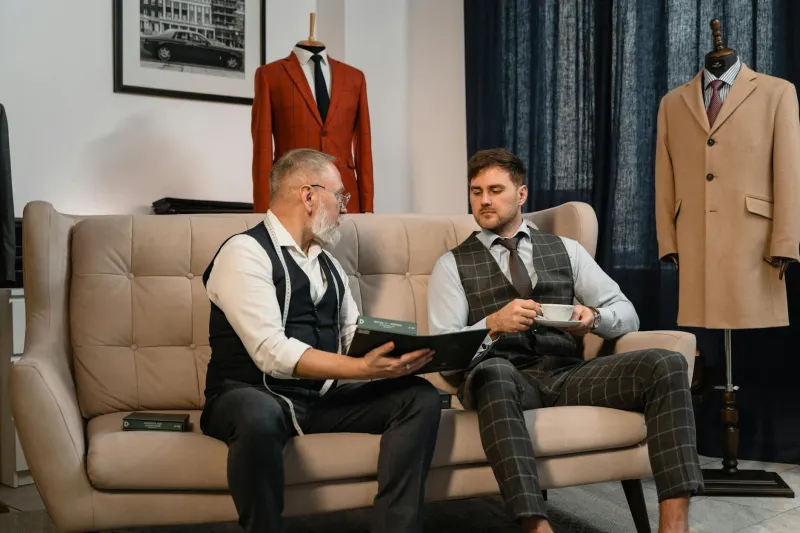
Every neighborhood had its tailor, and he wasn't just someone who hemmed pants. He was a craftsman who could take a worn suit jacket and completely rebuild it, turn a man's coat into a woman's, or transform last year's dress into this year's skirt. The relationship between customer and tailor often lasted decades.
"Mr. Goldstein knew exactly how my father's left shoulder was higher than his right," recalls 89-year-old Rose Martinez from Boston. "When Papa needed a new suit, Mr. Goldstein would just look at him and start cutting. No measuring tape needed."
Clothing repair was an art form. Darning socks wasn't a quaint hobby — it was an economic necessity. Mothers taught daughters how to mend tears invisibly and reinforce worn elbows. A shirt with a frayed collar didn't get thrown away; it got flipped and re-sewn to give it another year of life.
Sunday Best Wasn't Just a Saying
The concept of "Sunday best" reflected a culture where clothes had distinct purposes and social meanings. You didn't wear your work clothes to church, and you certainly didn't wear your good clothes to work. This wasn't just about showing respect — it was about protecting your investment.
Families would spend Saturday evenings preparing for Sunday: polishing shoes, pressing clothes, and making sure every button was secure. Children learned early that their "good" clothes were precious resources that needed to last.
The ritual extended to seasonal changes. Twice a year, families would have "changing of the wardrobe" days, carefully storing winter clothes with mothballs and cedar, and bringing out summer garments that had been preserved for months.
The Revolution That Changed Everything
The transformation didn't happen overnight. World War II accelerated clothing manufacturing technology as factories retooled to produce uniforms quickly and cheaply. The 1960s brought synthetic fabrics that were easier to produce and care for. But the real revolution came in the 1990s with global supply chains and fast fashion.
Suddenly, a t-shirt could be designed in New York, manufactured in Bangladesh, and sold in Ohio for $5. The economics that once made clothing precious evaporated. Why repair a $12 shirt when you could buy a new one?
What We Lost When Everything Became Disposable
Today's abundance comes with hidden costs. The average American throws away 81 pounds of clothing annually. We buy five times more clothes than our grandparents did, but wear each item far fewer times. A typical garment today is worn just 14 times before being discarded.
We've also lost the intimate relationship with our possessions that scarcity created. When you owned three dresses, you knew every stitch, every stain, every repair. You had preferences about which outfit made you feel confident, which was most comfortable for long days, which looked best in photographs.
The local tailor has largely disappeared, taking with him not just a trade but a form of community connection. The neighborhood seamstress who knew three generations of a family, who could look at a growing child and predict exactly when they'd need new clothes, who served as confidante and counselor — she's been replaced by self-checkout kiosks at fast fashion retailers.
The Hidden Wisdom of Scarcity
There was something to be said for the old way. When clothes were expensive and precious, people thought carefully about what they bought. They chose classic styles over trends, quality over quantity. They learned to see past temporary fashion to lasting value.
They also developed a different relationship with their bodies and self-image. When you couldn't solve a bad day with a shopping trip, you had to find other ways to feel good about yourself. When you couldn't buy a new outfit for every occasion, you had to be creative with what you owned.
Today's closet abundance offers freedom and self-expression our ancestors couldn't imagine. But it's worth remembering that their constraints taught lessons about value, craftsmanship, and the difference between what we want and what we actually need. In a world where everything is disposable, perhaps we could learn something from a time when nothing was.